This project showcases student project work from Japan and the World, a modern Japanese history course offered at Kanda University of International Studies. It focuses on important themes and individuals from the Meiji (1868-1912) and Taisho (1912-26) periods, when Japan was beginning to open to the world after centuries of government-enforced isolation.

All submissions are researched, whether in English or Japanese, and references provided. Comments responding to and exploring ideas, suggesting connections or further reading, are most welcome. As entries are written by non-native English speakers, please refrain from non-constructive comments about language use.

Blog editor/ course designer: Caroline Hutchinson
Showing posts with label alexander. Show all posts

Thursday, 29 January 2015

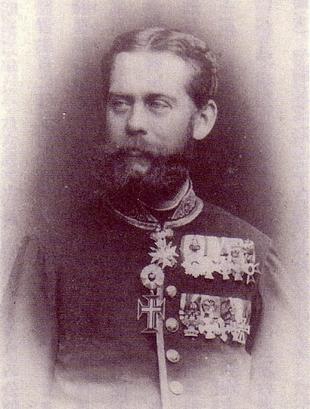
Alexander von Siebold

Alexander von Siebold
By Yuka Shiratori

Introduction

Do you know about foreigners who worked for Japanese government in Meiji Japan? They are called foreign specialists in government employ (in Japanese, Oyatoi-gaikokujin). Alexander von Siebold is one of them and he worked as an interpreter. He studied Japanese so hard after he came to Japan, and he succeeded as a Japanese-English interpreter even though his mother language was German.

His life

Siebold was born in Leyden, Netherlands in 1846. He came to Japan for the first time when he was 12 years old. This opportunity was created by his father.

His father, Philip Franz von Siebold is famous for the “Narutaki-juku” [a medical school - Ed] and the Siebold incident, in which he tried to bring the map of Japan overseas, although it was illegal at that time. He was deported from Japan and he couldn't come to Japan for about 30 years.

When Alexander’s father became able to come to Japan, because the deportation was lifted, Alexander came to Japan with his father.

He studied Japanese so hard for about a year, and then he started to work as an interpreter when he was 15 years old. At that time, he was a student-interpreter and assisted British consul. He was not familiar with the job at first, but he kept making efforts to learn Japanese.

From 1870, he was sent to Europe and accomplished many achievements. The arrangement for Japan’s participation in the Vienna World Expo of 1873 was one of his great achievements. He had already been and experienced the 1867 World Fair in Paris. To add to this result, he also worked for Japanese students in London, and negotiated about the bill print.

He became official interpreter for the Ministry of Finance in 1875. From that time he translated the official documents and the laws which related to the Ministry of Finance. His job of supporting the Japanese politics had continued. For example, in 1881, to assist Inoue Kaoru, he went to Germany and negotiated with the German government over treaty revisions.

He contributed to Japanese politics and society for over 40 years, his work was recognized and he was awarded the order of the Sacred Treasure in 1910. There are six grades and he was awarded the 2nd class.

Discussion

I asked two questions at the discussion.

What do you think about his father’s decision (decided his son would be an interpreter)?

Most of members said that it was not bad for him because he finally succeeded as an interpreter. To think of the difficulty of getting good job, it was a valuable opportunity that should not be missed for him. One more reason is that he could chose his work or future, because his father passed away after leaving Alexander in Japan and went back to the country.

What do you think about foreigners who work for Japan (or Japanese people)?

Considering the reason to come Japan, we felt that most foreigners love Japan and had hoped to visit Japan.

Another viewpoint is that of Japanese people. Before Meiji era, Japan had no chance to learn from other countries, so foreigners who visited Japan were like teachers for Japanese at that time. They taught the foreign culture or customs, and these experiences were important and necessary for Japan.

Reflection

Alexander’s experiences of Japan were not intended but I think that working in Japan for Japanese government was good for him. As I mentioned in the discussion part, working for Japanese government was precious chance for him to learn about Japan, including the language.

I recognized that Japan learned many things from foreign countries and tried to adopt them into Japanese society. It is said that there is a less Japanese atmosphere these days rather than past Japanese society, but my opinion became slightly different from this. I think that Japan always tries to get new and useful information and tries to adjust it to Japan, and this also should be seen as one of Japanese merits.

After all, I noticed that I could ask the discussion questions that were related to his effort to learn foreign languages. Actually, he studied so hard to master the foreign language. I think Japanese is difficult but he roughly mastered it for only a year. It was such a surprising fact for me.


References

Kreiner, J. (1998) Tokugawa Japan at dusk Japan which was seen by Siebold and his sons


"Alexander von Siebold", (n.d.). In Wikipedia, retrieved on January 26th 2015 from
http://en.wikipedia.org/wiki/Alexander_von_Siebold


"Alexander von Siebold" (Japanese page), (n.d.). In Wikipedia Japan, retrieved on January 26th 2015 from
http://ja.wikipedia.org/wiki/%E3%82%A2%E3%83%AC%E3%82%AF%E3%82%B5%E3%83%B3%E3%83%80%E3%83%BC%E3%83%BB%E3%83%95%E3%82%A9%E3%83%B3%E3%83%BB%E3%82%B7%E3%83%BC%E3%83%9C%E3%83%AB%E3%83%88

Sunday, 3 August 2014

Alexander von Siebold

By Tomomi Ishizaka

Alexander Von Siebold was one of translators who were hired by Japanese government. Alexander was from Germany, so his mother language was German. However, he made a big achievement as a Japanese-English translator.

He came to Japan in 1859 with his father, Phillip Von Siebold, when he was 12 years old. From then, he started to work as a Japanese-English translator in Imperial Russian Navy. Of course, English was not his native language, so at first, his English skill was not enough. However, it was brushed up in his work.

He was appointed official interpreter to the British consulate in Edo when he was 15 years old. He assisted British consul in negotiations pertaining to the Namamugi incident, Anglo-Satsuma War and Bombardment of Shimonoseki [all decisive incidents leading to the Meiji Restoration - Ed].

From 1870, he was sent to Frankfurt and Wien by Japanese government to negotiate. And in 1875, he became an official interpreter for the Japanese Ministry of Finance. He assisted the Japanese government and succeeded in concluding Anglo-Japanese Treaty of Commerce and Navigation. Thanks to the treaty, Japan revised the unequal treaties [the Harris Treaties of 1858 opened several of Japan's ports to trade at rates unfavorable to Japan and contained extraterritoriality clauses. Japan was keen for them to be revised as soon as possible - Ed].

Why did a German-speaking 12-year-old boy start to work as a Japanese-English translator?
The reason is that most Japanese in Dejima spoke Dutch and English speakers were in demand. At that time, there were a lot of transactions with people from Netherland, so people could speak only Japanese and Dutch. Even Commodore Perry came to Japan with Dutch speaking translator. So, the Japanese government really wanted English-Japanese translator.

Speaking of Alexander’s family, his father and his brother also came to Japan. His father was a doctor in Germany, but he was interested in the environment, such as biology and geography, so he came to Japan. He was kicked out off Japan because he tried to take a Japanese map to his home country. It was illegal in Japan to take Japanese things to other countries. After he got permission by the Japanese government, he came back to Japan again. Alexander’s brother, Heinrich, also came to Japan to study Japanese biology, geography and folklore, and he got married to Japanese woman.

In discussion, I gave two questions to audience:

1. If you were a person from Western country who had already had work like Phillip, would you want to go to Japan in Tokugawa period?

Most of audience answered “NO”. They said “because Japanese people seem barbarous from Western people’s perspective.” And some people said “living in Japan was really difficult so I would keep working in home country.” On the other hand, some people who answered YES said “I would go there because I would want to spread my idea and knowledge.”

2. If you were Phillip, would you let Alexander go to Japan?

Again, most of them answered NO. They said that Phillip was kicked out off Japan so if I were Phillip, I would not want my son to go to Japan. Another reason is that Phillip was a doctor, so Alexander could be a doctor too.

People in Meiji period called foreign people “oyatoi gaikokujin” with irony [something like "honorably employed foreigners" - Ed]. However, foreign people influenced Japanese a lot and contributed to developing Japan.

As you read the answers above, most people think that if they were Western, they wouldn’t have gone to Japan. I suppose that it was true for people of that time. But in that situation, “oyatoi gaikokujin” came to Japan and worked. Even though they got big salary, I think it’s amazing. And Alexander’s career was quite special compared with others’ because he started to work in Japan when he was only 12 years old! From researching Alexander’s career, I could know how serious problem the Japanese government had in terms of diplomacy.


References
Arata, I. (1937, Feb). Alexander Von Siebold. Historiography. p627-p667.
http://ci.nii.ac.jp/els/110007472064.pdf?id=ART0009296306&type=pdf&lang=jp&host=cinii&order_no=&ppv_type=0&lang_sw=&no=1406526152&cp=

Ministry of Foreign Affairs of Japan. (2014). Information about diplomacy. Retrieved from
http://www.mofa.go.jp/mofaj/annai/honsho/shiryo/qa/meiji_02.html

Friday, 1 August 2014

Keep up your English study motivations!!

Alexander von Siebold
By Kosei Kubota

Alexander George Gustav von Siebold was a German who worked as an interpreter of British legation in Japan and a foreign advisor (Oyatoigaikokujin) of Japanese Meiji government. He was born in Leiden Netherland; his father worked in Netherland but consequently took banishment order, and moved to Japan with him.

When he was 14, he could not speak either Japanese or English well. However, he made an effort to learn English and mastered it within only one year. When he was 15, he became a student interpreter of British legation in Japan. Student interpreter is a system which trains interpreters who deal with Asian countries, introduced by British.

He also studied harder, and one year later he had become a student interpreter, passed the national administered exam and became a translator. As a translator, he dealt with three languages, Germany, English and Japanese. He was very trusted by influential people from some countries so he was involved in a lot of events such as the Namamugi incident, the negotiation of opening a port in Hyogo in the Shimonoseki War, and navigating Shomu Tokugawa to the Paris expo.

In 1870, he resigned as a British legation officer and became a foreign advisor (oyatoi-gaikokujin) of the Meiji government. He started to support growth of Japan. As a foreign advisor, he supported Japanese travelers life in Britain, requested Vienna to participate in the expo, and concluded the treaty of Commerce and Navigation between the UK and Japan (Nichi-Ei Tsusho Kokai Joyaku).

Discussions
In our group's discussion, we talked about how members felt about his life. My group members were amazed by his eager attitude for language studies and negotiation. Obviously, there were not enough materials because technologies were still not developed, so he had to study without convenient things. How did he study effectively under that situation? And what was important for his foreign language acquisition? One interesting opinion was taking interaction with native speakers. The immersion made him to take communication in Japanese many times. Perhaps, it supported his effective learning. And in other opinion, high motivation by him was also important; when he was youth, he learned Japanese as important issue to make his future. So he could maintain his motivation. These opinions were right on the mark.

My opinions
I have learned that Siebold studied harder and made an effort to do a lot of important things for building the current Japanese country. I’m not sure whether he liked Japan or not, but he had been living in Japan for over 50 years, so I guessed that may be not too bad for working place. Through the group discussion, I totally agreed with my group members. Although the environment given for him is more difficult than nowadays, He proved that he could master languages and get the job even in such situation. This fact really encouraged our studying motivations as foreign language learners. From my point of view, Japan is still not well-developed for living with people from foreign countries. He made some bases for language studies, so we might have to study harder and contribute to supporting foreign travelers instead of saying thanks to him.

References
The web page Wikipedia : http://en.wikipedia.org/wiki/Alexander_von_Siebold
Link image : http://pds.exblog.jp/pds/1/201305/27/48/b0181748_18331211.jpg