This project showcases student project work from Japan and the World, a modern Japanese history course offered at Kanda University of International Studies. It focuses on important themes and individuals from the Meiji (1868-1912) and Taisho (1912-26) periods, when Japan was beginning to open to the world after centuries of government-enforced isolation.

All submissions are researched, whether in English or Japanese, and references provided. Comments responding to and exploring ideas, suggesting connections or further reading, are most welcome. As entries are written by non-native English speakers, please refrain from non-constructive comments about language use.

Blog editor/ course designer: Caroline Hutchinson
Showing posts with label kaisyun. Show all posts

Sunday, 3 August 2014

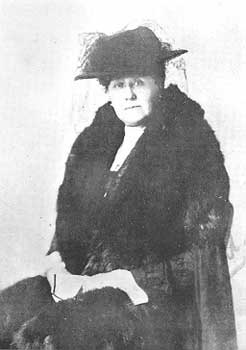
Hannah Riddell

Hannah Riddell
By Kana Suzuki

Hannah Riddell was a British woman who saved many Japanese patients. But her job was not a doctor. When she came to Japan, she was shocked by Japanese situation for a certain group of people.

She was born in 1855 in North London. She managed small private school with her mother. However, after her parents passed away, she went bankrupt. She joined Church Missionary Society to make her life again. So she came to Japan as a missionary in 1891. She stayed in Kumamoto with her co-workers. As well as her missionary work, she studied Japanese and taught English at local high school in Kumamoto.

In the same year she came to Japan, Riddell saw some people who were suffering from something in Honmyo temple. And they begged passers-by for alms. They were all Hansen’s disease (leprosy) patients. At that time, the patients of this disease were discriminated against and isolated because of their appearance (symptoms) such as a rash and 2 misunderstandings.

Hansen’s disease is curable now, however, it was considered to be incurable disease. And many people believed it was contagious disease. In fact, the possibility of infection is quite low. These misunderstandings also caused suffering for the patients.

In Europe, there had been patients of Hansen’s disease, and discrimination against them, in the Middle Ages. But in modern time, this situation had improved greatly. So Riddell was shocked by this difference of situation between Japan and Europe.

Riddell decided to help them. At first, she wrote a letter about what she saw and her desire to build hospital for the patients to YMCA, which organization she joined as headmistress. She also asked support to Church Missionary Society. But both of them replied “No”, because they thought it was impossible for a foreign woman to build hospital in Japan. Nonetheless, she never gave up. She also asked support to her friends in Liverpool. Her characteristics helped a lot: she was very active to make new relationship and contact with someone who has authority. She made relationships in Kumamoto. She sometimes held tea parties with professors of school and prefectural officers. She talked about strong wish to save the patients.

By her these efforts, Hannah could get agreement for her idea and support from some people of CMS. In 1985, she finally built Kaisyun (回春) hospital for the patients of Hansen’s disease. Kaisyun means “resurrection of hope” in English. She named from her thought and wish that although patients had felt much pain for a long time, now they could get back hope again.

Riddell and Kaisyun hospital still had the problem for managing and money. So she decided to write a letter to Okuma Shigenobu who was prime minister of Japan at that time. She explained about treatment of patient and how situation was bad. Next year, the meeting about relief for Hansen’s disease patient was held. It was the first time this problem was discussed as a national problem. From this time, Japanese support system has developed quickly.

Riddell came to Japan as a missionary, however, she saved the patients of Hansen’s disease not as a missionary. She saved them just as a foreign woman. So, we discussed about “if you find someone who was discriminated against or suffered from some kind of reason or disease when you were in foreign country, what would you do?” in my group. Our main opinion was we couldn't do anything for them because we wouldn’t know anything about their situation and rules in the country. And we are just a foreigner. It is difficult problem even now. Especially, in 1890s the visit to Japan of foreigners was more limited than now. So the position of foreign women was not so stable and they didn't have social power at that time. But Riddell was so brave and active person doing something new. These attitudes for Japanese serious situation changed one aspect of Japanese society and medical situation. However I don’t think every foreigner and even local people could behave like her. All we could do and need to do is to know about the country and situation well. It is true that we couldn't do anything if we don’t know anything about it. So I think we can begin help with knowing the situation.


References

Retrieved June 18 2014. Wikipedia

http://ja.wikipedia.org/wiki/%E3%83%8F%E3%83%B3%E3%83%8A%E3%83%BB%E3%83%AA%E3%83%87%E3%83%AB

Retrieved June 25 2014. Fukushi shinbun web

http://www.fukushishimbun.co.jp/topics/3416

http://www.fukushishimbun.co.jp/topics/3488

http://www.fukushishimbun.co.jp/topics/3529

http://www.fukushishimbun.co.jp/series02/3571

http://www.fukushishimbun.co.jp/topics/3682

http://www.fukushishimbun.co.jp/topics/3819

Picture

from http://riddell-wright.com/history_index.php

Sunday, 4 August 2013

Hannah Riddell

By Jaimie Natsuki
Hannah Riddell
Hannah Riddell


Hannah Riddell was an English women who devoted her life to leprosy victims in Japan. Leprosy is a serious chronic disease which destroys the flesh and nerves. From 1907 to 1996 in Japan, leprosy victims had serious discrimination problems. For example, they were treated cruelly by people, government, and even by hospitals.

However, in 1895, Hannah Riddell made a hospital called “Kaisyun hospital” in Japan, and she made a great contribution to the Japanese policy of leprosy, but if she were not inflexible person, deepen people’s understanding of leprosy was not easy. In this paper, I will focus on the reasons why she came to Japan, her achievements, and the two sides of her character.

Hannah was born in 1855 in London, and her family were Christian. She and her mother managed a women's school, and even though she was only 20 years old at that time, she could teach all the subjects. Her parents were quite old and she had a brother’s little nephew and niece to bring up, because he died of pneumonia. Hannah had to work to live, and she had no choice except being a teacher.

When she came to Japan as a missionary, she met a little boy suffering from leprosy at Honmyou temple in Kumamoto, and that made her decide to take care of leprosy victims for her whole life.

In 1895, finally she was able to build her ideal hospital, “Kaisyun hospital”, but it was not so easy. She had to negotiate with many top class people, and solicit funds. She had a bad relationship with middle echelons, and because of her character, she made many enemies on the church organization committee, so she had to manage without their help. However, that made it easier to collect funds. In 1905, she held a nationwide conference and her proposal for a nonprofit hospital was accepted.

Also, she cared about the location and hospital name too. The location was peaceful, and had beautiful nature, and moreover it was easy to go to the city, but was not too close. The outside of house did not look like a hospital. The design was a mix of western and oriental style. Hannah did not want to get image of “revival” and “regenerate”, so she choose the name very carefully. In English, it means “Resurrection of Hope”, but in Japanese, her concept of “revival” and “regenerate” is well expressed in appropriate language.

Hannah believed that leprosy is a hereditary disease, and was convinced that men and women should live separately, even though in 1873, a doctor proved it is bacterial disease. Here is her opinion: “Leprosy victims should not live in the same house, and if it is possible, the house should be as far as possible, and the best way to avoid this disease is to ban a marriage in two generation. It might sound little bit hard, but still it is possible to learn the happiness and joy, and they will understand that they just do not have choice to get married.” She strongly believed the best way to avoid leprosy is to control passions and desires, but in fact, just keeping a clean and noble life was not helpful. Her knowledge was too scanty, even though she devoted her life to leprosy.

Some victims felt “Kaisyun hospital” is like a religious house because sometimes victims felt pleasure to become Christian. However, even though the hospital was like a religious house, it was overwhelming popular to enter, especially for serious cases.

To build up the medical treatment of leprosy took a long time, but following all of her efforts, in 1910, Japanese authorities recognized leprosy as a social problem. Nowadays Hannah’s opinion is accepted and respected from some Japanese top class people, and patients had their love and respect for her.


<References>

Boyd, J. (1995.11.16). Hannah Riddell: an English woman in Japan, Charles E. Tuttle Company.