This project showcases student project work from Japan and the World, a modern Japanese history course offered at Kanda University of International Studies. It focuses on important themes and individuals from the Meiji (1868-1912) and Taisho (1912-26) periods, when Japan was beginning to open to the world after centuries of government-enforced isolation.

All submissions are researched, whether in English or Japanese, and references provided. Comments responding to and exploring ideas, suggesting connections or further reading, are most welcome. As entries are written by non-native English speakers, please refrain from non-constructive comments about language use.

Blog editor/ course designer: Caroline Hutchinson
Showing posts with label botchan. Show all posts

Tuesday, 4 February 2014

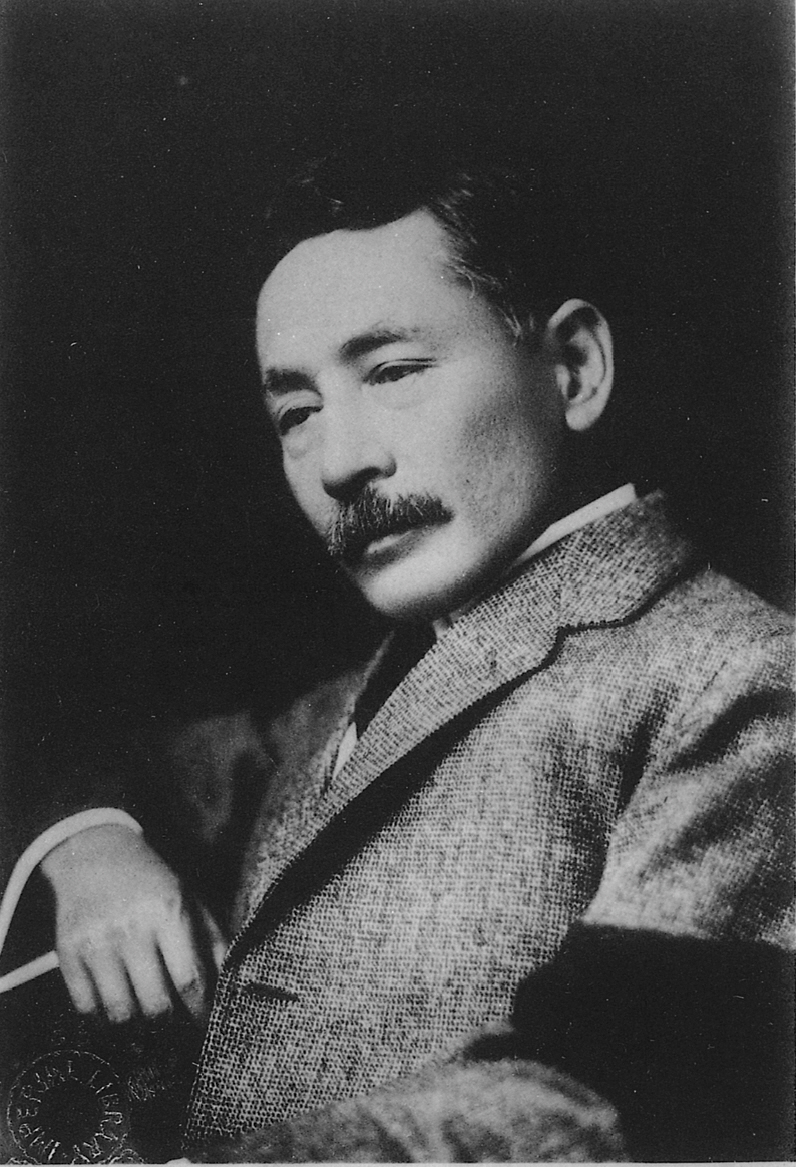
Natsume Soseki

Natsume Soseki
By Seina Suzuki

Soseki was the sixth child and unwanted child by his family, because he was born to his mother late in her life. His mother was 40 years old and father was 53 years old. In 1868, he was sent to childless couple named Shiobara Masanosuke and his wife. However they divorced, therefore Soseki returned to his real family when he was 9 years old. His family welcomed him, except for his father. He didn’t have good relationship with his father. His mother died when he was 14 years old.

He attended the First Tokyo Middle school (now Hibiya High School) and while studying there, he became enamored with Chinese literature and he dreamed of becoming a writer. When he told his old brother about his dream, his family strongly disagreed. In 1884, he entered Tokyo Imperial University to become an architect. While at university, he study Chinese classics and also started to learn English.

In 1887, he met Masaoka Shiki and Soseki was affected by him. Soseki started singing his poems. He entered English Literature department in 1890. In 1895, he began teaching at Matsuyama Middle School and he also published haiku and Chinese poetry in that time.

In 1900, he was sent to study in Great Britain as “Japan’s first Japanese English literary scholar” by the Japanese government. However he didn’t get his scholarship by government. He studied instead at University College London. Before he arrived in London, it took 2 months to get there. He visited many museums in London. He studied a lot of English and he came to have a fundamental question, “What is Literature?” He wrote “Theory of Literature.” He had to go back to Japan before he could accomplish his ambitions. He didn’t enjoy his life in London however he learned some things and wrote “Theory of Literature”.

Soseki’s literary career started in 1903. He published his haiku in some magazines. He won public admiration when he published “I Am a Cat”. His first major work was that novel. “I am a Cat” was written from the viewpoint of a cat and Soseki also a cat. The owner of the pet Mr. Kushami is a self-ironic portrait of the writer. He succeeded and published many novels like Botchan, Tower of London in 1905, and Kusamakura in 1906. His post when he wrote at the university got a position with Asahi Shimbun and he began writing full time. In that time, Naturalist literature was popular; however he was part of Yoyu-function.

In 1907, he decided to resign from his teaching job and entered a newspaper company The Asahi Shimbun as a novelist. He wrote a lot of stories in newspaper. His novels were full of humor at the first, but later changed to focus on depth of human psychology, isolation and egoism, and analyzed the contradictions in Japanese society.

He died of stomach ulcer on December 9th 1916. He was writing “Light and Darkness”, however he didn’t finish writing about it. His novels are still widely read and his major works of fiction have been translated into English.


Reference list

-Natsume Soseki, the greatest Novelist in Modern Japan
http://www.ucl.ac.uk/library/exhibitions/soseki-pamphlet.pdf#search='natsume+soseki'

-Wikipedia Natsume Soseki

-Natsume Soseki
http://www.kirjasto.sci.fi/natsume.htm


Monday, 5 August 2013

Natsume Soseki

By Satoshi Ui
Natsume Soseki
Natsume Soseki

Soseki (known as Soseki Natsume) was born on 9th of February 1867 and passed away on the 9th of December 1916 at the age of 49. His real name was Kinnosuke (金之助). He had several jobs. He worked as a novelist, critic, and an English literature. But he is mainly famous for writing many novels. For example, his debut work “I am a Cat” (吾輩は猫である) in 1905, then “Botchan” (坊ちゃん) and “Londontou” (倫敦塔), became popular in magazines. He is also famous for being printed on the old 1000 yen bill. During his life, he did not just have a happy life but also was affected by mental problems and many diseases that gave hard time on his jobs.

Firstly, since he was an infant he had tough times in his childhood. His father had a very strong political power, but his family had many problems. For example, his grandpa was addicted to alcoholic and their wealth was slipping into danger but, later on his father strived to fix the problem. Also, his mother bore many children, and Soseki was born as an unwanted child and sent as an adopted child to many houses. However eventually he settled back to his parents’ home. This is when he began to be sick through his life, which had a big effect on his novels that he is going to write in the future.

Secondly, in his university life, he met a man name Masaoka Shiki (14th of October 1867 - 19th of September 1902, at the age of 34) who was famous for writing Chinese poems and haiku. This is when he started to study the haiku and changed his name to “Soseki”. Actually, this name was one of Shiki's pen names but he yield it to Soseki. This is when Shiki guided Soseki into the literature world. After graduating from Teikoku University, as a career he went to some schools and taught as a professor. Later on he decided to go study abroad in the U.K. After 2 years of studying abroad, he wrote his famous maiden work “I am a Cat” in the magazine named “Hototogisu”. After this good literature fame, he announced the new novels one after another.

Thirdly, in the year of 1907, he resigned teaching at school and found a job at the Asahi Newspaper (朝日新聞). From this moment, Soseki began to step toward to a professional author. In the same year of June he started to serialize the work “Gubizinsou” (虞美人草) on part of the newspaper. But, while writing the story he started suffering from “stomach ulcer”. This is when his nightmare began. After he finished the series of “Gubizinsou”, he worked on several novels until the last one “Meian” (明暗), that he could not complete. But, during his job he suffered from the stomach ulcer and nervous breakdown several times. He also broke some promises with the doctor about his health, for example, eating the jam that he loved or a lot of oily food.

Finally, I will explain about his great legacy and conclusion. Because of his complicated childhood, his thoughts and ideas were different from others. This happened to change his life. In the literature congress, he is famous for creating original Japanese words. For example, the word for “various” in Japanese came out “iroiro” (色々) which means “many colors” if you translate it directly. Also, this is very famous as a romantic sentences that he translated “I love you” into “Tsukiga-kireidesune” (月が綺麗ですね), which means that you are beautiful as a moon. By these examples, you can see that he is a talented person for creating new words. He is also famous for writing himself in his novels. He sometimes described the diseases and the situation that he was in to the readers too. These kinds of techniques are used a lot in the novels that are read in the present day. It makes us have attention and interest in a lot of books.


Reference

Wikipedia-Natume Soseki

https://ja.wikipedia.org/wiki/%E5%A4%8F%E7%9B%AE%E6%BC%B1%E7%9F%B3

Retrieved on 23/07/2013


Sunday, 4 August 2013

Natsume Soseki

By Saki Rokuhara
Natsume Soseki on the old 1,000 yen note


Natsume Soseki was a famed Japanese novelist of the Meiji Era (1868–1912). He became the portrait on the thousand-yen note in old days. Therefore there would not be anyone who does not know him in Japan. He is best known for his novels Kokoro, Botchan, I Am a Cat, and his unfinished work Light and Darkness. My image of Soseki is that he could speak English well, he had an excellent record and he is the famous writer. However the reality is a little less positive. He grew up in an unhappy environment. I am interested in his life though his surroundings. That is why this essay focuses on three points of his life: his background, people who were around him and what he has contributed to modern society.

First, Soseki was born Natsume Kinosuke in Edo in 1867. However he had a difficult childhood. He was sixth child and unwanted by his family. His mother was 40 years old and his father was 53 so it was late in their lives (Books and writers, 2008). He was sent to live with a childless couple from 1868 to 1877, but they divorced so he returned to his home. His mother died when he was 14, and his eldest brothers died in 1887. In 1893 he became an English teacher but he was worried about many things, including his disease, and English literature as learned by Japanese. Therefore in 1895 he resigned as teacher in Tokyo and he went to different school in Ehime where he continued teaching.

Second, I will talk about people who were around him. Natsume Soseki and Masaoka Shiki were classmates in their cram school. They met in 1889 and they were influenced by each other. Tohoku University Library (2003) said that “In May 1889 Soseki contributed a critical essay to a collection of Shiki's compositions. It is reasonable to suggest that their parting was foreseeable for them from the outset: it is said that Shiki was diagnosed as being tuberculosis of the lungs during this period and realized he had "only ten years" to live.” That is why I think they formed a close friendship. Shiki taught Haiku to Soseki. They were the same age but Shiki was conceited so he treated Soseki like a younger brother (Hoshimiruhiro, 2010). It was Shiki Masaoka who acted as a middleman for Soseki to become a novelist. However Shiki was already dead when Soseki started writing novels. Shiki died in September 1902 during Soseki's stay in England (Tohoku University Library 2003).

Finally, Soseki published many books and he made speeches. Tohoku University Library (2003) said that “Influenced by Shiki, Soseki composed Chinese poems and haikus. Later, encouraged by Kyoshi Takahama, one of a disciple of Shiki, Soseki published I am a Cat in Hototogisu, a magazine started by Shiki.” Soseki gave a famous speech to students at Gakushuin school in 1914. This speech was called My Individualism. He talked about his experience of growing up in the early Meiji era. He argued that it was important for everybody to find their individual identity, but also to respect other people’s individualism as well. Books and writers (2008) says that “In 'My Individualism', a speech delivered to the students of the Gakushuin, an elite academy, he said: "... a nationalist morality comes out a very poor second when compared with an individualistic morality. Nations have always been most punctilious over the niceties of diplomatic language, but not so with the morality of their actions."

In conclusion, I think Natsume Soseki was probably quite good at communication in the sense of his language skill and understanding of people. However maybe he was a high achiever. That is why he was unhappy in spite of the fact he could speak English by going abroad. Moreover the background of his speech is Japanese who were learning about English literature. Could Japanese understand English literature? If a British judgment was different from one's own judgment as a Japanese person, could you insist on your opinion? (Shirolog, 2007). I think this speech is very important even now.


References 

Books and writers, (2008), Natsume Soseki, Retrieved 20 July 2013, from http://www.kirjasto.sci.fi/natsume.htm

Hoshimiruhito, (2010), Shiki to Soseki, Retrieved 25 July 2013, from http://morinnko.cocolog-nifty.com/blog/2010/03/post-caee.html

Shirolog, (2007), My individualism, Retrieved 25 July 2013, from http://blog.hakoniwa.net/archives/404

Tohoku University Library, (2003), Natsume Soseki Library, Retrieved 24 July 2013, from http://www.library.tohoku.ac.jp/collect/soseki/

Friday, 2 August 2013

Natsume Soseki

Natsume Soseki
Natsume Soseki
By Ayaka Ohara

Natsume Soseki is one of the famous people who lived in Meiji period. He was a novelist, critic and a scholar of English literature. He made a lot of works which connect to loneliness, for he had a lonely childhood. Also he studied in the UK and played a role in translation. Natsume Soseki was a talented person, and still influences society now. I was interested in his unique personality resulting from his lonely experiences, so I will introduce Natsume Soseki through his novel Bocchan and his famous translation.

“Loneliness” is the key of Soseki’s works. The loneliness came from his childhood experiences, inferiority in himself and opposition to modernization. One of his famous novels, “Bocchan”, reflects Soseki himself, and both Soseki and Bocchan have similarities. There are two sadnesses in the story, “Bocchan”.

Soseki was sent to another family as a foster child soon after birth, and he was adopted when he was 1 year old. Although he returned to his real family when he was 9 years old, his real mother died when he was 14 years old. Bocchan was deserted by his mother 3 days before she died. Also he was not loved by his father. He and his brother were not in good terms, and he had never met his brother since his brother went to Kyushu for work. Soseki and Bocchan have the same loneliness against family, which is one sadness.

The similarity is not only childhood but also the whole story ― Bocchan went to Matsuyama as a teacher, and he faced some difficulties there. From the middle of the story, he does not trust “Aka shatsu (red shirt)” and “Nodaiko” who are intelligent. One day he felt discomfort against society. He lost Aka shatsu and Nodaiko and left Matuyama. ― Matsuyama is the symbol of modern Japan, and he felt uncomfortable there. “Aka shatsu” is Natume Soseki. Both of them are scholars who graduated from a department of literature. By drawing himself critically as the symbol of modernization in the novel, he also criticized modern Japan. In the end, he left modern Japan. As a result, he lost modern Japan, which is another sadness.

There is a nice sentence which Soseki translated which is favored among fashionable or intelligent people. When he was a teacher, one day in his class, he translated “I love you” into “Tsuki ga Kirei desune” which normally means “The moon is beautiful” after he heard a student translate “I love you” literally into “Ware Kimi wo Aisu”. He said it was enough to communicate your feeling because he was a person in Meiji period when feeling (Jou) was common rather than love (Ai). That is why he thought the direct sentence “Ware Kimi wo Aisu” was not practical and did not meet Japanese sensibility, so he regarded it as better to communicate with Japanese lyrical way which connects with former sentence. It is very natural that he translated this way because he was very smart and he did not like unfashionable things. The reason why he translated into such a nice sentence is that his experiences were different from others, which gave him unique ideas. The sentence “Tsuki ga Kirei desune” (The moon is beautiful) is often used to communicate love by today’s people. They favor the sentence because it is like a kind of secret sign and they think it is more tasteful than using “Ai shiteru” directly.

Natsume Soseki was a representative person in Meiji period. Nobody doubts he was an educated and intelligent person in modern Japan. He is a famous person, but he was a lonely person. He influenced society with his study and sensibility. He contributed to society for giving new idea. However he was negative about modernization and himself. The negative thought made his works interesting. All his experiences helped him to get unique idea and good sense. Even his lonely childhood was not unnecessary.


References

Anonymous. (January 15, 2012), 夏目漱石『坊っちゃん』は自己批判の書ではないか?(再掲).のび日記~誤読と曲解の日々~. Retrieved July 14, 2013, from http://d.hatena.ne.jp/nobitter73/20120115/p2

Anonymous. (October 17, 2007), 「i love you 」=「月が綺麗ですね」 . Retrieved July 14, 2013, from http://detail.chiebukuro.yahoo.co.jp/qa/question_detail/q1313126873