This project showcases student project work from Japan and the World, a modern Japanese history course offered at Kanda University of International Studies. It focuses on important themes and individuals from the Meiji (1868-1912) and Taisho (1912-26) periods, when Japan was beginning to open to the world after centuries of government-enforced isolation.

All submissions are researched, whether in English or Japanese, and references provided. Comments responding to and exploring ideas, suggesting connections or further reading, are most welcome. As entries are written by non-native English speakers, please refrain from non-constructive comments about language use.

Blog editor/ course designer: Caroline Hutchinson
Showing posts with label kumamoto. Show all posts

Sunday, 3 August 2014

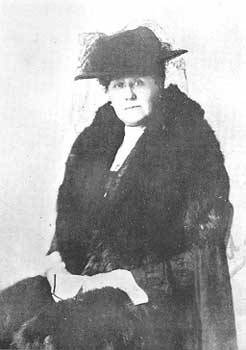
Hannah Riddell

Hannah Riddell
By Shota Inoue

Life of Riddell

Hannah Riddell was a British woman who devoted her life to caring for patients of leprosy in Japan. When she was younger, she and her mother established private school, because they need money. The school sometimes succeeded, but in 1889 it went into bankruptcy. Then, her next job was as superintendent for the YMCA (Young Women’s Christian Association). In 1890, she was selected as missionary to Japan. At the same time, she heard about Japan from her friend. She got good impression of Japan. Therefore, she decided to go to Japan.

In 1891, she saw the leper at the Honmyoji temple in Kumatmoto. When she saw the leper begging for mercy (like “help me”), she made up her mind to devote her life to their care. She decided to establish Kaishun hospital. Then, she did donation work. But Japanese didn't know about her. She behaved like upper class and attended upper class party. She was also supported by British, in and 1895 Kaishun hospital was complete. Next she set the policy, but she was not doctor. She didn't know about leprosy and way of cure. At that time nobody also knew about that. She thought that the best way of cure for leprosy was sexual abstinence and to quarantine these patients in Kaishun hospital. Because she didn't like sexual relations, and her idea is that men and women didn't get along with each other.

In 1918 she established institute (lab) of leprosy in Kaishun hospital, thanks to a lot of donations. Plenty of famous persons donated to this hospital, because Riddell made efforts for helping leper. She gathered scholars and doctors to search and look for a remedy. She was sometimes greedy, but lepers had good impression of her, because although many people despised lepers, she interacted with them with a smile. After her death, the effort was continued by niece “Ada Hannah Wright”.

Summary of discussion

My questions were “If you were healthy person in this time, would you help the leper?” and “What do you think was the best kind of cure?”

My discussion member’s idea is to help them. It stands to reason that people should help them, because we are people. If you help the leper, you might be ignored by other healthy person. Most people are influenced by others but some people have a strong heart.

We don’t know about leprosy and medical science. Maybe we would try to do donation work and encourage to them. We would also establish medical facility. And then, we spread that the leprosy is safe.

The discussion is important for me, because member’s views were different from mine. I can soak up other information.


Reflection

I think Riddell was great person, because in this time most of people ignored and despised lepers, but she devoted her life to caring for them. Then, nobody knew whether this flu infected other people or not. In addition, Japan is not her hometown, but she helped them. Thanks to her efforts, all of Japanese minds was becoming better for medical treatment. Therefore, Japanese government attached importance to the medical treatment and supported medical facilities. Now Japan has good medical technologies.


References
“Hannah Riddell” Wikipedia, accessed July, 2014
http://en.wikipedia.org/wiki/Hannah_Riddell

“Hannah Riddell by Jingo Tamotsu”, accessed July, 2014
http://anglicanhistory.org/asia/jp/riddell1937/text.html

Hannah Riddell

Hannah Riddell
By Kana Suzuki

Hannah Riddell was a British woman who saved many Japanese patients. But her job was not a doctor. When she came to Japan, she was shocked by Japanese situation for a certain group of people.

She was born in 1855 in North London. She managed small private school with her mother. However, after her parents passed away, she went bankrupt. She joined Church Missionary Society to make her life again. So she came to Japan as a missionary in 1891. She stayed in Kumamoto with her co-workers. As well as her missionary work, she studied Japanese and taught English at local high school in Kumamoto.

In the same year she came to Japan, Riddell saw some people who were suffering from something in Honmyo temple. And they begged passers-by for alms. They were all Hansen’s disease (leprosy) patients. At that time, the patients of this disease were discriminated against and isolated because of their appearance (symptoms) such as a rash and 2 misunderstandings.

Hansen’s disease is curable now, however, it was considered to be incurable disease. And many people believed it was contagious disease. In fact, the possibility of infection is quite low. These misunderstandings also caused suffering for the patients.

In Europe, there had been patients of Hansen’s disease, and discrimination against them, in the Middle Ages. But in modern time, this situation had improved greatly. So Riddell was shocked by this difference of situation between Japan and Europe.

Riddell decided to help them. At first, she wrote a letter about what she saw and her desire to build hospital for the patients to YMCA, which organization she joined as headmistress. She also asked support to Church Missionary Society. But both of them replied “No”, because they thought it was impossible for a foreign woman to build hospital in Japan. Nonetheless, she never gave up. She also asked support to her friends in Liverpool. Her characteristics helped a lot: she was very active to make new relationship and contact with someone who has authority. She made relationships in Kumamoto. She sometimes held tea parties with professors of school and prefectural officers. She talked about strong wish to save the patients.

By her these efforts, Hannah could get agreement for her idea and support from some people of CMS. In 1985, she finally built Kaisyun (回春) hospital for the patients of Hansen’s disease. Kaisyun means “resurrection of hope” in English. She named from her thought and wish that although patients had felt much pain for a long time, now they could get back hope again.

Riddell and Kaisyun hospital still had the problem for managing and money. So she decided to write a letter to Okuma Shigenobu who was prime minister of Japan at that time. She explained about treatment of patient and how situation was bad. Next year, the meeting about relief for Hansen’s disease patient was held. It was the first time this problem was discussed as a national problem. From this time, Japanese support system has developed quickly.

Riddell came to Japan as a missionary, however, she saved the patients of Hansen’s disease not as a missionary. She saved them just as a foreign woman. So, we discussed about “if you find someone who was discriminated against or suffered from some kind of reason or disease when you were in foreign country, what would you do?” in my group. Our main opinion was we couldn't do anything for them because we wouldn’t know anything about their situation and rules in the country. And we are just a foreigner. It is difficult problem even now. Especially, in 1890s the visit to Japan of foreigners was more limited than now. So the position of foreign women was not so stable and they didn't have social power at that time. But Riddell was so brave and active person doing something new. These attitudes for Japanese serious situation changed one aspect of Japanese society and medical situation. However I don’t think every foreigner and even local people could behave like her. All we could do and need to do is to know about the country and situation well. It is true that we couldn't do anything if we don’t know anything about it. So I think we can begin help with knowing the situation.


References

Retrieved June 18 2014. Wikipedia

http://ja.wikipedia.org/wiki/%E3%83%8F%E3%83%B3%E3%83%8A%E3%83%BB%E3%83%AA%E3%83%87%E3%83%AB

Retrieved June 25 2014. Fukushi shinbun web

http://www.fukushishimbun.co.jp/topics/3416

http://www.fukushishimbun.co.jp/topics/3488

http://www.fukushishimbun.co.jp/topics/3529

http://www.fukushishimbun.co.jp/series02/3571

http://www.fukushishimbun.co.jp/topics/3682

http://www.fukushishimbun.co.jp/topics/3819

Picture

from http://riddell-wright.com/history_index.php

Tuesday, 4 February 2014

Hannah Riddell

Hannah Riddell
By Ayaka Kamoda

Hannah Riddell was born in London in 1855. Her father was sick, so she and her mother managed girl’s school instead of father. Although she was only 20, she taught all subjects. In 1886, her mother died, and also her father died soon after, so the school went bankrupt. After that she joined CMS (Church Missionary Society), and she was send to Japan when she was 35 as missionary. There, she saw Hansen’s patients, and she decided to support the building of a hospital for Hansen’s disease, even though she wasn’t doctor. It was called Kaishun hospital in Kumamoto, southern Japan. The reason why she took part in it was that she had read the bible. It says you should help people who are not helped by anybody.

It was hard for her to achieve her purpose because she was not Japanese and people did not try to understand Hansen’s disease, but she took action actively. To begin with she started fundraising campaign. She needed money, so she pressured a Zaibatsu [Editor's note: a large industrial conglomerate in prewar Japan, with influence over large parts of the economy] to support her, and she stayed in Karuizawa during summer to meet powerful person. As a result industrialist Eiichi Shibusawa and politician Shigenobu Ookuma decided to help her.

Secondly, she had a talented for publicity work, so she gave two lectures per a day. In addition, she tried to understand about Hansen's disease. At that time nobody knew that the chance of transmission was low between humans, especially adults. She also isolated them, but she respected patients. For example, they could wear clean clothes, and they were required to control sexual abstinence, so they could not marry. Many people might think it’s not reception, but they can go out if they did not want to be there, so it’s not obligation. Therefore she really wanted to help them, she did like that. In addition Shigenobu Ookuma suggested that Hannah should build another hospital in another place. As a result she built hospital for Hansen’s disease in Kusatu and Okinawa.

She stuck to her opinion, so she had many enemies in the organization. As a result she could not work with them. There is a definitive incident that shows this. It is that Jon Bishop and Hannah were on bad terms with each other, and finally Jon became mentally deranged in 1897. When he was moving to Hong Kong for medical treatment in 1900, he died on the ship. Henry Evington, who was enemy of Hannah, said that he died because of her. Therefore she had to work far from Kaishun Hospital. It was her obstacle, but she overcame it. She looked at it from a different angle, and she thought it is chance to do freely. She was active in the front more than before.

At that time Japanese had ignored Hansen's patients because they did not try to understand Hansen's disease. Riddell had a lot of enemies, and couldn’t speak Japanese. Moreover, she could have lived in London if she had gone back, but she stayed in Japan to help foreigners. Could you be as active as Hannah in foreign country?

Friday, 2 August 2013

Lafcadio Hearn: His Journey Through Japan

Lafcadio Hearn
Lafcadio Hearn
By Ayako Miki

Lafcadio Hearn, later known as Koizumi Yakumo, is definitely one of the most important non-Japanese in Japanese history, who wrote more than ten books about Japan which showed old Japanese way of life through a Westerner’s eye from ancient myth to people’s daily lives. He is often described as a naturalized Japanese who researched and grasped what is called “Japanese mind” and this is the reason why he was counted as such an important person in history. However, his perspective toward Japan changed significantly thorough his fourteen years in Japan. The aim of this paper is to clarify how Hearn’s perspective on Japan changed by examining his writings and historical facts.

In his early days in Japan, Hearn seemed to see the country very delightedly with great enthusiasm. According to My First Day in the Orient[1], he found this Far East as “the old and new mingle so well” and described Japanese as “the most lovable people in the universe”. Considering adjectives used in the essay which are “divine” “fantastic” “beautiful” “mysterious” etc, it was clear that he found almost everything very attractive and exotic. Although he was surrounded by unfamiliar, strange, unknown things, he enjoyed himself being stranger on the street. Also, another reason for him to find Japan exotic and mysterious was that he spent his first two years in Matsue. Shortly after landing, Hearn was sent to Matsue in Shimane prefecture to teach English by Japanese government. Shimane prefecture is known as the place where many Japanese myths were set, which interested him. With this enthusiasm brought by the honeymoon days and encounters with the ethnic ancient tales, Hearn mostly saw Japan as a beautiful, warm, friendly nation.

However, after moving to Kumamoto from Matsue where he spent his first year in Japan, Hearn seemed to realize that his beloved Japan was standing at a turning point which disappointed him. Although it was far apart from Tokyo, Kumamoto city was big enough to reflect the influence of Meiji Restoration. He criticized the transition as “rapid industrialization took away Japanese traditional minds from people”[2]. Compared to Matsue, small city but still possessing fragments of Japanese mythology everywhere, Kumamoto was much more modernized and leaving traditional Japan behind. Because of the bigger population and urbanness of Kumamoto, also feeling huge changes happening to Japanese society in Meiji Era, Hearn left for Kobe to be a journalist at a newspaper company for foreign residents in Japan by quitting his job as an English teacher. It did not take long for Hearn to notice the transition of Japan, which disappointed him. He could not help feeling his love melting away.

Finally in his later days, moving to Tokyo, Hearn begun to note his melancholy and nostalgia for Japan which he dreamt of. “The beautiful illusion of Japan, the almost weird charm that comes with one's first entrance into her magical atmosphere, had, indeed, stayed with me very long,” he wrote in his essay titled In Yokohama[3], “but had totally faded out at last.” He mourned for his passing days filled with divine specters, sweetness, traditional Japan and people who possessed loving hearts. However, during his very last time in Japan, he did not mention that his memory and dream were lost because of rapid social change known as Meiji Restoration. In contrast to writings from days in Kumamoto, he gradually came to notice that he got used to his Japanese life as if he had awakened from a dream. Although his writings in Kumamoto seemed to contain anger and criticism for Meiji Restoration, at this time he started to express his disappointment to himself and more nostalgia for the illusion of Japan which captured and led him to this far-east Orient from the United States. At last his dream was lost, and Hearn was certainly aware of that. Shortly before his death, he continued to note his indescribable love and melancholy for lost Japan and passing days.

Hearn is now often described as a person who loved Japan without any doubts. However, as his writings telling us, his mind changed through his fourteen-year life in Japan. At first it was only enthusiastic, but gradually vivid colors were washed out by Westernization, and finally he noticed the Japan that he dreamt of was lost because of both of Meiji Restoration and changes happened to himself. His life, of course his mind, too, was not as easy as recent people expected. However surely he was in love with Japan, which he once regarded as his home. He passed away fifteen years after his first day of Japan, and now he rests in the Zosigaya grave. He ended his life in the place he dreamt of; even though it disappointed him, perhaps he reached the Orient heaven at last.

Citations 

[1] Hearn, L. (n,d,). Lafcadio Hearn – The First Day in the Orient. Retrieved from http://www.oldandsold.com/articles33n/essays-studies-25.shtml

[2] Hearn, L. (n,d,). Insect Musicians. [Mushi no Ensoka]. Tokyo. Kodansha.

[3] Hearn, L. (n,d,). In Yokohama. Retrieved from http://lafcadiohearn.jp/articles/InYokohama.html
References

Hearn, L. (1990.). Glimpse of Unfamiliar Japan. [Shirarezaru Nihon no Omokage]. Tokyo. Kodansha.

Hearn, L. (1990.). Kokoro. Tokyo. Kodansha.

Yamada, T. (2002). Glimpse of Japan- The world of Lafcadio Hearn. [Nihon no Omokage – Lafcadio Hearn no Sekai.]. Tokyo. Iwanami Gendai Bunko.