This project showcases student project work from Japan and the World, a modern Japanese history course offered at Kanda University of International Studies. It focuses on important themes and individuals from the Meiji (1868-1912) and Taisho (1912-26) periods, when Japan was beginning to open to the world after centuries of government-enforced isolation.

All submissions are researched, whether in English or Japanese, and references provided. Comments responding to and exploring ideas, suggesting connections or further reading, are most welcome. As entries are written by non-native English speakers, please refrain from non-constructive comments about language use.

Blog editor/ course designer: Caroline Hutchinson
Showing posts with label hagi. Show all posts

Monday, 5 August 2013

Yoshida Shoin

By Yoshiki Takanashi
Yoshida Shoin
Yoshida Shoin


Do you know the person who tried to sneak into the Perry’s Black Ship, the first ship which came to open Japan to the world? It is Yoshida Shoin who tried to change Japan in the Edo and Meiji era. He is known as a samurai, thinker, educator and community scholar. Generally he is said to be the spiritual leader of the Meiji Restoration. The information from textbook in school is not at all about him. His essence is far away from people we see in the textbook. If I explain his character in one word, crazy is only word which matches him. He did crazy things which usually people do not. I will describe him how great and crazy he was in the view of his background, personality and what we can learn from him.

He was born in Hagi in the Choshu region of Japan as Sugi Yurinosuke. He studied at Shokasonjuku, which is a cram school that his uncle opened. In 1982, he planned to travel to the north-east (Tohoku region) with his friends and to keep the promise of departure, he left the Choshu clan without getting any permission from them. After arriving at Edo, he was accused of a crime and lost his rank of samurai and relations between him and his family. In 1853, when Perry came to Uraga, his mind was heading to go abroad. After that, Russian warship came and he and his friend tried to sneak into the ship but they could not succeed because the warship left earlier than the schedule because of the war. They did the same thing to Perry’s Black Ship but were told to go back because if Perry brought them to U.S it would have been illegal. Their baggage were on the boat which they used to sneak into the Black Ship and the boat was already floated somewhere so they thought they would be caught easily. Therefore, they surrendered not to humiliate themselves. They were sent to prison but a few years later, Shoin was released from the prison and opened Shoukason-juku, the same name as his old school, and educated many talented people.

As I mentioned in the beginning of essay, he was a crazy person. From his totally unexpected action, we can read some of his character. By the way, he was a believer of Youmeigaku which is consciousness that we should not just obey the power but act with responsibility. I will explain this Youmeigaku more specifically and simply by using their precept. First, even if an action is illegal, it is just if you thought it is just. Second, if you did not act what you studied, it means learning is for nothing. Third, every human has moral fiber inborn so as long as you follow it, your action is just. These are his consciousness and also he left a quote which shows his personality. The best quote showing his character is, “if you set an aim, you have to start from the day you set it” (Yoshida Shoin). From his actions such as sneaking into warship and leaving Choshu clan without permission, he completely put into practice this quote. From these elements, we can say he is direct and active.

What we should learn from him is his ability to take action and accomplish a purpose. However, the teller has often spruced up history. Some people say he is dangerous and I think this is true. In fact, he tried to assassinate some people who he thought were wrong. There is doubt about whether he tried to assassinate Perry. His justice is not justice for all people which means he was just evil for the Bakufu government. Whether he is right or not, his way of living is something we can respect because he did it for the country not for himself.

In conclusion, I wrote some criticism of him but he receives recognition from many people and his way of life is admirable. For instance, his action surprised Perry but he felt admiration for Shoin. There is less necessity now for people like him because of change of age but thanks to people who changed or tried to change Japan, what we have today is result of their effort and great success.


References

Hiruta, R. Yoshida Shoin sonohito wo miru (Look at Yoshida Shoin). Retrieved on 17/07/2013 from http://homepage2.nifty.com/kumando/mj/mj011005.html

Quotes of Yoshida Shoin. (9/10/2011). Retrieved on 17/07/2013 from http://matome.naver.jp/odai/2131813940838887701

Yoshida Shoin (10/7/2013). Retrieved on 15/07/2013 from http://en.wikipedia.org/wiki/Yoshida_Sh%C5%8Din

Yosshi (8/8/2012). Yoshida Shoin ha tadano terorisuto ni suginai (Yoshida Shoin was a just a terrorist). Retrieved on 17/07/2013 from http://blog.nihon-syakai.net/blog/2012/08/002325.html



Friday, 2 August 2013

Inoue Masaru

By Hikaru Kawasaki
Inoue Masaru
Inoue Masaru


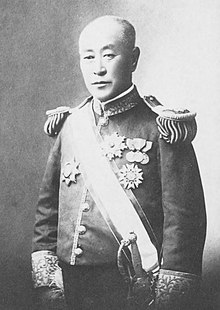
Have you ever heard of Inoue Masaru, who is called the “Father of Japan’s Railways? He was one of the Choshu five, who went to study abroad while it was still illegal to leave Japan. He was born on August 24th in 1843 at Hagi in Yamaguchi prefecture, in southern Japan. He was brought up as a samurai belonging to the Choshu clan who controlled that area. In 1863, however, he and four friends from Choshu clan sneaked into a vessel which went to the UK. He studied civil engineering and mining at University College London and came back to Japan in 1868. After he came back, he took a leadership in Japan’s railway planning and construction, and he was appointed the Director of the Railway Board in 1871. He thought railways should be under national control, and he worked for a creation of the Railway Nationalization Act. He died of an illness in London in 1910, during an official visit on behalf of the Ministry of Railways. Thanks to him, Japanese railway developed and made our life convenient. Without him, it would have been more difficult for Japan to develop in that time, and also we might not have a good train system today.

One of the most important things which he did was making the first railway in Japan. In 1872, the government decided to make a railway, and he was appointed the supervisor because he saw many techniques about it in London. He often went to the construction field and gave instructions by himself. In 1875, the first railway was opened between Shinbashi and Yokohama, which are famous places around Tokyo. The Meiji emperor rode on the rail and told him to expand the railway system throughout Japan, so he was inspired and made more efforts after that. To build up a railway between Kyoto and Otsu, which are located in middle parts of Japan, a tunnel construction was needed, but it was such a difficult work. In addition, it was said that it was impossible to build a tunnel by Japanese without foreign help, but he succeeded in making it only by Japanese people in 1883. In 1892, he finally finished making the Tokaido line between Tokyo and Kobe, located in the centre of Japan. There were no other people who had much knowledge about the railway except him, so he worked hard to expand the railways. In 1894, the railway between Ueno located in Tokyo and Aomori in the north of Japan was also opened.

Why did he work so hard for making the railway? In that time, transportation system in Japan wasn’t good, and walking was the main way for the transportation. There was a mikoshi which is a box carried by people, but only rich people used it. Also, only samurai officers used war-horses. For most people, there was no other useful transportation but walking, so he thought Japan needed the railway. Though horse carts and jinrikisha were developing, he thought they were not enough. He was hoping that the railway system would make life more convenient and also bring in benefits for the Japanese economy. The railway made it possible for people to travel all over Japan, and people exchanged their materials and information with other Japanese so that they could help each other more. That’s why he worked so hard for the railway system.

He resigned as the director in 1893, but he kept working for the railway. In that time, the railway was developing, but it relied on foreign techniques and materials. Thus, Japan needed to pay much money to foreign countries. Then he thought Japan needed the technique which was made and used by Japanese. He cooperated with some of his friends such as Mori and Iwasaki, who were rich and had good education, and they established a new company called “Train production firm company” in 1896. The company built plants in Osaka and got orders for making trains. Thanks to the demand of the railway caused by Russo-Japan War, the company got many orders and became a big company. Also, other companies were established after that, which improved Japanese railway techniques.

He died in London in 1910 while he was visiting there as studying railways. Through his life, he worked for Japanese railway system, and he improved Japanese transportation system. In 1914, his statue was made at Marunouchi station, which is a famous place in Tokyo, to admire his achievement. Without him, Japanese railway would not really have developed, and transportation system would have been inconvenient. Thanks to his great effort, Japan got a railway made in Japan, which brought large benefits to Japanese economy and helped Japan develop. Our life would be so different from now if he hadn’t gone to the UK, so we should thank him for his courage in that time.


References

Hidaka Olion, (2010). Father of the railway: Inoue Masaru ~persistence to Made in japan~. Retrieved from http://www13.ocn.ne.jp/~dawn/ on July 25, 2013

Toshikazu, K, (2012). The railway initiation history of Inoue Masaru. Retrieved from http://ktymtskz.my.coocan.jp/denki/inoue.htm on July 25, 2013