This project showcases student project work from Japan and the World, a modern Japanese history course offered at Kanda University of International Studies. It focuses on important themes and individuals from the Meiji (1868-1912) and Taisho (1912-26) periods, when Japan was beginning to open to the world after centuries of government-enforced isolation.

All submissions are researched, whether in English or Japanese, and references provided. Comments responding to and exploring ideas, suggesting connections or further reading, are most welcome. As entries are written by non-native English speakers, please refrain from non-constructive comments about language use.

Blog editor/ course designer: Caroline Hutchinson
Showing posts with label japanese. Show all posts

Friday, 1 August 2014

Keep up your English study motivations!!

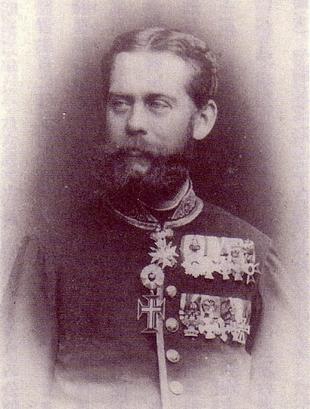
Alexander von Siebold
By Kosei Kubota

Alexander George Gustav von Siebold was a German who worked as an interpreter of British legation in Japan and a foreign advisor (Oyatoigaikokujin) of Japanese Meiji government. He was born in Leiden Netherland; his father worked in Netherland but consequently took banishment order, and moved to Japan with him.

When he was 14, he could not speak either Japanese or English well. However, he made an effort to learn English and mastered it within only one year. When he was 15, he became a student interpreter of British legation in Japan. Student interpreter is a system which trains interpreters who deal with Asian countries, introduced by British.

He also studied harder, and one year later he had become a student interpreter, passed the national administered exam and became a translator. As a translator, he dealt with three languages, Germany, English and Japanese. He was very trusted by influential people from some countries so he was involved in a lot of events such as the Namamugi incident, the negotiation of opening a port in Hyogo in the Shimonoseki War, and navigating Shomu Tokugawa to the Paris expo.

In 1870, he resigned as a British legation officer and became a foreign advisor (oyatoi-gaikokujin) of the Meiji government. He started to support growth of Japan. As a foreign advisor, he supported Japanese travelers life in Britain, requested Vienna to participate in the expo, and concluded the treaty of Commerce and Navigation between the UK and Japan (Nichi-Ei Tsusho Kokai Joyaku).

Discussions
In our group's discussion, we talked about how members felt about his life. My group members were amazed by his eager attitude for language studies and negotiation. Obviously, there were not enough materials because technologies were still not developed, so he had to study without convenient things. How did he study effectively under that situation? And what was important for his foreign language acquisition? One interesting opinion was taking interaction with native speakers. The immersion made him to take communication in Japanese many times. Perhaps, it supported his effective learning. And in other opinion, high motivation by him was also important; when he was youth, he learned Japanese as important issue to make his future. So he could maintain his motivation. These opinions were right on the mark.

My opinions
I have learned that Siebold studied harder and made an effort to do a lot of important things for building the current Japanese country. I’m not sure whether he liked Japan or not, but he had been living in Japan for over 50 years, so I guessed that may be not too bad for working place. Through the group discussion, I totally agreed with my group members. Although the environment given for him is more difficult than nowadays, He proved that he could master languages and get the job even in such situation. This fact really encouraged our studying motivations as foreign language learners. From my point of view, Japan is still not well-developed for living with people from foreign countries. He made some bases for language studies, so we might have to study harder and contribute to supporting foreign travelers instead of saying thanks to him.

References
The web page Wikipedia : http://en.wikipedia.org/wiki/Alexander_von_Siebold
Link image : http://pds.exblog.jp/pds/1/201305/27/48/b0181748_18331211.jpg

Thursday, 31 July 2014

Ernest Fenollosa

Ernest Fenellosa
By Fumiya

Life of my focus person
Ernest Fenollosa is famous as a student of Japanese art. He was born in the US in 1853 when the Black ships came to Japan. He studied philosophy at Harvard University. After graduation, he was interested in art and entered an art school. When he was 25 years old, he found a job offer with information of Tokyo University and he came to Japan in the same year. He taught economy and philosophy in Tokyo University. After came to Japan, he was really impressed by the beauty of Japanese art and he began to study it by collecting antiques and traveling to old temples. Later, he was shocked that Japanese didn’t respect Japanese art because they aimed at westernization. Then, he began to protect Japanese art. He taught the beauty of Japanese art to Japanese by giving lectures to them and researching antiques with Okakura Tenshin who contributed to Japanese art greatly. In addition, he tried to develop Japanese art by creating new style of art with Kanou Hougai, who was a great painter, and researching the present conditions of western art with Okakura Tenshin. In 1888, Fenellosa established Tokyo school of Fine Arts with Okakura Tenshin and became a vice-president. Later, he went back to the US and tried hard to introduce Japanese art there. Therefore, he contributed to reviving and developing Japanese art greatly.
Summary of discussion
I asked three discussion questions about Ernest Fenollosa to my group members. Firstly, I asked them “Why do you think Fenollosa decided to go to Japan?” Student A answered that she thought his relationship with his family was not so good or his parents were divorced. Student B answered that she thought Fenollosa was interested in Japanese art since he was a child, so he wanted to go to Japan. Student C answered that she thought Fenollosa liked Japanese culture and art, so he wanted to learn about them in Japan. Secondly, I asked “Why do you think Japanese traditional art was treated badly and a lot of temples and statues of Buddha were destroyed when Fenollosa came to Japan?” Student B answered that it was very surprising and she thought because Japan aimed at the westernization at that time. Student A answered that she thought it was because of Haibutsukishaku [the move to abolish Buddhism in Japan, especially during the Meiji period - Ed]. Student C answered that it was difficult, but she thought it was because Japanese liked western art and culture at that time. Finally, I asked “Why do you think Fenollosa loved Japanese art?” Student B answered that she thought because Japanese art was not colorful but simple such as an ink painting and Fenollosa was impressed by this feature of Japanese art. Student A answered that she thought because Japanese art was different from western art, so Japanese art was fresh for him and attracted him. Student C answered that she thought because Japan had many kinds of art and each art was very beautiful.
Reflection on person and project
Through this project, I could understand about Ernest Fenollosa. Also, I could understand that he really loved Japanese art and culture. He let Japanese turn their attention to Japanese art when Japan aimed at the westernization and he carried out various activities to revive and develop Japanese art actively. Therefore, Fenollosa contributed to Japanese art greatly. I thought he was a benefactor of Japanese art. Also, I thought we should respect him and Japanese art. Finally, through this project, I felt that learning the history was very interesting and useful because the history sometimes taught us what we should do.
References
Nihonn no onnzinn Fenollosa [A benefactor of Japan, Fenollosa] Retrieved from