This project showcases student project work from Japan and the World, a modern Japanese history course offered at Kanda University of International Studies. It focuses on important themes and individuals from the Meiji (1868-1912) and Taisho (1912-26) periods, when Japan was beginning to open to the world after centuries of government-enforced isolation.

All submissions are researched, whether in English or Japanese, and references provided. Comments responding to and exploring ideas, suggesting connections or further reading, are most welcome. As entries are written by non-native English speakers, please refrain from non-constructive comments about language use.

Blog editor/ course designer: Caroline Hutchinson
Showing posts with label romanization. Show all posts

Thursday, 29 January 2015

James Curtis Hepburn

James Curtis Hepburn
by Sayuri Hama

Introduction

Hepburn is famous for Romaji [romanization; a way to write Japanese in the Latin alphabet - Ed] in Japan, but do you really believe that Romaji was invented by Hepburn? In fact, it is not true. I’m going to write about that later.

Background

Hepburn was born in America. His father was a lawyer, and his mother believed in Christianity. Thanks to smart parents, he was good at studying. He entered a college at 16 years old. He majored in medical and learned the Bible, which made him be interested in Christianity. After graduation from the college, he married Kurara who was Christian. Hepburn spent most his life in other countries to propagate Christianity with his wife.

Life in China for 5 years

Hepburn and his wife moved to China in spite of his parents’ objections. In China, they had many difficulties. At first, they faced a handicap in language. What is worse, Kurara had a miscarriage and next baby died soon after the birth. In addition, Hepburn and Kurara suffered from Malaria. They had to go back to America for treatment. Then Hepburn started a medical office and succeeded in it. He got a good reputation; however, he decided to leave America again to Japan for propagation.

Life in Japan for 33 years

Hepburn and Kurara arrived at Kanagawa prefecture. It took about 6 months to come to Japan. What surprised Hepburn at first was Japanese appearance. Men had a sword and a topknot. According to his diary, Japanese people were full of curiosity about foreign culture because Japan was closed for a long time. He tried to propagate Christianity but there was a serious problem. Christianity was illegal at the time. He once gave up doing that and opened a medical office. He learned Japanese through the work. His hospital became the most famous one in Kanto area. He got reputation also in Japan, but he wasn't satisfied with that because his purpose was propagation of Christianity. 

He decided to study Japanese but there was no dictionary in Japan at the time so he started to make a dictionary. Hepburn started to prepare a dictionary. He mastered vocabularies, grammar, and idioms. But there were other problem. Japan didn't have the technology to print millions of words or make suitable paper. So Hepburn asked Chinese factory to do that. Finally he completed making dictionary 7 years after he came to Japan. He built a church and the members reached 200, so after all he achieved his goal to propagate Christianity.

Romaji

Japanese people think that Romaji was invented by Hepburn. Actually Romaji was made by Portuguese long before Hepburn used it for the first time in dictionary. He was just the person who put it into practice.


Reference

Anonymous, (n.d.). Kanagawa no ijin, nihon no ijin [A great man in Kanagawa and Japan]. Retrieved January 20, 2015 from http://www.hebon.sonanda.net/

James Curtis Hepburn

James Curtis Hepburn
By Ayako Hirose

When you use a computer, how do you type Japanese? Most of the people utilize combination of alphabets to show Japanese letters. The creator of this system, Hepburn Romanization, is James Curtis Hepburn. Hepburn contributed to Japanese development not only as a creator of the Romanization system, but also as a doctor, educator, missionary, and an editor of Japanese English dictionaries.

Hepburn was born in Pennsylvania in 1815, and he learned medical science and became a physician. On the other hand, as he aspired to mission, he moved to Japan as a medical missionary in 1859.

He opened a small clinic in Yokohama for free because he wanted to help Japanese people while Tokugawa shogunate had prevented him to open it. At first, Japanese people had guarded against foreigners, but his tender attitude toward Japanese neighbors and developed Western medical techniques was attractive, so the clinic became crowded. Overall, he treated more than 10,000 patients in Japan.

He taught his knowledge to Japanese students with his wife. As Japanese people started realizing the importance of foreign language and studies, the shogunate offered Hepburn to teach it, and sent nine students. He taught Western medical science, and his wife, who used to be a teacher in New York, covered English education. Later, he established Hebon-juku which is a precursor of Meiji Gakuin University. And another teacher at Hebon-juku founded Ferris Jogakuin. It means Hepburn was concerned with foundation of two famous schools in Japan.

In addition, he worked as a missionary by translating the Bible. It was hard task because Christianity was prohibited by the shogunate in those days. Hepburn and other missionaries worried how to diffuse doctrine of Christianity, and they decided to translate the bible. They started the work in 1872. At first, they referred to Chinese Bible, so Hepburn’s experience in China and Chinese knowledge was useful. They published some books from 1875 to 1880.

Hepburn spoke Japanese fluently, but other American people could not. Usually American and Japanese needed Chinese interpreter who understand both English and Japanese. Therefore, he published Japanese English dictionary to learn Japanese in 1867. His dictionary was the first Japanese English dictionary.

However, Hepburn spent difficult time because those two languages have totally different letters. Then, he created Hepburn Romanization. Thanks to this system, Japanese characters can be written in alphabet.


As Hepburn worked in many fields, he influenced Japan in some ways. So I asked group members what was the most remarkable thing by Hepburn. Each of them had different interests. Hepburn dealt with Japanese people for free. One member seemed to be impressed by his kindness. And one person is interested in translation, so she thought his translation work was great. Others thought that Hepburn was a great educator because he was related to two Universities. Through this discussion, I was surprised because I could listen to various answers. I personally think that Hepburn Romanization was his greatest job because we use the system even today, so I had guessed that most of people would also think so. Actually, they pointed out other things and no one answered that Romanization is the best. I learned that evaluation sometimes differs quite a lot depending on the person.


Before I searched Hepburn, I had only known that “Hebon created Hepburn Romanization”. I did not even know that Hebon is kind of his nickname, and his real name was Hepburn, and I also had never heard that he actually came to Japan as a missionary. It was surprising that one person mastered such broad areas of knowledge, and brought many results. Though he was a missionary, some of his achievements had no relation to Christianity. Through listening to other presentation, I knew that like Hepburn, many missionaries came to Japan and worked on medical treatment, education and other studies. The number of Christians did not increase so much in Japan; however, their efforts enriched Japanese country and all the people living in Japan.


References

“James Curtis Hepburn” Wikipedia, retrieved 2014, December 12 from http://en.wikipedia.org/wiki/James_Curtis_Hepburn

Mochiduki, Y. (1987). ヘボンの生涯と日本語. Tokyo: Toyo Insatsu Kabushikigaisya.

Takaya, M. (1961). ヘボン. Tokyo: Nihon Rekishi Gakkai.

James Curtis Hepburn

James Curtis Hepburn
By Misato Yabe

James Curtis Hepburn is the person who published the Japanese-English dictionary and created the Hepburn styled Romanization. At first, he came to Nagasaki with his wife in 1859, and soon moved to Kanagawa and opened his own clinic at Sokoji-temple. Although he was an ophthalmologist, he conducted many kinds of surgery like leg amputation . He also treated two victims of “Namamugi Incident” [in which a British merchant was killed by samurai - Ed].

He really loved Japan and he had a strong wish to have Japanese servants in order to get used to Japanese customs, although many foreigners tended to have Chinese servants at that time. In addition, he declared to the American consul that he would never treat Americans in Japan, and would take care only of Japanese. Moreover, he thought obsessively about Japanese grammar with his friend, Brown. Actually, they were able to speak Chinese; therefore they thought that Japanese would be easier for them because they are similar. However, they realized that these two languages are completely different and Japanese is so deep and interesting. While Hepburn was sleeping, if Brown found a new answer for Japanese grammar, ho would sometimes wake him up and they would talk about it overnight.

In 1867, he published Japanese-English dictionary using Hepburn styled Romanization. Also he established Meiji Gakuin which is now Meiji Gakuin University. In Meiji Gakuin, there was a Hepburn building, and on September 21st 1911, the Hepburn building was burned with uncertain cause at the same time on the same day as Hepburn died.

Discussion

For the first discussion question, we thought about that the difficult points of learning Japanese. My group members told that we have so many kinds and ranks of expressions using honorifics, like Sonkei-go (the honorific expression), Kenjou-go (the humble expression), and Teinei-go (the polite expression). They also mentioned the difficulty of distinguishing between using kanji (Chinese characters), Hiragana and Katakana. Personally, I thought that the use of Joshi (the postpositional particle) might be difficult in Japanese. However, I have heard that listening to Japanese is easier than learning other languages. It was the first time to think about Japanese as the target language, and it was really interesting to talk with my members from the other point of view.

Furthermore, for the second question, which was more difficult than the upper one, it required imagination skill, that is “How do you think of the relationship to Hepburn’s death and the fire of the Hepburn building?” At first, some members thought that the person who really respected Hepburn burned the Hepburn building because of their sadness at his death. However, after I told that, actually Hepburn was not in Japan when he died, so many members told that Hepburn came and burned the building as a ghost because of his great love for Japan.

Reflection

In conclusion, it took only 8 years to publish the Japanese-English dictionary after Hepburn arrived in Japan, which means it was only 8 years since he started studying Japanese to publish the Japanese-English dictionary. I was really shocked to know the fact because it was more than 10 years ago when I started learning English, but I am still not a good English speaker. I think that the reason why he was able to be a good Japanese speaker in a short time is that Hepburn had a strong wish to master the language and to be like real Japanese. Therefore, he finally became the person who is really famous in Japan, and also his achievement made Japanese people more familiar with foreign languages.


References

Mochiduki, Y. (1987) Hepburn’s life and Japanese. Tokyo: Shincyou-sensyo.

Monday, 4 August 2014

James Curtis Hepburn

James Curtis Hepburn
By Yuta Onodera

Life of Hepburn

"Anata wa kore wo yomemasuka?" Today, we always use this kind of typing in our daily lives, and this way of describing Japanese is understandable for both Japanese learners and non-Japanese learners. As for Japanese typing, this type of typing is always used to type Japanese words and sentences. However, who invented this useful and effective way of describing Japanese language? Some people might have heard his name: “James Curtis Hepburn”.

James Curtis Hepburn was born in 1815. After he earned a master’s degree, he became a physician. When he came to Japan as a medical missionary, he opened a clinic in Kanagawa. In addition to his clinic, he founded the Hepburn School. Also, he compiled a Japanese-English dictionary while he was in Japan. In the third edition, he adopted a new system of Romanization of Japanese language, which is widely known as “Hepburn Romanization”. However, how did he collect Japanese words and complete his dictionaries? Weren't there any difficulties collecting Japanese words and describing phonological information of Japanese?

In fact, Hepburn had knowledge of kanji because he had been in China for some years before coming to Japan, and it seemed that it was relatively easy for him to learn Japanese language because Chinese and Japanese have some common points between their languages. However, he mentioned that he had a lot of difficulties learning Japanese because that language was much different from Chinese. Thus, Hepburn collected Japanese words from Japanese people, classified those words, studied grammatical rules, idioms, etc. and finally he summed up over 20,000 entry words with Hepburn Romanization system.


Summary of Discussion

We discussed three points of Hepburn’s accomplishments:
  1. Why did he found Hepburn School? 
  2. What was the motivation for him to compile Japanese-English dictionary? and 
  3. What are the positive and negative points of Hepburn Romanization? 
For the first topic of discussion, ”Why did Hepburn found Hepburn School?”, I got some interesting responses and opinions. One of them was that Hepburn wanted not only to cure injured people in Japan, but also to give knowledge of the way to cure people. Also, some people stated that Hepburn founded the school since he wanted to collect Japanese words because the school made it easy to do that.

The second discussion was about “What was the motivation for him to compile Japanese-English dictionary”. One of the members in my group mentioned that he wanted to spread Japanese language to foreign countries because the person assumed that there were few Japanese-English dictionaries so it seemed difficult to learn Japanese things. Another opinion was that Hepburn compiled the dictionary for himself to learn Japanese. Since he had a lot of difficulties learning Japanese language, he studied Japanese hard. As a consequence, he accidentally completed the dictionary.

The last discussion topic was “What are the positive and negative points of Hepburn Romanization?” This topic was controversial. According to our discussion, there are some positive points of Hepburn Romanization, but interestingly more negative points are mentioned. One of the positive points is that Hepburn Romanization makes it easier for Japanese learners to learn Japanese language because they can learn its pronunciation by looking at Romanization. Furthermore, it also makes it easier for Japanese people to learn other languages that use Romanization because Japanese people who know this system can understand the pronunciation of their mother tongue, and they can adopt it when they learn different languages.

However, as I mentioned above, it seemed that there are more negative points of Hepburn Romanization. One of them is this system made Japanese people learn Romanization in addition to hiragana, katakana, and kanji. This made Japanese language very complicated. What I thought interesting was that this Hepburn Romanization would generate different sounds, depending on people who read. That is, if people whose mother tongue is English see the sound “/ch/”, they would pronounce it as a fricative sound as in China or Chin. However, if those whose mother tongue is Chinese see it, then they would pronounce it as an aspirate sound (strong /ch/). This phenomenon is caused by speakers’ native languages. Thus it seems impossible that Hepburn Romanization can adapt to all human languages.


Reflection on person and project

Through this project, I learned a number of things, about Hepburn, Japan at that time, the origin of Japanese-English dictionary, lessons that we can learn from Hepburn, and so forth. Before taking this class, I wasn't interested in history so much, honestly. However, once I started to study about Japanese history, I found that our current life is based on what our ancestors did in the past. The reason why people in Japan succeeded in developing Japan and Japan became one of the most developed countries came from the history of Japan. They learned everything including good and bad from the past, and they tried to follow good points, and tried to improve or never repeat bad things.

Talking about Hepburn, he gave massive knowledge to Japanese people. Not only did he give medical knowledge, but also the Japanese-English dictionary which enables us to study foreign languages easily than the past. Some surprising things are that these seemingly recent inventions or events happened 200 years ago. I stereotypically feel that the life at that time was not so stable to live comfortably, so people couldn't afford to spend much of their time studying. Hence I believe that those who contributed to Japan, such as Hepburn whom I researched, really contributed and that we have to appreciate their works. I’m sure that things in this world are continuing to be improved and made more sophisticated. Namely, we contemporary people have to inherit our ancestors’ works and make them more sophisticated. I believe that we live in more comfortable and wealthier world than the past era, so we can inherit and improve their works if there are some points that we can do. Furthermore, what we can learn from Hepburn is that it is more important to do anything for others without reward. Hepburn treated people for free, even if he did some surgery, he didn't get any money from people. Meiji Gakuin University, which is established by Hepburn, had a lesson “Do for others”. We also should follow his lesson.

The project this time was composed of a short presentation and discussion. Because I have to spare time for discussion, I didn't make long presentation, but rather, I made three discussion questions so that the audience or participants can join the discussion and talk a lot. Since I didn't prepare for long presentation, I needed less time for practicing presentation than last time, but instead, I used more time for gathering information about the person for whom I made presentation so that I can answer any questions or doubts that the listeners had. During my presentation, I thought that I need more slides of my presentation to tell more details so that audience can get knowledge of him and join the discussion more smoothly. In contrast to my thought, every member in my group joined the discussion very actively. Sometimes after one member in my group told her opinion, one of other members asked her about what she said. This way of discussion was good and valuable. Before discussion, I was worried that this discussion would be one-way communication, like I asked questions, one member answered, and then finished. However, this two-way communication made the discussion more controversial. I have to thank them for making the discussion like that.

There are some good points and bad points in my project. One of the good points was I prepared for questions that audience would have. Although they didn't have questions, I used that knowledge and started to talk in order to not make quiet or silent atmosphere during discussion. I heard that this utterance gave them additional knowledge of the person, which made them easy to join the discussion. This is a good point but also it implies that this is a bad point. “The additional information made it easy for them to join the discussion” meant that they didn't get enough information from my presentation, I should have included more information in my presentation. Also, some people feel that my English was fluent, while others feel too fast. Presentation is not for me, but for listeners, so I should have spoken a little bit slower so that every listener of my presentation could understand what I said. Through this project, I got much knowledge of my focus person, confidence in presentation skills, delivering discussion, and so on. All of these achievements are thanks to my teacher Caroline and my peers. I would like to say “thank you” to them. Thank you.
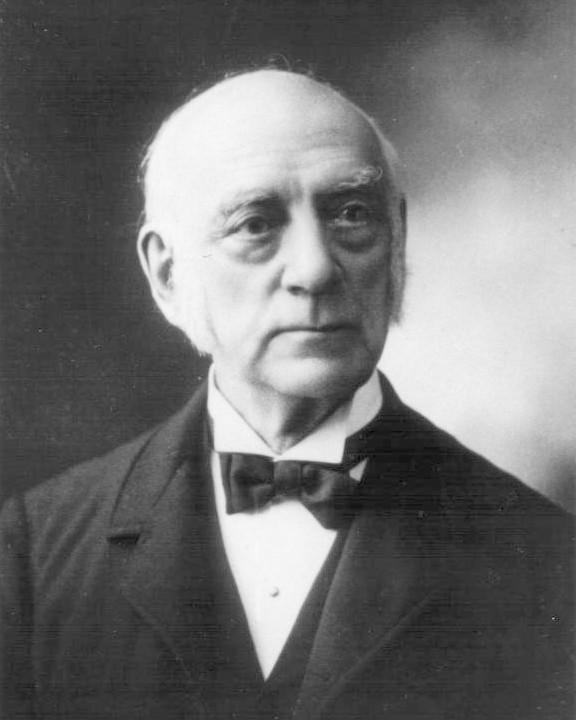

Reference

Meiji Gakuin University. (n.d.). James Curtis Hepburn. Retrieved from
http://www.mg150th-whoswho.jp/atc01.html

Meiji Gakuin University. (2014). The Birthplace of James Curtis Hepburn. Retrieved from
http://www.meijigakuin.ac.jp/guide/history_en.html

Michio, T. (n.d.). James Curtis Hepburn. Retrieved from
http://www.bdcconline.net/en/stories/h/hepburn-james-curtis.php

Friday, 1 August 2014

Life of James Curtis Hepburn

James Curtis Hepburn
By Haruka Matsuzaki

“Do for others what you want them to do for you”. James Curtis Hepburn greatly contributed to Japan in terms of medicine and education in the Meiji period (1868-1912) under this Christian belief. James Curtis Hepburn was a physician, translator, educator and Christian born in Milton, Pennsylvania in the U.S. in 1815. He went to a medical school and became a physician. After that he went to China as a Christian missionary and stayed there for five years. Then he came back to the U.S. and opened a medical practice in New York City. Even though he opened the clinic in New York City, he had been wishing to go to Japan as a Christian missionary for a long time. So, in 1859 he decided to go to Japan as a medical missionary and opened a clinic in Yokohama.

He made three major contributions: providing free medical treatment for Japanese people, creating the first Japanese-English dictionary (the invention of the Hepburn Romanization system), and the translation of the bible into Japanese. He provided free medical treatments for 9 years and saved many people’s lives. It is said that he provided treatments for 3,500 people in half a year. Therefore, he was praised as a person who established the foundation of contemporary medicine in Yokohama. While he was working on as a doctor, he also had wanted to contribute to spreading Christianity, therefore, he decided to translate the bible from English into Japanese. Before he started translating the bible, he needed to make a Japanese-English dictionary, so he decided to make the dictionary first. In 1864 his first dictionary was published, and later in 1880, he completed translating the bible (the Old Testament). In the dictionary's third edition, Hepburn adopted a new system for Romanization of the Japanese language (Rōmaji). This system is widely known as the Hepburn Romanization because thanks to Hepburn’s dictionary, it became popular.

As soon as he started providing free treatments in Yokohama, he started providing education too. The school was called “Bara-juku” which later developed into “Meiji Gakuin University”. The university has been passing down a Christian belief, whose principles Hepburn had put into practice, “Do for others what you want them to do for you”, as its university mission.

Summary of discussion

Based on the presentation of Hepburn’s life, we discussed two questions. The first discussion question was “why do you think he dedicated himself so much to helping people in Japan and to translating the bible from English into Japanese?” All members concluded that it is because of his Christian belief. They concluded that he especially valued the belief “do for others what you want them to do for you” because he saved a lot of Japanese people’s lives for free. Without this belief, he would not have done those things. One interesting answer is that he might have loved Japan and Japanese people, so that is why he stayed in Japan for 33 years to contribute to Japanese people in medicine, education and so forth. It is true that he loved Japan because he mentioned that he never forgot the years he spent in Japan in his last speech in Meiji Gakuin University.

The second discussion question was “Hepburn came to Japan leaving his father and son, who was only 14 years old, in order to spread Christianity and help people in Japan. If you were Hepburn, would you go to Japan or overseas to spread Christianity (or your belief) even though you leave your family back in your country?” All group members concluded they would not leave their family behind because for them, family is more important than their belief. In addition, some group members answered that they would bring their family overseas because they would like to be with their family. One group member mentioned that it is hard to believe for her that Hepburn left their family behind the U.S. and came to Japan as a missionary, because she said she does not have any strong belief like him. It would be great if I could ask the same question to those who have strong belief in their religion.

Reflection on James Curtis Hepburn and project

Before I worked on this project, I had not known Hepburn, however, after the project, now I am very grateful for what he has done for Japan. I was impressed with his Christian belief “do for others what you want them to do for you”, and he actually put this belief into practice by providing free medical services, creating a Japanese-English dictionary and contributing to Japanese education. At the same time, however, it was difficult for me, as a non-Christian or non-religious person, to understand what drove him so strongly to help people overseas even though he sacrificed his family. The project was a great opportunity for me to learn about non-Japanese people who came to Japan and contributed to Japanese development in Meiji and Taisho period. Like me, many Japanese people do not know about those foreigners, including Hepburn. However, without their contributions, Japan would not have developed this much. Therefore, I am really grateful to them.


References

Meiji Gakuin Daigaku no rekishi to ima (n.d.) [The history and presence of Meiji Gakuen University] Retrieved from http://www.meijigakuin.ac.jp/guide/history.html

Meiji Gakuin Rekishi Shiryokan (n.d.) [Meiji Gakuin Archives of History] Retrieved from http://archive.today/1s4D0