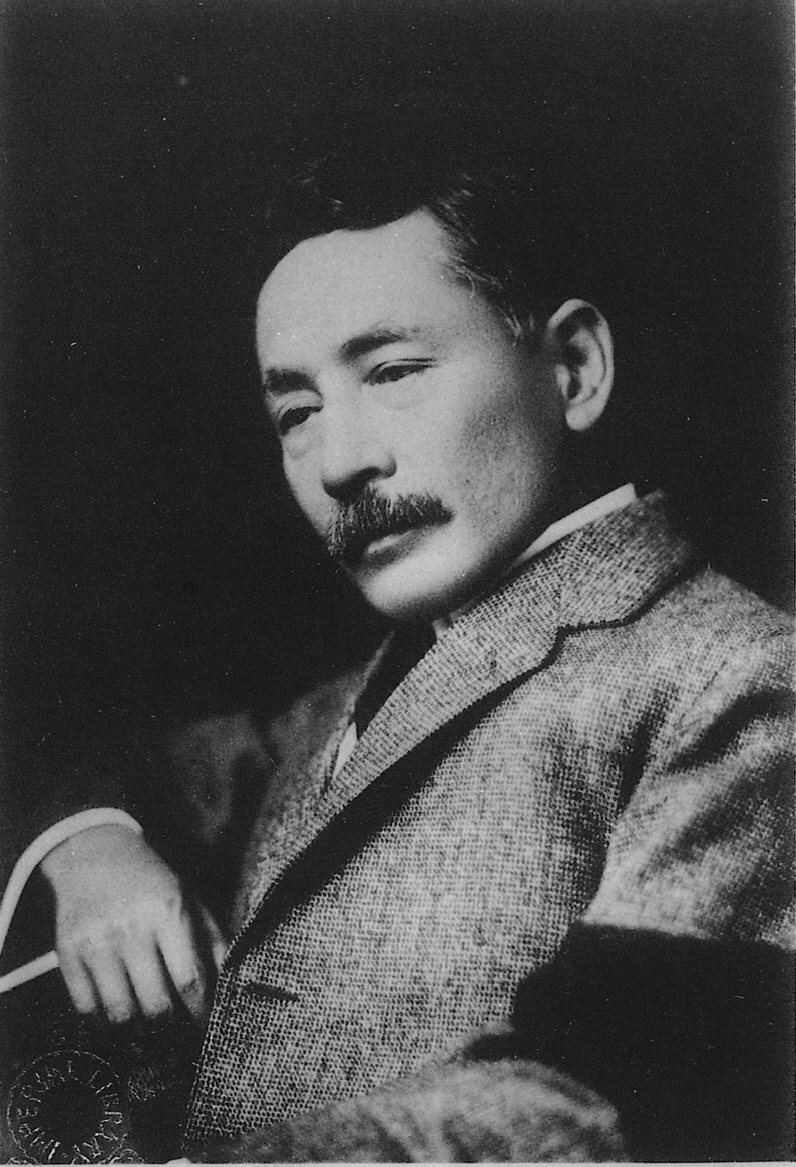
This project showcases student project work from Japan and the World, a modern Japanese history course offered at Kanda University of International Studies. It focuses on important themes and individuals from the Meiji (1868-1912) and Taisho (1912-26) periods, when Japan was beginning to open to the world after centuries of government-enforced isolation.

All submissions are researched, whether in English or Japanese, and references provided. Comments responding to and exploring ideas, suggesting connections or further reading, are most welcome. As entries are written by non-native English speakers, please refrain from non-constructive comments about language use.

Blog editor/ course designer: Caroline Hutchinson
Showing posts with label natsume soseki. Show all posts

Sunday, 3 August 2014

James Murdoch

James Murdoch
By Saki Kurihara

Presentation

James Murdoch was born in Scotland, Aberdeen city in 1856. He grew up in a poor general store’s family. He studied a lot and he entered Aberdeen University. After graduation, he went to Oxford University, University of Göttingen, University of Paris and the college of Wooster. When he was 24 years old, he took a post as Greek professor at Aberdeen University at this young age. In 1882 he got offer from Grammar school in Australia and then he seized the chance and went to Australia.

He became aware of the concept of socialism while staying in Australia. Eventually, he quit his job and he threw himself into the world of journalism.

At that time in Australia, left-wing workers insisted to wash out the Chinese immigrants. He tried to find out what is happening to the Chinese immigrants so he got on a ship as a low-grade passenger with the immigrants.

“From Australia and Japan” is his book which was written based on his experience in the ship. In the book, he found out that left-wing Australian workers treated Chinese immigrants badly. He wrote about their evildoing and grief of the Chinese.

After finishing investigative action, he made a brief visit to Japan to meet his friend. However during his trip to Japan he was absolutely charmed by Japanese people, culture and atmosphere so he decided to be an English teacher in Japan.

In 1889 he taught at Tokyo Daiichi Koutou Chugakou (now Tokyo University) and he met Soseki Natsume there. Soseki was struck by James Murdoch and he wrote book about him. In this book, Soseki said he sometimes visited Murdoch’s home so it seems that they were in a good relationship.

One day, Murdoch suddenly handed his resignation because he heard that his friend planned to create new ideal communism country in Paraguay. He got there immediately and helped his friend to realize the new country but it failed. He came back to England with a sore heart.

At that time, Japanese people were engaged in creating modernized country with Westerners’ cynical smile but they endured Westerners and made efforts. Murdoch heard that and he started studying about Japan to find a new way how to make a country.

In 1894 he visited Japan and worked as a teacher again. In 1904 he got married to Japanese woman, Takeko, and moved to Kagoshima prefecture.

He concentrated on studying about Japan and finally, he completed writing three books, “A History of Japan”. These books are on the subject of Japanese history from 1543 (When the Lusitanian came to Japan with guns) to 1868 (End of the Tokugawa Shogunate).

Moreover, he wrote many books about Japan in his life and he introduced Japan abroad. For instance, “47 Ronin” is one of the famous books introducing Japanese Bushi [warriors, or samurai - Ed]. The book’s sources were provided by Shigeno Yasutsugu. He is the first Japanese historian who analyzed the incident. In the book, James Murdoch analyzes the Tokugawa society.

His books are read by many foreign people even now. Probably, there are academic theses analyzing Tokugawa society using his books.

In 1917 he moved to Sydney and promoted exchanges between Japan and Australia. He died in Australia in 1921, planning a trip to Kagoshima..


Discussion

①If you were James Murdoch, how would you promote exchanges between Japan and Australia or other countries?

One student said that they would try to spread European information in Japan or take pictures about Japan. Another student said “When I go back to my country, I would bring something Japanese and introduce Japanese culture or become Japanese teacher”.

②If you were Murdoch, what subject could you teach for foreign students in other country?

Many students said they could teach English.


Reflection

Throughout Caroline’s class, I realized that I don’t know foreign people who contributed to Japan a lot.

In this presentation, I picked James Murdoch and researched about his life and achievement. He devoted most of his life to introducing Japan and promoting exchanges between Japan and overseas. Thanks to him and his books, Japan was known by many foreign people and they thought positively about Japan at that time. Even now, his books are read by many people so I think he is still an influence on many people all over the world.

He played a significant role and I think we should study about foreign people who contributed to Japan a lot like James Murdoch.


References

Blog “Seisouan”
http://sea.ap.teacup.com/seiasouan/31.html

James Murdoch
http://www.dhs.kyutech.ac.jp/~ruxton/James_Murdoch.htm

The 47 Rônin are Introduced to the World
http://www.columbia.edu/~hds2/chushinguranew/retelling/Murdoch.htm

Soseki Natsume “Murdoch’s Japanese History”
http://www.aozora.gr.jp/cards/000148/files/2375_13562.html

James Murdoch

James Murdoch
By Shiori Haba

Do you know that Natsume Soseki, considered Japan's greatest modern writer, studied English? Yes, he learned English at university. Who was the teacher? The answer of this attractive question was in Australia. His name is James Murdoch.

In 1986, James Murdoch was born in Stonehaven in Scotland. He went to Aberdeen University to study. In 1881, he moved to Australia and lived here from this time to 1889. When he lived in Australia, he became a journalist and wrote about the class of Australian laborers. In 1889, he was invited to Japan and began to teach English and European history in high school. He married Okada Takeko when he taught in a commercial high school (now Hitotsubashi University). In 1917, he went back to Australia and he became an adviser of policy to Japan. Then he could visit Japan many times.

Murdoch had several faces. One was as a teacher and another face was as a journalist. He was also an adviser of policy to Japan. When he came to Japan, he taught at high school and one of his students was Natsume Soseki. At same time, he published some books. One of his books was “Ayame-san” which was the romance story. He also published books about history of Europe, Australia and Japan, but his way of writing was sometimes not good for people to read because his style of writing was unpleasant and sometimes there were strange comical parts. In addition, he became an adviser of policy to Japan, so he could come to Japan every year to get the information about Japanese people and how foreign policy was changed. Therefore, he was a mediator between Australia and Japan.


We had the discussion and I could get some interesting opinions. We talked about two topics. First one was “If you would work for foreign policy, how would you like to help Japan become close friends with the foreign countries?” There were two main opinions. First of all, student A and student B wanted to try to understand foreign culture and introduce Japanese culture for foreign people. In addition, they wanted to learn not only foreign culture but also Japanese culture to introduce about it. Secondly, student C wanted to try to have Japanese people and foreign people get to know each other. For example, they wanted to organize some events and give the chance to exchange their cultures and get to know each other more than before. I think all ideas are fantastic for making friends with foreign countries. The most interesting point is that they want to learn Japanese culture. I agree with this because in order to understand culture of foreign countries, we have to know our culture more.

The second topic was that “If you could show off Japanese strong points for foreign countries, which point would you like to introduce?” There were three opinions. The first one was that they want to introduce about Japanese traditional and modern culture such as temples in Kyoto and high technology in Tokyo. Secondly, student B wanted to show Japanese characteristics such as being kind to other people. The last one was about four seasons. Japan has spring, summer, autumn and winter, so it is tasteful. I like these opinions because they look at the good points and they are pride of Japanese culture and characteristic. I think it is important to know and find good points our country to know other countries. Therefore, we need to know ourselves more than before if we would like to understand foreign countries.


Through this project, I could learn the connection between Japan and foreign countries especially Australia by researching about James Murdoch. We learned about some travelers to Japan in Meiji and Taisho period, but I could learn and understand Japan though these foreign people. I think that researching foreign people who are related to Japan and looking at Japan through their eyes is a better way to know more about Japan. We thought about this in the discussion and I got various opinions. I would like to consider these opinions when I research the history of Japan and foreign countries. I’m interested in the history of the connection between Japan and foreign countries, so I would like to continue to learn it.


References

James Murdoch (2014) Wikipedia Retrieved July 3, 2014 from http://en.wikipedia.org/wiki/James_Murdoch_(Scottish_journalist)

Australian Dictionary of Biography Murdoch, James (1986) D.C.S Sissons Retrieved July 3, 2014 from http://adb.anu.edu.au/biography/murdoch-james-7690

我輩は日豪パイオニアある (2010) 考えRoo Retrieved July 4, 2014 from
http://adb.anu.edu.au/biography/murdoch-james-7690

Friday, 1 August 2014

Raphael Von Koeber

Raphael von Koeber
By Misato Mochizuki

Nowadays, you can learn philosophy, aesthetic and languages like Latin and Greek if you want. However, do you know the person who brought these subjects from overseas and taught them to Japanese for the first time? The person who did the important work for Japan is Raphael Von Koeber.

Raphael Von Koeber was born in Russia in 1848. Although he graduated music school in Moscow, he gave up on being a pianist because he was too shy to play the piano in front of many people. He began to study philosophy in Germany in 1872 and got doctorate in 1878. When he was 43 years old, his friend recommended he go to Japan. He followed the offer. He came to Japan in 1891, and began to teach philosophy, aesthetics and languages at Tokyo Imperial University.

He met many students who became famous in Japan later. For example, Natsume Soseki and Watsuji Tetsuro respected Mr. Koeber. Natsume said “if you ask students in Tokyo Imperial University who is the best teacher here, 90% of students would answer Mr. Koeber.” He taught hard for 21 years. He decided to go back to Russia after he quit his job. Unfortunately, Japanese-Russo war happened at that time, so he could not go back to his home country. He passed away in 1923 in Kanagawa, unable to return.


In my group discussion, I asked three questions to my members. First, I asked them “what do you think about his background?” Student A said that he could not choose the thing which he should persuade. He was very good at playing the piano, but he was a philosopher. Moreover, he could teach aesthetic and languages. He had good abilities in studies so he could do many things in his life.” On the other hand, student B had completely different opinion from other perspective. She said that he could use wide range of knowledge for studying philosophy. She also mentioned his musical side. She said that his musical abilities and knowledge grew his thinking. She meant that thanks to his knowledge, he could think of things from many perspectives so he could be a philosopher. From these two opinions, I can say he was a curious person. In addition, his wide range knowledge led him to be a philosopher. His life seemed to be little strange at first glance, but all parts of his life were important for him.

Second, I asked “what do you think about why he did not speak Japanese even though he lived Japan for over 30 years?” Student C said that he might feel no interest in Japan. She meant that although he was a good teacher, he thought West was better than Japan. This is really interesting opinion because I did not think this way. Actually, he did not travel around Japan so this opinion was good point. He might think Japan was not developed compared to West so he did not have interest in Japanese culture.

Third, I asked “if you were a student of Tokyo Imperial University at that time, would you want to take his classes?” Student D said that he wanted to take his philosophy class because it was rare Japanese could learn philosophy in detail. On the other hand, student E said she wants to take his aesthetics class because this was the first time to bring it to Japan. She thought it must have been interesting for Japanese students. From these opinions, my members thought he was a good teacher and they had curiosity about his classes.

Probably, they were influenced by Soseki’s words. The famous person in Japan said he was the best teacher so we were very interested in his classes and teaching. In my opinion, I would really want to take his lesson if I were a student at that time. Of course, I cannot understand German, but I am interested in what he taught and how to teach. My questions was too unclear and broad, especially question 1. Moreover, my questions did not relate to Koeber’s important points, especially question 2. I think I had to prepare and think more about questions. If I could do so, my members could more easily discuss and know what his important points were. 


From this project, I thought it was difficult to research foreign people who came to Japan in Meiji or Taisho period. There was little information, especially my focus person. Probably, Japanese did not record that what foreign people did and how people felt about them compared to famous Japanese people who went to Western. Moreover, Japanese could write about their experience in West after they came back, but foreigners did not do after they came to Japan like Japanese. Therefore, there was little information about them. However, it was really interesting to learn about foreigners at that time. They were very important for today’s Japan because they brought a lot of knowledge, thinking and technology. I understand they gave huge impact to Japanese even though the numbers of foreigners who came to Japan at that time were few. Thanks to their work, Japan could develop.

Speaking of Raphael Von Koeber, his life was different from others. Normally, famous people who we know very well do not change their job or thought incredibly like Koeber. However, he is attractive because of the differences. He learned music and playing the piano in his early life but he became a philosopher. Moreover, he had a lot of knowledge of many subjects. I think every experience and all studies in our life make us wise. He is not famous in Japan but many famous Japanese were influenced by him. Therefore, I believe that his spirit and lesson are living on in some Japanese.


References

Ito.M. (2007, August 27). Kyouikusya tositeno Raphael Von Koeber [Raphael von Koeber as an educator]
http://ci.nii.ac.jp/els/110006458832.pdf?id=ART0008475671&type=pdf&lang=en&host=cinii&order_no=&ppv_type=0&lang_sw=&no=1406098984&cp=

Kadokura,I.(1997, October 7). Koeber sensei to sono zidai [Mr.Koeber and the period he lived]
http://ci.nii.ac.jp/els/110004872518.pdf?id=ART0008058546&type=pdf&lang=en&host=cinii&order_no=&ppv_type=0&lang_sw=&no=1406098516&cp=

Wikipedia. Raphael Von Koeber
http://en.wikipedia.org/wiki/Raphael_von_Koeber


Tuesday, 4 February 2014

Natsume Soseki

Natsume Soseki
By Seina Suzuki

Soseki was the sixth child and unwanted child by his family, because he was born to his mother late in her life. His mother was 40 years old and father was 53 years old. In 1868, he was sent to childless couple named Shiobara Masanosuke and his wife. However they divorced, therefore Soseki returned to his real family when he was 9 years old. His family welcomed him, except for his father. He didn’t have good relationship with his father. His mother died when he was 14 years old.

He attended the First Tokyo Middle school (now Hibiya High School) and while studying there, he became enamored with Chinese literature and he dreamed of becoming a writer. When he told his old brother about his dream, his family strongly disagreed. In 1884, he entered Tokyo Imperial University to become an architect. While at university, he study Chinese classics and also started to learn English.

In 1887, he met Masaoka Shiki and Soseki was affected by him. Soseki started singing his poems. He entered English Literature department in 1890. In 1895, he began teaching at Matsuyama Middle School and he also published haiku and Chinese poetry in that time.

In 1900, he was sent to study in Great Britain as “Japan’s first Japanese English literary scholar” by the Japanese government. However he didn’t get his scholarship by government. He studied instead at University College London. Before he arrived in London, it took 2 months to get there. He visited many museums in London. He studied a lot of English and he came to have a fundamental question, “What is Literature?” He wrote “Theory of Literature.” He had to go back to Japan before he could accomplish his ambitions. He didn’t enjoy his life in London however he learned some things and wrote “Theory of Literature”.

Soseki’s literary career started in 1903. He published his haiku in some magazines. He won public admiration when he published “I Am a Cat”. His first major work was that novel. “I am a Cat” was written from the viewpoint of a cat and Soseki also a cat. The owner of the pet Mr. Kushami is a self-ironic portrait of the writer. He succeeded and published many novels like Botchan, Tower of London in 1905, and Kusamakura in 1906. His post when he wrote at the university got a position with Asahi Shimbun and he began writing full time. In that time, Naturalist literature was popular; however he was part of Yoyu-function.

In 1907, he decided to resign from his teaching job and entered a newspaper company The Asahi Shimbun as a novelist. He wrote a lot of stories in newspaper. His novels were full of humor at the first, but later changed to focus on depth of human psychology, isolation and egoism, and analyzed the contradictions in Japanese society.

He died of stomach ulcer on December 9th 1916. He was writing “Light and Darkness”, however he didn’t finish writing about it. His novels are still widely read and his major works of fiction have been translated into English.


Reference list

-Natsume Soseki, the greatest Novelist in Modern Japan
http://www.ucl.ac.uk/library/exhibitions/soseki-pamphlet.pdf#search='natsume+soseki'

-Wikipedia Natsume Soseki

-Natsume Soseki
http://www.kirjasto.sci.fi/natsume.htm


Natsume Soseki

Natsume Soseki
By Mihiro Suzuki

If asked "Do you know Natsume Soseki?", every Japanese person would say yes. Soseki was great author at Meiji period, so his works appear in Japanese text books. In addition, Soseki was symbol of Japanese 1,000yen note until 2014, so most Japanese people know him. However, how many people know his background and his studying abroad? This paper will show 3 points: studying abroad, his childhood, and his thinking.

How many people know that Soseki had been abroad to London for studying? He went to London to study when he was 32 years old. However, this trip was not suitable for Soseki, because his character is very sensitive. When he heard that he was to go abroad, he was already married and had a child, and he was teaching at school in Kumamoto. Therefore he hesitated to go aboard. In addition, at that time the Japanese Ministry of Education said that this purpose of studying abroad is research of English, but Soseki’s interest was English literature, so he was not interested in going to London. However, the Ministry of Education said that you are able to grasp more widely if you take this trip, so Soseki decided to go abroad and study. However, his studying abroad was not successful and something unusual. He suffered from neurosis, paranoia, and weak digestion. This is one of Soseki’s stories: he had such deep paranoia. His friend recognized his condition was not good. One day his landlady said to Soseki “You should go on bicycle trip to relax”, but Soseki misunderstood her as wanting to give him pain, so land lady sent to letter to Japan saying “Soseki has gone crazy”.

This was not the first time he experienced a persecution complex. The cause of persecution complex was his childhood, because when he was born, his mother was 41, so his mother felt really sorry and could not bring up him [Editor's note: he was the sixth child]. Therefore Soseki was fostered out very poor family. One day, Soseki’s sister found him in the trash, so she took him back in, but his real father was not welcoming. When he was 10 years old, he was fostered out to another family. This family’s father always gave him whatever he wanted. However, Soseki thought it is not interesting because he cannot see his father always do coaxing. Finally his father cheated, so Soseki was returned to his real family, but also this time, his real father did not welcome Soseki. Therefore, Soseki did not open mind to his real father until his father died. He was starving for love.

However, if he had not experienced, he would not have completed his principles. After he returned to Japan, he lectured at university. At that time he said that “I became stronger, because I got the word; it is “EGOTISM”.” This word was understood by everyone to mean that I am OK, I only feel OK. However, Soseki said this egotism meant to respect other people and also respect oneself, and love my freedom and also respect other people’s freedom. He did not like London, However he learned about freedom of western culture and individualism. Soseki said that he learned that no matter how many times people say this work is wonderful, unless I think it is good, it is not good in my opinion.

After such painful experiences, finally everything is his treasure and his foundation of his thinking. He was not interested in going to London, but he learned western people's thinking, for example egotism. This thinking did not exist in Japan. Therefore, Soseki got strong impression from this. Finally, his studying abroad was successful.


References

夏目漱石 - NPO法人 国際留学生協会/向学新聞 http://www.ifsa.jp/index.php?kiji-sekai-natume.htm (2013/1/26)

Natsume Soseki

Natsume Soseki
By Haruka Takenawa

I would like to present Natsume Soseki’s growth, experience and the effect on his character, and his contribution to society at that time and this time. The reason why I chose him is I was interested in his literature when I was junior high school student. I would like to know his personal side. I think his personal background and experience must have influenced his works, and have given a lot of ideas to his works. That is why I chose him.

Firstly, I will mention three main points about Soseki’s growth: his family, study in Japan, and study in Britain.

Soseki was born in 1867. At that time, Japan was full of upheavals. The Meiji Restoration [Editor’s note: defeat of the Shogunate and restoration of rule by the Emperor] had happened, and Sakamoto Ryouma and Nakaoka Tarou had been killed by Bakufu [the ruling Shogunate]. His father was a village head, so Soseki’s parents’ home was rich. His mother had many children. He had four brothers and three sisters. However, Soseki was not a wanted child. His parents’ treatment of him was terrible. His parents had never treated him as their child. Soseki was born in rich family, but not an amiable family. He was sent to a merchant family by his father as soon as his birth. Unfortunately, his adoptive father and his father had a trouble, so he went back to his house where he was born. The trouble between them continued until Soseki entered ASAHI press when he was 40 years old. That experience, and his domestic environment, gave him the ideas for “Michikusa”.

He acquired culture at ten different schools and Universities. He changed his learning place many times. He mainly learned English literature, because he was really interested in English. When he entered Nishyougakushya University, he learned ethics, the western sense of beauty, and Edo’s sensitivity. He had an outstanding brain, so he was the head of his class in all subjects especially English. He became an honor student of Tokyo University. As a result of his outstanding work, he got job from his professor to translate “Houjyouki” (Kamakura era masterpiece). He met Masaoka Shiki at Tokyo University, and they became best friends and haiku companions.

Governor let Soseki to study in Britain. Soseki was inspired by European thoughts, education, and their way of living. Also he could concentrate on his study of English literature. “MY INDIVIDUALISM” was inspired by their ideas of “Freedom”. British freedom meant one had to have the responsibility to be free. However, Japanese freedom was totally different. Through his studying in British, he found that an ideal English teacher is a person who has studied overseas then mastered English as a communication tool. Furthermore, he got many ideas about educational style.

Secondly, I will mention his experiences and the essential points to build up his character. I will focus on the literature, his friends, and illness.

He loved not only writing but also reading. He is famous for loving foreigner’s literature. When he went abroad to Britain, he read Jane Austen’s literature with pleasure. It is not an exaggeration to say that his literature was influenced by her works.

He had a lot of precious friends. When he was 22 years old he met Masaoka Shiki at Tokyo University. Soseki was impressed by Masaoka’s haiku and became his haiku companion. They improved each other so that Masaoka is necessary for Soseki’s works and Masaoka was too. Thanks to Shiki’s friend Takahama kyoshi (literature companion), Soseki became a full time writer. Soseki had neurasthenia (a nervous breakdown) so Kyoshi believed that if Soseki focused on his works, he would be able to forget his uneasiness. He had not only literature companions; he also had friends for boat race, and gymnastics. He was really interested in boat race and good at gymnastics. He had good relationships with them.

Soseki had really poor health. He had serious illnesses more than fifteen times. He suffered from illness from only three years old to when he died. His one-year-old fifth daughter died when he was forty-four years old. Her cause of death was uncertain, because of that, Soseki decided to ask his doctor to examine his body by dissection after his death.

Lastly, I will mention his contribution to Japanese society at that time and this time, focusing on his works, his educational style, and his famous speech at Gakushuuin University.

He produced about 37 masterpieces in his short life. His works give his reader great impact even now. “KOKORO” is really meaningful novel because depending on the age, each generation feel differently. That is why it is difficult to understand his works. Its psychological description lets reader consider deeply. The time background is of course different from these days, however the characteristics are related to us. ASAHI press took a survey to ask audience which writer is the best writer in Japan of the past thousand years. The most popular writer was Natsume Soseki.

Soseki taught mainly English at about six different Universities, junior and high schools such as Meiji, Tokyo, and Waseda University. Soseki carefully considered not only his teaching style but also how to build up students’ character. His teaching style was incredible, because he had already found that to unite grammar and communication is the best way to learn English. That idea had just started in 2013. I was so surprised to know that. His educational style was very practical, because he thought English was a tool to communicate, not for study.

“MY INDIVIDUALISM” was a speech given by Soseki at Gakushuuin University. When I read it, I was so impressed, because he noticed that Japanese society’s fault even though it was 1914. His quote must have influenced many people even now. He told the students three main topics. Firstly, “If you want to be free, you have to accept other’s freedom.” Secondly, “If you want to use your right, you have to have its duty.” Lastly, “If you want to use your power of money, you have to think about its responsibility.” After he left such meaningful speech, he passed away when he was 49 years old.

In conclusion, I have mentioned Soseki’s growth, experiences, and contribution. I noticed that he had a lot of setbacks. Through his difficulties, he made lots of outstanding and meaningful works. I think his setbacks are his works’ essential items. He had to have serious illness. However, the motivation to produce his works was his limited life I think. In learning about his background, Soseki taught me fortitude. Even we have difficulties, we should overcome our difficulties and should not give up.


References

Kimura. (1998). Natsume Soseki’s history. Retrieved May 5, 1998, from Biglobe web site: http://www2a.biglobe.ne.jp/~kimura/senpu.html

Koki, K. (2000). Natsume Soseki as English teacher. Japan: Shintyosya Institution Press.

Mizuho, I. (2004). Soseki in London. Japan: Seibundou Institution Press.

Soseki, N. (1978). MY INDIVISUARISUM. Japan: Kodansha Institution Press.

Movement for women’s right in Taisho and Meiji era and appearance of ladies who have independent identity like “Moga”

Hiratsuka Raicho
By Anonymous

Japanese women’s lives in Meiji era were not really as comfortable as nowadays. There was a thought of domination of men over women, like women did not have right to vote, it was thought that women should be “Good wife, good mother”, and they were told that they should not cut their hair short. Beautiful ladies often could not graduate high school because they had to marry someone.

In Taisho era, there were remarkable movements for women’s liberation which were started by so-called “New Women”, and one of these was Hiratsuka Raicho. “New women” is about ladies who had an independent identity and tried to change the traditional thought of sexual role. Because Raicho grew up in a modern-thinking family, she seemed to have quite forward-thinking kind of thoughts since she was an elementary school student. However, her father turned a Europe family style into traditional Japanese one, and made her go a traditional nationalist high school, so from then she needed to have a rebellious spirit by herself. She seemed to be a humorous person and passed through it by forming a group of skipping out called “The pirate”.

When Raicho was 25 years old, she started to publish a magazine called “Seito”, which contained articles about movements for women’s rights. In this era, it was prohibited for women to join politics and the Seito Company was punished by nationalist men. According to the web site “Kokoroni Kizamu Kotoba” (January, 2014), she wrote proverbs like “Women were originally the Sun but now it turned to Moon” [Editor's note: she continues “... dependent on another, reflecting another's brilliance”]. She was criticized by society, but women supported her. It can say that she made Japanese women aware of their own value.

There were also other women who tried to form their identity in the era. “Moga” were the girls who longed for and were influenced by European cultures in late Taisho era to early Showa era (around 1920), and it is short for “Modern girls”. There were also “Mobo”, a shortened form of “Modern boys”, and both terms included an ironic sense of “easily influenced”, but most others seemed also to have longing for Moga and Mobo. They wore Western styled fashion, and especially Moga cut their hair shorter, drew on eyebrows, and put on lipsticks (Web site “Nihon zokugo zisyo”).

There are some novels in which Moga appear. Katai Tayama’s “Futon” is about a writer who thinks that woman should have a traditional sexual role. He loved a modern girl and changed his thought, but her actions were thoroughly free and modern, and because of it, she went away from him and his heart was broken. There are so many novels (e.g. Ichiro by Soseki Natsume), comics, or animations about Moga (Haikara san ga toru), and I can see that the culture or that kind of people were so familiar then. Moga and Mobo thought like “Yankees” [Editor's note: Japanese “yankii” originally referred to a subculture of delinquent teens in the '80s and '90s. The word is often used in the way we might use “chav” or “white trash”], because their style was new, wicked and also rebellious. I think it is like gals in Shibuya or characteristic fashionable people and I feel like we are in a same race. I do not think about it usually, but females are still struggling or fighting for rights or a better situation, so it is a familiar thing to us and after searching this, I felt that there was a long history.


References

http://kari-kari.net/manmonth/2012/02/post-15.html

http://zokugo-dict.com/35mo/moga.htm

http://search.yahoo.co.jp/search?fr=slv1-snvaio&p=%E5%B9%B3%E5%A1%9A%E9%9B%B7%E9%B3%A5&ei=UTF-8


Monday, 5 August 2013

Natsume Soseki

By Satoshi Ui
Natsume Soseki
Natsume Soseki

Soseki (known as Soseki Natsume) was born on 9th of February 1867 and passed away on the 9th of December 1916 at the age of 49. His real name was Kinnosuke (金之助). He had several jobs. He worked as a novelist, critic, and an English literature. But he is mainly famous for writing many novels. For example, his debut work “I am a Cat” (吾輩は猫である) in 1905, then “Botchan” (坊ちゃん) and “Londontou” (倫敦塔), became popular in magazines. He is also famous for being printed on the old 1000 yen bill. During his life, he did not just have a happy life but also was affected by mental problems and many diseases that gave hard time on his jobs.

Firstly, since he was an infant he had tough times in his childhood. His father had a very strong political power, but his family had many problems. For example, his grandpa was addicted to alcoholic and their wealth was slipping into danger but, later on his father strived to fix the problem. Also, his mother bore many children, and Soseki was born as an unwanted child and sent as an adopted child to many houses. However eventually he settled back to his parents’ home. This is when he began to be sick through his life, which had a big effect on his novels that he is going to write in the future.

Secondly, in his university life, he met a man name Masaoka Shiki (14th of October 1867 - 19th of September 1902, at the age of 34) who was famous for writing Chinese poems and haiku. This is when he started to study the haiku and changed his name to “Soseki”. Actually, this name was one of Shiki's pen names but he yield it to Soseki. This is when Shiki guided Soseki into the literature world. After graduating from Teikoku University, as a career he went to some schools and taught as a professor. Later on he decided to go study abroad in the U.K. After 2 years of studying abroad, he wrote his famous maiden work “I am a Cat” in the magazine named “Hototogisu”. After this good literature fame, he announced the new novels one after another.

Thirdly, in the year of 1907, he resigned teaching at school and found a job at the Asahi Newspaper (朝日新聞). From this moment, Soseki began to step toward to a professional author. In the same year of June he started to serialize the work “Gubizinsou” (虞美人草) on part of the newspaper. But, while writing the story he started suffering from “stomach ulcer”. This is when his nightmare began. After he finished the series of “Gubizinsou”, he worked on several novels until the last one “Meian” (明暗), that he could not complete. But, during his job he suffered from the stomach ulcer and nervous breakdown several times. He also broke some promises with the doctor about his health, for example, eating the jam that he loved or a lot of oily food.

Finally, I will explain about his great legacy and conclusion. Because of his complicated childhood, his thoughts and ideas were different from others. This happened to change his life. In the literature congress, he is famous for creating original Japanese words. For example, the word for “various” in Japanese came out “iroiro” (色々) which means “many colors” if you translate it directly. Also, this is very famous as a romantic sentences that he translated “I love you” into “Tsukiga-kireidesune” (月が綺麗ですね), which means that you are beautiful as a moon. By these examples, you can see that he is a talented person for creating new words. He is also famous for writing himself in his novels. He sometimes described the diseases and the situation that he was in to the readers too. These kinds of techniques are used a lot in the novels that are read in the present day. It makes us have attention and interest in a lot of books.


Reference

Wikipedia-Natume Soseki

https://ja.wikipedia.org/wiki/%E5%A4%8F%E7%9B%AE%E6%BC%B1%E7%9F%B3

Retrieved on 23/07/2013


Sunday, 4 August 2013

Natsume Soseki

By Saki Rokuhara
Natsume Soseki on the old 1,000 yen note


Natsume Soseki was a famed Japanese novelist of the Meiji Era (1868–1912). He became the portrait on the thousand-yen note in old days. Therefore there would not be anyone who does not know him in Japan. He is best known for his novels Kokoro, Botchan, I Am a Cat, and his unfinished work Light and Darkness. My image of Soseki is that he could speak English well, he had an excellent record and he is the famous writer. However the reality is a little less positive. He grew up in an unhappy environment. I am interested in his life though his surroundings. That is why this essay focuses on three points of his life: his background, people who were around him and what he has contributed to modern society.

First, Soseki was born Natsume Kinosuke in Edo in 1867. However he had a difficult childhood. He was sixth child and unwanted by his family. His mother was 40 years old and his father was 53 so it was late in their lives (Books and writers, 2008). He was sent to live with a childless couple from 1868 to 1877, but they divorced so he returned to his home. His mother died when he was 14, and his eldest brothers died in 1887. In 1893 he became an English teacher but he was worried about many things, including his disease, and English literature as learned by Japanese. Therefore in 1895 he resigned as teacher in Tokyo and he went to different school in Ehime where he continued teaching.

Second, I will talk about people who were around him. Natsume Soseki and Masaoka Shiki were classmates in their cram school. They met in 1889 and they were influenced by each other. Tohoku University Library (2003) said that “In May 1889 Soseki contributed a critical essay to a collection of Shiki's compositions. It is reasonable to suggest that their parting was foreseeable for them from the outset: it is said that Shiki was diagnosed as being tuberculosis of the lungs during this period and realized he had "only ten years" to live.” That is why I think they formed a close friendship. Shiki taught Haiku to Soseki. They were the same age but Shiki was conceited so he treated Soseki like a younger brother (Hoshimiruhiro, 2010). It was Shiki Masaoka who acted as a middleman for Soseki to become a novelist. However Shiki was already dead when Soseki started writing novels. Shiki died in September 1902 during Soseki's stay in England (Tohoku University Library 2003).

Finally, Soseki published many books and he made speeches. Tohoku University Library (2003) said that “Influenced by Shiki, Soseki composed Chinese poems and haikus. Later, encouraged by Kyoshi Takahama, one of a disciple of Shiki, Soseki published I am a Cat in Hototogisu, a magazine started by Shiki.” Soseki gave a famous speech to students at Gakushuin school in 1914. This speech was called My Individualism. He talked about his experience of growing up in the early Meiji era. He argued that it was important for everybody to find their individual identity, but also to respect other people’s individualism as well. Books and writers (2008) says that “In 'My Individualism', a speech delivered to the students of the Gakushuin, an elite academy, he said: "... a nationalist morality comes out a very poor second when compared with an individualistic morality. Nations have always been most punctilious over the niceties of diplomatic language, but not so with the morality of their actions."

In conclusion, I think Natsume Soseki was probably quite good at communication in the sense of his language skill and understanding of people. However maybe he was a high achiever. That is why he was unhappy in spite of the fact he could speak English by going abroad. Moreover the background of his speech is Japanese who were learning about English literature. Could Japanese understand English literature? If a British judgment was different from one's own judgment as a Japanese person, could you insist on your opinion? (Shirolog, 2007). I think this speech is very important even now.


References 

Books and writers, (2008), Natsume Soseki, Retrieved 20 July 2013, from http://www.kirjasto.sci.fi/natsume.htm

Hoshimiruhito, (2010), Shiki to Soseki, Retrieved 25 July 2013, from http://morinnko.cocolog-nifty.com/blog/2010/03/post-caee.html

Shirolog, (2007), My individualism, Retrieved 25 July 2013, from http://blog.hakoniwa.net/archives/404

Tohoku University Library, (2003), Natsume Soseki Library, Retrieved 24 July 2013, from http://www.library.tohoku.ac.jp/collect/soseki/

Friday, 2 August 2013

Natsume Soseki

Natsume Soseki
Natsume Soseki
By Ayaka Ohara

Natsume Soseki is one of the famous people who lived in Meiji period. He was a novelist, critic and a scholar of English literature. He made a lot of works which connect to loneliness, for he had a lonely childhood. Also he studied in the UK and played a role in translation. Natsume Soseki was a talented person, and still influences society now. I was interested in his unique personality resulting from his lonely experiences, so I will introduce Natsume Soseki through his novel Bocchan and his famous translation.

“Loneliness” is the key of Soseki’s works. The loneliness came from his childhood experiences, inferiority in himself and opposition to modernization. One of his famous novels, “Bocchan”, reflects Soseki himself, and both Soseki and Bocchan have similarities. There are two sadnesses in the story, “Bocchan”.

Soseki was sent to another family as a foster child soon after birth, and he was adopted when he was 1 year old. Although he returned to his real family when he was 9 years old, his real mother died when he was 14 years old. Bocchan was deserted by his mother 3 days before she died. Also he was not loved by his father. He and his brother were not in good terms, and he had never met his brother since his brother went to Kyushu for work. Soseki and Bocchan have the same loneliness against family, which is one sadness.

The similarity is not only childhood but also the whole story ― Bocchan went to Matsuyama as a teacher, and he faced some difficulties there. From the middle of the story, he does not trust “Aka shatsu (red shirt)” and “Nodaiko” who are intelligent. One day he felt discomfort against society. He lost Aka shatsu and Nodaiko and left Matuyama. ― Matsuyama is the symbol of modern Japan, and he felt uncomfortable there. “Aka shatsu” is Natume Soseki. Both of them are scholars who graduated from a department of literature. By drawing himself critically as the symbol of modernization in the novel, he also criticized modern Japan. In the end, he left modern Japan. As a result, he lost modern Japan, which is another sadness.

There is a nice sentence which Soseki translated which is favored among fashionable or intelligent people. When he was a teacher, one day in his class, he translated “I love you” into “Tsuki ga Kirei desune” which normally means “The moon is beautiful” after he heard a student translate “I love you” literally into “Ware Kimi wo Aisu”. He said it was enough to communicate your feeling because he was a person in Meiji period when feeling (Jou) was common rather than love (Ai). That is why he thought the direct sentence “Ware Kimi wo Aisu” was not practical and did not meet Japanese sensibility, so he regarded it as better to communicate with Japanese lyrical way which connects with former sentence. It is very natural that he translated this way because he was very smart and he did not like unfashionable things. The reason why he translated into such a nice sentence is that his experiences were different from others, which gave him unique ideas. The sentence “Tsuki ga Kirei desune” (The moon is beautiful) is often used to communicate love by today’s people. They favor the sentence because it is like a kind of secret sign and they think it is more tasteful than using “Ai shiteru” directly.

Natsume Soseki was a representative person in Meiji period. Nobody doubts he was an educated and intelligent person in modern Japan. He is a famous person, but he was a lonely person. He influenced society with his study and sensibility. He contributed to society for giving new idea. However he was negative about modernization and himself. The negative thought made his works interesting. All his experiences helped him to get unique idea and good sense. Even his lonely childhood was not unnecessary.


References

Anonymous. (January 15, 2012), 夏目漱石『坊っちゃん』は自己批判の書ではないか?(再掲).のび日記~誤読と曲解の日々~. Retrieved July 14, 2013, from http://d.hatena.ne.jp/nobitter73/20120115/p2

Anonymous. (October 17, 2007), 「i love you 」=「月が綺麗ですね」 . Retrieved July 14, 2013, from http://detail.chiebukuro.yahoo.co.jp/qa/question_detail/q1313126873