This project showcases student project work from Japan and the World, a modern Japanese history course offered at Kanda University of International Studies. It focuses on important themes and individuals from the Meiji (1868-1912) and Taisho (1912-26) periods, when Japan was beginning to open to the world after centuries of government-enforced isolation.

All submissions are researched, whether in English or Japanese, and references provided. Comments responding to and exploring ideas, suggesting connections or further reading, are most welcome. As entries are written by non-native English speakers, please refrain from non-constructive comments about language use.

Blog editor/ course designer: Caroline Hutchinson
Showing posts with label shimane. Show all posts

Tuesday, 4 February 2014

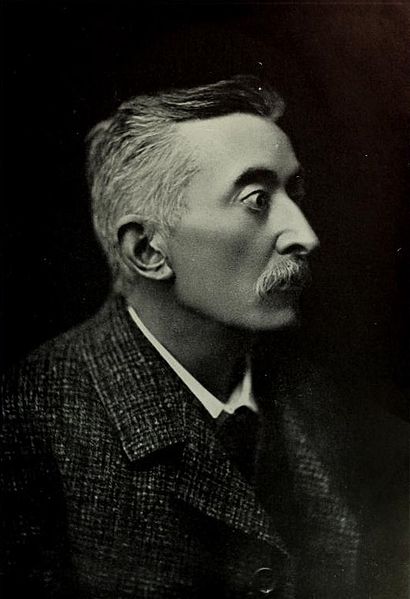
Patrick Lafcadio Hearn (Koizumi Yakumo)

Lafcadio Hearn
By Mio Yamada

Patrick Lafcadio Hearn was born in Greece on June 27, 1850, and he passed away in Tokyo when he was 54 years old. He died of the heart failure. In 1865, he lost his left eyesight because of the playground accident, so he always hid his left side of his face when he had his picture taken. He was one of the people who affected Japan so nicely. He was an international writer, and he was interested in Japanese culture and Japanese ghosts.

First, Hearn was a cosmopolitan. His father was Irish, and his mother was Greek. After his parents divorced in 1854, he was well-educated in France and England. In 1859, he was sent to the U.S. and succeeded as a journalist using foreign language when he was in his twenties. He lived in New Orleans for nearly a decade, and he wrote about New Orleans. He was little known at that time, and even now he is little known for his writing about New Orleans. Finally, he came to Japan as a correspondent of America in 1890.

Second, after he came to Japan, he was fascinated by Japanese culture so much. Thus, he canceled a contract, and he started to work as an English teacher in Japan. Next year, he got married to a Japanese woman, Koizumi Setsu. He became naturalized Japanese, assuming the name Koizumi Yakumo. He got Japanese last name from his wife and first name from the region where he lived. Also, he published a lot of books for introducing Japanese culture to American people. Although Japan was unknown and exotic to Westerners at that time, Japanese style became fashionable in Western countries thanks to his books about Japan.

Finally, when he was a little boy, he believed in ghosts, so when he came to Japan, he was really interested in Japanese ghosts. He published not only books about Japanese culture but also books about Japanese ghosts. His major work is Kwaidan. It has a lot of stories such as The Story of Mimi-Nashi-Hoichi, Yuki-Onna and so on. Today, many people still set a high valuation on these stories. Also, Koizumi Yakumo Kinenkan was established, which is Lafcadio Hearn Memorial Museum, in Matsue, Shimane Prefecture in 1933. It has an interesting content called “Matsue ghosts tour.” Guests can go around the places which are associated with Kwaidan story.

To sum up, Patrick Lafcadio Hearn had an international sense because of his childhood. He knew about lots of different cultures, but he was fascinated by Japanese culture most. Also, he decided that he would spend the rest of his life in Japan. He affected Japan so much, but he was also affected by Japanese culture. He was also interested in Japanese ghosts. There are many books about Japanese ghosts which are written by Lafcadio Hearn on Japanese subjects. People in recent years still love his books. Also, his books about Japanese life style from non-Japanese person’s eyes were loved by both Japanese people and Westerners. Hearn changed the image of Japan for Westerners at that time. Therefore, he is absolutely an important person in Japanese history.


References

Lafcadio Hearn. (2014). Retrieved from http://en.wikipedia.org/wiki/Lafcadio_Hearn

小泉八雲. (2004). Retrieved from http://www.geocities.jp/bane2161/koizumiyakumo.htm

小泉八雲記念館 Lafcadio Hearn Memorial Museum. (2010). Retrieved from http://www.matsue-tourism.or.jp/yakumo/

http://en.wikipedia.org/wiki/File:Portrait_of_Lafcadio_Hearn.jpg

Friday, 2 August 2013

Lafcadio Hearn: His Journey Through Japan

Lafcadio Hearn
Lafcadio Hearn
By Ayako Miki

Lafcadio Hearn, later known as Koizumi Yakumo, is definitely one of the most important non-Japanese in Japanese history, who wrote more than ten books about Japan which showed old Japanese way of life through a Westerner’s eye from ancient myth to people’s daily lives. He is often described as a naturalized Japanese who researched and grasped what is called “Japanese mind” and this is the reason why he was counted as such an important person in history. However, his perspective toward Japan changed significantly thorough his fourteen years in Japan. The aim of this paper is to clarify how Hearn’s perspective on Japan changed by examining his writings and historical facts.

In his early days in Japan, Hearn seemed to see the country very delightedly with great enthusiasm. According to My First Day in the Orient[1], he found this Far East as “the old and new mingle so well” and described Japanese as “the most lovable people in the universe”. Considering adjectives used in the essay which are “divine” “fantastic” “beautiful” “mysterious” etc, it was clear that he found almost everything very attractive and exotic. Although he was surrounded by unfamiliar, strange, unknown things, he enjoyed himself being stranger on the street. Also, another reason for him to find Japan exotic and mysterious was that he spent his first two years in Matsue. Shortly after landing, Hearn was sent to Matsue in Shimane prefecture to teach English by Japanese government. Shimane prefecture is known as the place where many Japanese myths were set, which interested him. With this enthusiasm brought by the honeymoon days and encounters with the ethnic ancient tales, Hearn mostly saw Japan as a beautiful, warm, friendly nation.

However, after moving to Kumamoto from Matsue where he spent his first year in Japan, Hearn seemed to realize that his beloved Japan was standing at a turning point which disappointed him. Although it was far apart from Tokyo, Kumamoto city was big enough to reflect the influence of Meiji Restoration. He criticized the transition as “rapid industrialization took away Japanese traditional minds from people”[2]. Compared to Matsue, small city but still possessing fragments of Japanese mythology everywhere, Kumamoto was much more modernized and leaving traditional Japan behind. Because of the bigger population and urbanness of Kumamoto, also feeling huge changes happening to Japanese society in Meiji Era, Hearn left for Kobe to be a journalist at a newspaper company for foreign residents in Japan by quitting his job as an English teacher. It did not take long for Hearn to notice the transition of Japan, which disappointed him. He could not help feeling his love melting away.

Finally in his later days, moving to Tokyo, Hearn begun to note his melancholy and nostalgia for Japan which he dreamt of. “The beautiful illusion of Japan, the almost weird charm that comes with one's first entrance into her magical atmosphere, had, indeed, stayed with me very long,” he wrote in his essay titled In Yokohama[3], “but had totally faded out at last.” He mourned for his passing days filled with divine specters, sweetness, traditional Japan and people who possessed loving hearts. However, during his very last time in Japan, he did not mention that his memory and dream were lost because of rapid social change known as Meiji Restoration. In contrast to writings from days in Kumamoto, he gradually came to notice that he got used to his Japanese life as if he had awakened from a dream. Although his writings in Kumamoto seemed to contain anger and criticism for Meiji Restoration, at this time he started to express his disappointment to himself and more nostalgia for the illusion of Japan which captured and led him to this far-east Orient from the United States. At last his dream was lost, and Hearn was certainly aware of that. Shortly before his death, he continued to note his indescribable love and melancholy for lost Japan and passing days.

Hearn is now often described as a person who loved Japan without any doubts. However, as his writings telling us, his mind changed through his fourteen-year life in Japan. At first it was only enthusiastic, but gradually vivid colors were washed out by Westernization, and finally he noticed the Japan that he dreamt of was lost because of both of Meiji Restoration and changes happened to himself. His life, of course his mind, too, was not as easy as recent people expected. However surely he was in love with Japan, which he once regarded as his home. He passed away fifteen years after his first day of Japan, and now he rests in the Zosigaya grave. He ended his life in the place he dreamt of; even though it disappointed him, perhaps he reached the Orient heaven at last.

Citations 

[1] Hearn, L. (n,d,). Lafcadio Hearn – The First Day in the Orient. Retrieved from http://www.oldandsold.com/articles33n/essays-studies-25.shtml

[2] Hearn, L. (n,d,). Insect Musicians. [Mushi no Ensoka]. Tokyo. Kodansha.

[3] Hearn, L. (n,d,). In Yokohama. Retrieved from http://lafcadiohearn.jp/articles/InYokohama.html
References

Hearn, L. (1990.). Glimpse of Unfamiliar Japan. [Shirarezaru Nihon no Omokage]. Tokyo. Kodansha.

Hearn, L. (1990.). Kokoro. Tokyo. Kodansha.

Yamada, T. (2002). Glimpse of Japan- The world of Lafcadio Hearn. [Nihon no Omokage – Lafcadio Hearn no Sekai.]. Tokyo. Iwanami Gendai Bunko.