This project showcases student project work from Japan and the World, a modern Japanese history course offered at Kanda University of International Studies. It focuses on important themes and individuals from the Meiji (1868-1912) and Taisho (1912-26) periods, when Japan was beginning to open to the world after centuries of government-enforced isolation.

All submissions are researched, whether in English or Japanese, and references provided. Comments responding to and exploring ideas, suggesting connections or further reading, are most welcome. As entries are written by non-native English speakers, please refrain from non-constructive comments about language use.

Blog editor/ course designer: Caroline Hutchinson

Tuesday, 4 February 2014

Georges Ferdinand Bigot

By Hikari Kozono

Background

Have you ever heard of a non-Japanese painter who drew not only luxury life of Japanese upper class but also ordinary life of masses? Georges Ferdinand Bigot was the French painter who depicted Japan in Meiji period. He really liked beauty of Japan and Japanese people. He was born in France in 1860. His mother encouraged him into art. At the age of twelve, he was accepted by the École des Beaux-Arts in Paris, where he was trained by artists such as Jean-Léon Gérôme and Carolus-Duran. He was interested in Japonism and Japanese art by number of collectors of Japanese art in school and he decided to work as an illustrator of newspaper to pay for the trip to Japan. 

He came to Japan at the beginning of the Meiji-era to study Japanese and Japanese art. After that he worked at the imperial Japanese army academy where he taught water color paintings to his students as an Oyatoi Gaikokuzin [Editor's note: a non-Japanese person employed by the Japanese government to teach necessary skills for Japan's modernisation] for 2 years. After he was done with his teaching job, he was allowed to stay in Japan by drawing pictures for French people in Japan. Eventually, his works became popular among those who were interested in Japanese life and against revision of treaty. His main customers were French people who lived in the foreign settlement Japan. However many of them were opposed to revision of treaty and went back to their home countries. That made Bigot worried about losing a lot of his customers. He also worked as a journalist by drawing scenes he saw but since photo technology developed at this time, his work gradually decreased. He thought it would be difficult to publish magazines freely in Japan and decided to go back to France. Before he went back to France, he divorced to his Japanese wife Masu Sano. In France he kept working as a painter for some French magazines and newspapers. He died in 1927 while he was walking in the Japanese style garden in his house.

Satirical cartoon

Although his first interest in Japanese art was Japonism, his main style of painting was satirical cartoons. Satire means to use humor to show how foolish some people’s behavior or ideas are. He mostly illustrated scenes of everyday Japanese life of masses and upper class but also ridiculed Japanese politicians, revision of treaty, and what he felt to be too much westernization in Japan in his famous satirical newspaper, Tobae. He published it for French people who lived in Japan but he put Japanese captions on his works in order to impress Japanese journalists, and sent them to Japanese newspaper publishing companies. He watched Japan’s rapid westernization with a mixture of curiosity and affection, producing a lot of pictures of the scenes he saw and tried to introduce these to the West.

Affection for Japan

While Bigot criticized too much westernization in Japan, he loved and respected Japanese tradition, culture and the everyday life of ordinary people. He especially expressed affection towards Japanese woman who are calm and obedient to men. In Tobae, he wrote “The best thing in Japan is women. Japanese women should keep being Japanese.” It is said that Bigot saw Japanese women as symbol of Japanese tradition. The picture below is the one of his satirical cartoons about westernized Japanese called “Rokumeikan’s lady”. He depicted westernized upper class Japanese women smoking in the dance hall as looking like monkeys. 


Bigot could draw pictures from the same point of view to Japanese masses. That is because he assimilated into Japanese masses easily by living outside of foreign settlement and carefully observing Japanese ordinary life. He drew various looking Japanese unlike many painters who drew only Japanese people with glasses, slant eyes and buck teeth. I guess that would change the image of Japan for those foreigners who knew only stereotype of Japanese. Some of his work didn’t receive good evaluations because he drew too ordinary scenes. However, he definitely played an important role in telling people about real Japanese life. I think his drawings will be great resources to tell people life of Japanese masses and upper class in Meiji era.


References

Simizu, I. (December 8, 2006). Bigo ga Mita Meiji Nippon. Tokyo: Ko-dan sha

Georges Ferdinand Bigot. (December 9, 2013). Retrieved on January 23, 2014. From Wikipedia: http://en.wikipedia.org/wiki/Georges_Ferdinand_Bigot


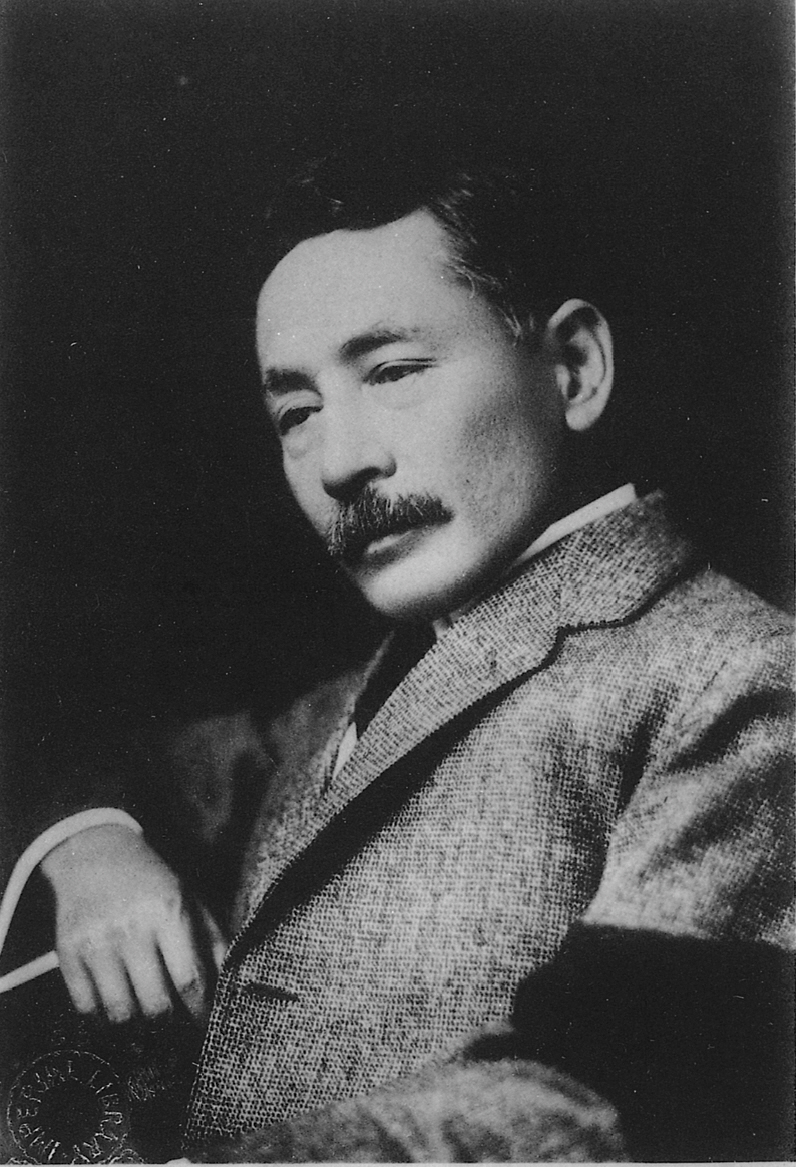
Natsume Soseki

Natsume Soseki
By Haruka Takenawa

I would like to present Natsume Soseki’s growth, experience and the effect on his character, and his contribution to society at that time and this time. The reason why I chose him is I was interested in his literature when I was junior high school student. I would like to know his personal side. I think his personal background and experience must have influenced his works, and have given a lot of ideas to his works. That is why I chose him.

Firstly, I will mention three main points about Soseki’s growth: his family, study in Japan, and study in Britain.

Soseki was born in 1867. At that time, Japan was full of upheavals. The Meiji Restoration [Editor’s note: defeat of the Shogunate and restoration of rule by the Emperor] had happened, and Sakamoto Ryouma and Nakaoka Tarou had been killed by Bakufu [the ruling Shogunate]. His father was a village head, so Soseki’s parents’ home was rich. His mother had many children. He had four brothers and three sisters. However, Soseki was not a wanted child. His parents’ treatment of him was terrible. His parents had never treated him as their child. Soseki was born in rich family, but not an amiable family. He was sent to a merchant family by his father as soon as his birth. Unfortunately, his adoptive father and his father had a trouble, so he went back to his house where he was born. The trouble between them continued until Soseki entered ASAHI press when he was 40 years old. That experience, and his domestic environment, gave him the ideas for “Michikusa”.

He acquired culture at ten different schools and Universities. He changed his learning place many times. He mainly learned English literature, because he was really interested in English. When he entered Nishyougakushya University, he learned ethics, the western sense of beauty, and Edo’s sensitivity. He had an outstanding brain, so he was the head of his class in all subjects especially English. He became an honor student of Tokyo University. As a result of his outstanding work, he got job from his professor to translate “Houjyouki” (Kamakura era masterpiece). He met Masaoka Shiki at Tokyo University, and they became best friends and haiku companions.

Governor let Soseki to study in Britain. Soseki was inspired by European thoughts, education, and their way of living. Also he could concentrate on his study of English literature. “MY INDIVIDUALISM” was inspired by their ideas of “Freedom”. British freedom meant one had to have the responsibility to be free. However, Japanese freedom was totally different. Through his studying in British, he found that an ideal English teacher is a person who has studied overseas then mastered English as a communication tool. Furthermore, he got many ideas about educational style.

Secondly, I will mention his experiences and the essential points to build up his character. I will focus on the literature, his friends, and illness.

He loved not only writing but also reading. He is famous for loving foreigner’s literature. When he went abroad to Britain, he read Jane Austen’s literature with pleasure. It is not an exaggeration to say that his literature was influenced by her works.

He had a lot of precious friends. When he was 22 years old he met Masaoka Shiki at Tokyo University. Soseki was impressed by Masaoka’s haiku and became his haiku companion. They improved each other so that Masaoka is necessary for Soseki’s works and Masaoka was too. Thanks to Shiki’s friend Takahama kyoshi (literature companion), Soseki became a full time writer. Soseki had neurasthenia (a nervous breakdown) so Kyoshi believed that if Soseki focused on his works, he would be able to forget his uneasiness. He had not only literature companions; he also had friends for boat race, and gymnastics. He was really interested in boat race and good at gymnastics. He had good relationships with them.

Soseki had really poor health. He had serious illnesses more than fifteen times. He suffered from illness from only three years old to when he died. His one-year-old fifth daughter died when he was forty-four years old. Her cause of death was uncertain, because of that, Soseki decided to ask his doctor to examine his body by dissection after his death.

Lastly, I will mention his contribution to Japanese society at that time and this time, focusing on his works, his educational style, and his famous speech at Gakushuuin University.

He produced about 37 masterpieces in his short life. His works give his reader great impact even now. “KOKORO” is really meaningful novel because depending on the age, each generation feel differently. That is why it is difficult to understand his works. Its psychological description lets reader consider deeply. The time background is of course different from these days, however the characteristics are related to us. ASAHI press took a survey to ask audience which writer is the best writer in Japan of the past thousand years. The most popular writer was Natsume Soseki.

Soseki taught mainly English at about six different Universities, junior and high schools such as Meiji, Tokyo, and Waseda University. Soseki carefully considered not only his teaching style but also how to build up students’ character. His teaching style was incredible, because he had already found that to unite grammar and communication is the best way to learn English. That idea had just started in 2013. I was so surprised to know that. His educational style was very practical, because he thought English was a tool to communicate, not for study.

“MY INDIVIDUALISM” was a speech given by Soseki at Gakushuuin University. When I read it, I was so impressed, because he noticed that Japanese society’s fault even though it was 1914. His quote must have influenced many people even now. He told the students three main topics. Firstly, “If you want to be free, you have to accept other’s freedom.” Secondly, “If you want to use your right, you have to have its duty.” Lastly, “If you want to use your power of money, you have to think about its responsibility.” After he left such meaningful speech, he passed away when he was 49 years old.

In conclusion, I have mentioned Soseki’s growth, experiences, and contribution. I noticed that he had a lot of setbacks. Through his difficulties, he made lots of outstanding and meaningful works. I think his setbacks are his works’ essential items. He had to have serious illness. However, the motivation to produce his works was his limited life I think. In learning about his background, Soseki taught me fortitude. Even we have difficulties, we should overcome our difficulties and should not give up.


References

Kimura. (1998). Natsume Soseki’s history. Retrieved May 5, 1998, from Biglobe web site: http://www2a.biglobe.ne.jp/~kimura/senpu.html

Koki, K. (2000). Natsume Soseki as English teacher. Japan: Shintyosya Institution Press.

Mizuho, I. (2004). Soseki in London. Japan: Seibundou Institution Press.

Soseki, N. (1978). MY INDIVISUARISUM. Japan: Kodansha Institution Press.

James Curtis Hepburn

By Hansol Lyu

Have you heard the name of James Curtis Hepburn? I had never heard this name before the class. In this semester, I researched about James Curtis Hepburn for my presentation then I became interested in his life. Thus, I will explain about his life in Japan.

He was born in 1815 in Milton, Pennsylvania. His father was a lawyer and his mother was daughter of minister of chapel. He entered the Princeton University, when he was 16 years old. After graduating, he entered again the University of Pennsylvania. Then, he studied medical science. At this time, he became interested in Christianity, because he was influenced by his grandfather who was a minister of chapel.

After graduating the University of Pennsylvania, he married Clara Mary Leete. In addition, in 1858, the United States start to trade with Japan. In this period, American’s Greek missionaries thought this was chance to impart thinking of the Christianity in Japan. The Christianity association decided to send missionaries to Japan. Hepburn had strong interest in Eastern Christianity, so he often checked the magazine and newspaper of missionary. Then he founded the article decision of the Christianity association and he applied for that. Therefore, he and his wife went to Japan to spread the Christianity in 1859.

 
James Curtis Hepburn & Clara Mary Leete

Hepburn arrived Japan in 1859 at Kanagawa prefecture. In 1859, the thinking that Japan was a closed country still remained. Many thought that foreigner should be killed or forced out Japan. This thinking was called “Jyoiron (攘夷論)”. In addition, Japan prohibited Christianity. If people did not follow the law, they might be killed by government. He was afraid of this situation. Thereby, Hepburn could not move freely and spread the Christianity. He decided to open the hospital at Soukou temple in Japan. He studied about medical science in the university, and he was famous doctor when he lived in America. He did surgery and ophthalmology treatment for Japanese. Also, he did not get the money from patients and he could treat about 3,500 people. However, the hospital closed in just 5 months because even though the hospital became famous, he was worried about the eyes of the people to have thinking of “Jyoiron (攘夷論)”. 

After closing the hospital, Hepburn’s wife Clara founded Hepburn cram school. At this time, Hepburn was busy making Japanese-English dictionary, so his wife was in charge of the cram school. She wanted to teach English to Japanese women. This cram school became the Ferris University now.

This picture shows Ferris University

Hepburn published the Japanese-English dictionary in 1867. He thought the dictionary is necessary to convey a correct meaning of the Bible, so he made the Japanese-English dictionary by using Romaji [Editor’s note: Japanese is a pictorial language – romaji is a system of writing it phonetically using the Latin alphabet]. Thereby, Americans were able to pronounce Japanese. 20 years later, he completed translation of the Bible.

In 1873, he could establish a church, his dream achieved 17 years after he came to Japan. Maybe, the church is one of the ways to spread the Christianity for him.

He related with various things in Japan. Firstly, he treated a lot of Japanese patients. Secondly, Hepburn and his wife tried to supply food education’s environment for Japanese. Finally, he made an effort to spread the Christianity in Japan and he attained it. I felt his love for Japan. He was always afraid of the Jyoiron (攘夷論), but he did not escape from Japan. Rather, he helped Japanese. I was really impressed by his action and thinking.


References

No name.(n.d).Retrieved January 13,2014 from A great man of Kanagawa- a great man of Japan(神奈川の偉人-日本の偉人) web site: http://www.hebon.sonanda.net/990hebon.html

Seiji, N.(2011). The James Curtis Hepburn’s achievements-宣教医、教育者として日本社会に貢献したアメリカ人-, The University of Tokyo Ariakeiryou, Tokyo. website: http://www.tau.ac.jp/outreach/TAUjournal/2011/06-nakayama.pdf#search='%E4%B8%AD%E5%B1%B1+%E3%83%98%E3%83%9C%E3%83%B3'

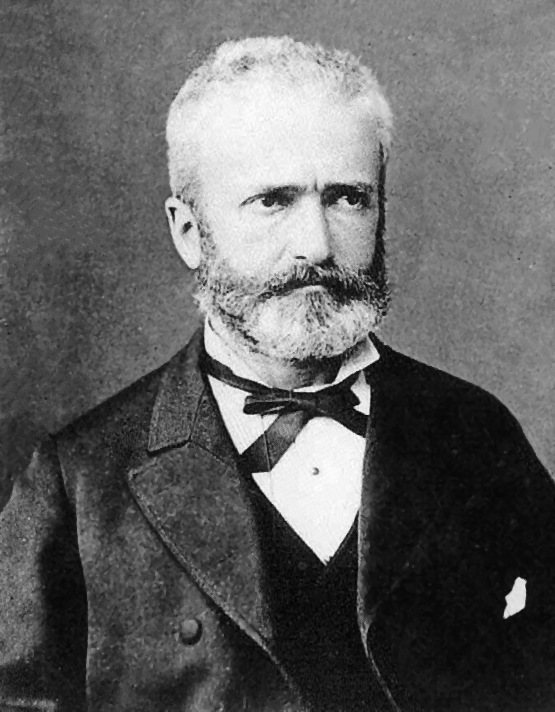
Edoardo Chiossone

Edoardo Chiossone
By Ayako

Edoardo Chiossone was a famous engraver. He had a strong relationship with Japan because of his talent of art. Edoardo was born in Italy in 1833. His father was an artist so he was born in an artist’s lineage. He came to Japan as an “Oyatoi” foreigner [Editor's note: foreign government advisors in Meiji era Japan were known as oyatoi-gaikokujin, or “hired foreigners”] and made paper money, stamps, and portraits. He loved Japanese arts and culture. He was a big and essential person for Japanese paper money history.

Japan’s paper money was made by a German company. However, Japan thought that if they continued to receive money requests from that company forever, it would cost a lot, so they decided to invite a person who can make paper money and teach how to do so. Edoardo came to Japan and made the paper money from his sculptor knowledge. He also taught Japanese people how to do it. When he was a child, he went to an art school and studied copper-plate engraving. He took some prizes for his art. After he graduated school, he worked at the copy company in England.

Edoardo worked as an Oyatoi foreigner for 16 years. His life in Japan was better paid than other Oyatoi foreigner. His salary was higher than others at that time and he used that money for his hobby. He liked to collect arts so he bought 3,269 Ukiyo-e [woodblock prints], 1529 copper-ware, and 1442 Tsubasa [part of a katana sword]. After he finished his term, he still stayed in Japan. He liked Japanese art and history. The most surprised thing is that he finished his life in Japan and his grave is in Tokyo Japan.

His most famous achievement was making Japanese paper money. He was the person who brought the Japanese paper money to Japan. He also made stamps and portraits. He designed the first stamp in Japan. The famous Saigou Takamori’s portrait [often called the last true samurai, Saigou was instrumental in overthrowing the Tokugawa shogunate and forming the new Meiji government, but was killed shortly after when he led the Satsuma Rebellion against the new government] was made by Edoardo. He had never met with Saigou Takamori, so he saw his brother and cousin and made the portraits. However, Saigou’s wife said the portrait is not similar to his face. Chiossone's art was famous in Japan, and he made more than 500 things for Japan through this term.

In conclusion, before I searched about him, I didn’t know that Japan’s paper money was made by foreigner. His job was very important for Japan so I can understand that he had the highest salary of Oyatoi foreigners. I was also surprised about Saigou Takamori’s portrait. We learned from the text book and the history book that Saigou’s face was like the portrait, but in fact it’s not his real face and it’s made from Edoardo’s guess. I think he really loved Japan and Japanese culture. If he hadn’t liked Japan, I think he would have gone back to his country after his term was finished. Moreover, from his arts collection, I can learn that he liked arts from the bottom of his heart. He used a huge amount of money to collect the arts. This is not an easy thing when people live in a foreign country. After I learned about him, he became my favorite person in the genre of visitors to Japan.


References

No name. Asemue Asia-Europe Museum Network. Retrieved on 23/01/2014
http://asemus.museum/museum/museo-darte-orientale-edoardo-chiossone/

No name. International House Of Japan. Retrieved on 23/01/2014
http://www.i-house.or.jp/eng/programs/japanihj20130111/


Movement for women’s right in Taisho and Meiji era and appearance of ladies who have independent identity like “Moga”

Hiratsuka Raicho
By Anonymous

Japanese women’s lives in Meiji era were not really as comfortable as nowadays. There was a thought of domination of men over women, like women did not have right to vote, it was thought that women should be “Good wife, good mother”, and they were told that they should not cut their hair short. Beautiful ladies often could not graduate high school because they had to marry someone.

In Taisho era, there were remarkable movements for women’s liberation which were started by so-called “New Women”, and one of these was Hiratsuka Raicho. “New women” is about ladies who had an independent identity and tried to change the traditional thought of sexual role. Because Raicho grew up in a modern-thinking family, she seemed to have quite forward-thinking kind of thoughts since she was an elementary school student. However, her father turned a Europe family style into traditional Japanese one, and made her go a traditional nationalist high school, so from then she needed to have a rebellious spirit by herself. She seemed to be a humorous person and passed through it by forming a group of skipping out called “The pirate”.

When Raicho was 25 years old, she started to publish a magazine called “Seito”, which contained articles about movements for women’s rights. In this era, it was prohibited for women to join politics and the Seito Company was punished by nationalist men. According to the web site “Kokoroni Kizamu Kotoba” (January, 2014), she wrote proverbs like “Women were originally the Sun but now it turned to Moon” [Editor's note: she continues “... dependent on another, reflecting another's brilliance”]. She was criticized by society, but women supported her. It can say that she made Japanese women aware of their own value.

There were also other women who tried to form their identity in the era. “Moga” were the girls who longed for and were influenced by European cultures in late Taisho era to early Showa era (around 1920), and it is short for “Modern girls”. There were also “Mobo”, a shortened form of “Modern boys”, and both terms included an ironic sense of “easily influenced”, but most others seemed also to have longing for Moga and Mobo. They wore Western styled fashion, and especially Moga cut their hair shorter, drew on eyebrows, and put on lipsticks (Web site “Nihon zokugo zisyo”).

There are some novels in which Moga appear. Katai Tayama’s “Futon” is about a writer who thinks that woman should have a traditional sexual role. He loved a modern girl and changed his thought, but her actions were thoroughly free and modern, and because of it, she went away from him and his heart was broken. There are so many novels (e.g. Ichiro by Soseki Natsume), comics, or animations about Moga (Haikara san ga toru), and I can see that the culture or that kind of people were so familiar then. Moga and Mobo thought like “Yankees” [Editor's note: Japanese “yankii” originally referred to a subculture of delinquent teens in the '80s and '90s. The word is often used in the way we might use “chav” or “white trash”], because their style was new, wicked and also rebellious. I think it is like gals in Shibuya or characteristic fashionable people and I feel like we are in a same race. I do not think about it usually, but females are still struggling or fighting for rights or a better situation, so it is a familiar thing to us and after searching this, I felt that there was a long history.


References

http://kari-kari.net/manmonth/2012/02/post-15.html

http://zokugo-dict.com/35mo/moga.htm

http://search.yahoo.co.jp/search?fr=slv1-snvaio&p=%E5%B9%B3%E5%A1%9A%E9%9B%B7%E9%B3%A5&ei=UTF-8


Hannah Riddell

Hannah Riddell
By Ayaka Kamoda

Hannah Riddell was born in London in 1855. Her father was sick, so she and her mother managed girl’s school instead of father. Although she was only 20, she taught all subjects. In 1886, her mother died, and also her father died soon after, so the school went bankrupt. After that she joined CMS (Church Missionary Society), and she was send to Japan when she was 35 as missionary. There, she saw Hansen’s patients, and she decided to support the building of a hospital for Hansen’s disease, even though she wasn’t doctor. It was called Kaishun hospital in Kumamoto, southern Japan. The reason why she took part in it was that she had read the bible. It says you should help people who are not helped by anybody.

It was hard for her to achieve her purpose because she was not Japanese and people did not try to understand Hansen’s disease, but she took action actively. To begin with she started fundraising campaign. She needed money, so she pressured a Zaibatsu [Editor's note: a large industrial conglomerate in prewar Japan, with influence over large parts of the economy] to support her, and she stayed in Karuizawa during summer to meet powerful person. As a result industrialist Eiichi Shibusawa and politician Shigenobu Ookuma decided to help her.

Secondly, she had a talented for publicity work, so she gave two lectures per a day. In addition, she tried to understand about Hansen's disease. At that time nobody knew that the chance of transmission was low between humans, especially adults. She also isolated them, but she respected patients. For example, they could wear clean clothes, and they were required to control sexual abstinence, so they could not marry. Many people might think it’s not reception, but they can go out if they did not want to be there, so it’s not obligation. Therefore she really wanted to help them, she did like that. In addition Shigenobu Ookuma suggested that Hannah should build another hospital in another place. As a result she built hospital for Hansen’s disease in Kusatu and Okinawa.

She stuck to her opinion, so she had many enemies in the organization. As a result she could not work with them. There is a definitive incident that shows this. It is that Jon Bishop and Hannah were on bad terms with each other, and finally Jon became mentally deranged in 1897. When he was moving to Hong Kong for medical treatment in 1900, he died on the ship. Henry Evington, who was enemy of Hannah, said that he died because of her. Therefore she had to work far from Kaishun Hospital. It was her obstacle, but she overcame it. She looked at it from a different angle, and she thought it is chance to do freely. She was active in the front more than before.

At that time Japanese had ignored Hansen's patients because they did not try to understand Hansen's disease. Riddell had a lot of enemies, and couldn’t speak Japanese. Moreover, she could have lived in London if she had gone back, but she stayed in Japan to help foreigners. Could you be as active as Hannah in foreign country?

Tsuda Umeko

Tsuda Umeko
By Anonymous

Many people know Tsuda Umeko as an educator for Japanese girls. However, there are few people who understand her background. She surely spent a strange life compared with other people at the time, but it is the fact that all her experience made her strong as an independent woman. Therefore, we couldn’t speak about girls’ education without Tsuda Umeko, and she is one of the most important women in Japan.

Tsuda Umeko was extremely inspired by American society system through studying abroad. She was in the U.S. for 11 years when she was a child. Originally, this project was held under Kuroda Kiyotaka who was impressed by high position of women in the U.S. There were few people who thought to let their lovely daughter go, but Tsuda Sen, Umeko’s father, had a flexible idea about it. Umeko grew up in traditional Christian family, so she also became a Christian perfectly because she was really smart and noble (www.yomiuri.co.jp). In short, she spent her school days in the U.S., so she became a completely Americanized woman.

She was really surprised at a gap between men and women when she came back to Japan after her long life in the U.S. She was so excited to come back to her mother country even though she couldn’t speak Japanese. According to a letter to her friend Shige (Tsuda, 1882), Umeko was looking forward to living in Japan and thought it was like a dream. However, she was shocked, against her expectation. Of course, she understood Japanese and their culture gradually, but she didn’t understand why the position of Japanese women was low compared with men. Her feeling then made her stand up for Japanese women. It was also a big challenge to conservative Japanese society at the same time. Gender gap was a good opportunity to make a new woman for Umeko.

It was Umeko’s life project that she made an effort to modernize and improve the status for Japanese women. After she learned biology at Bryn Mawr College, she came back to Japan again. Professor Iino Masako (2009) mentioned that Umeko had both awareness about a favor against the government and what she should do (www.yomiuri.co.jp). By the way, her goal for girls’ education was not just to produce noble women. She wanted Japanese women to contribute Japan by helping men intellectually and mentally. She thought that it was true contribution to society to play an active part inside and outside the house. To realize it, she suggested that it was a good idea to mix traditional Japanese values and American ones. Then, she used “All Round Woman” when she opened Girls English School (present-day Tsuda Juku University) in 1900. It means every woman should learn English and other major subjects and broaden her range wider. Her wills took over Tuda Juku students now. It would not exaggeration even if we say that her ambitious dream almost became the reality.

Tsuda Umeko is one of the women who changed Japan, and she got stronger thorough the three life turning points. Study abroad made her not only good English speaker, but also created Christian base. The gap between men and women made her confused, but she found the way to educate girls at the same time. Finally, she succeeded in founding the girls’ school and in telling them how important the woman's independence is. This smart woman moved Japan and came to be handed down as an advanced educator for Japanese girls.


References

Minako Oba. (1990). Tsuda Umeko. Asahi Newspaper Co.

Nobori Kiuchi. (2013, May 19) Tsuda Umeko; be sophisticated in any environment, from Japan Economy Newspaper Web. http://www.nikkei.com/article/DGXNASFE2201F_Q3A510C1TY5000/

Yomiuri Online. (2009, April 25) Tsuda Umeko and America; the background of founding “Girls’ English School”. http://www.yomiuri.co.jp/e-japan/tokyotama/feature/hachioji1267517640969_02/news/20100302-OYT8T00872.htm