This project showcases student project work from Japan and the World, a modern Japanese history course offered at Kanda University of International Studies. It focuses on important themes and individuals from the Meiji (1868-1912) and Taisho (1912-26) periods, when Japan was beginning to open to the world after centuries of government-enforced isolation.

All submissions are researched, whether in English or Japanese, and references provided. Comments responding to and exploring ideas, suggesting connections or further reading, are most welcome. As entries are written by non-native English speakers, please refrain from non-constructive comments about language use.

Blog editor/ course designer: Caroline Hutchinson

Thursday, 29 January 2015

John Batchelor; The father of the Ainu

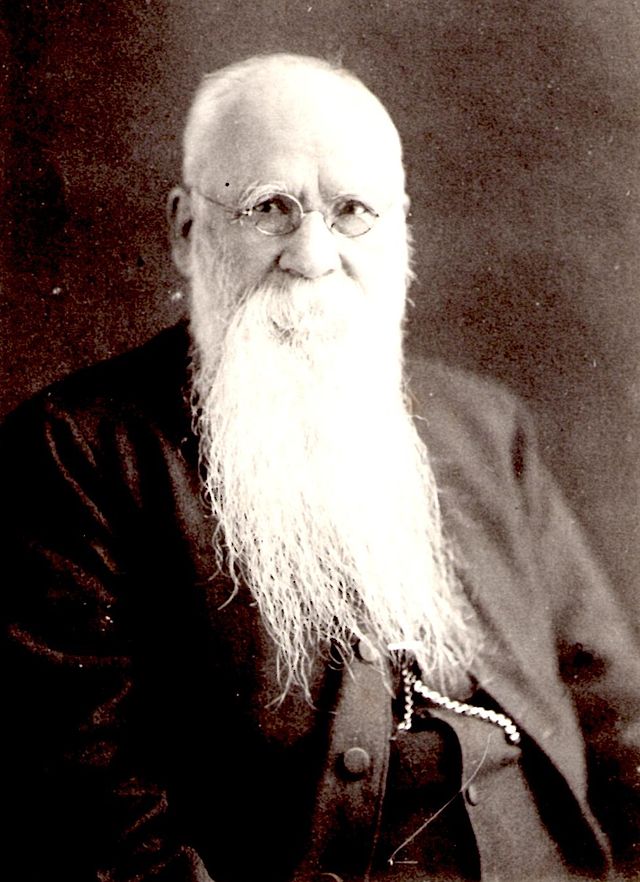
John Batchelor
By Tomoki Ogawa

Did you know that Japan has another race and language? It’s Ainu. Ainu is an indigenous people in Japan. They originally lived in Ezo (Hokkaido) and had their own traditional cultures and histories. Due to the Meiji Restoration which included modernization and democratization, Japanese people who lived on mainland tried to assimilate the Ainu people to the standard of Japan. At that time, following national trends was usual but Ainu people’s life style was too different from the ordinary Japanese way of life. The Japanese nation’s forcible cultural assimilation made the Ainu confused since the nation prohibited Ainu’s traditional cultures, like earrings for man and tattooing of women. Furthermore, historical festivals, salmon fishing and deer hunting were necessary to survive. Against these policies, missionaries and doctors of foreign countries started the movement to uphold the Ainu’s human rights. John Batchelor was one of them.

John Batchelor was born in England in 1854 and he had 11 brothers. He was born in a wool merchant’s shop and his father was the mayor of Hartsfield city three times. The family was reverent Christian and Batchelor was also baptized. At 14 years old, he left junior high school and tried to be lawyer but he failed to pass the examination so he went on to a night school and engaged in farming. He also graduated from Islington seminary and School of Theology of Cambridge. After that, he entered St. Paul College in Hong Kong when he was 22 years old. However, after three months, he had to move to Japan because he suffered from local disease, malaria. He needed to go to a region which had similar conditions of England, and Japan has the Anglican Church in Hakodate of Hokkaido so he decided to go there.

After he arrived in Hakodate, he started to study Japanese and the Ainu language. One day, he met an Ainu boy and got to know about the cruel situations of the Ainu. Japanese people in the main land tried to cultivate Hokkaido by force, so the Ainu people were forced to be assimilated. In 1878, he visited Sapporo and met Kurotaka Kiyoda who was the leader of development of Hokkaido. The next year, he visited Hiratori and started missionary work. Penriuku, the head of the region, and the villagers were impressed by Batchelor’s enthusiasm. The head decided that Batchelor should stay at his house and teach Ainu language for three months. In 1881, he went back to England and studied divinity again for six weeks at Cambridge University. In 1884 when he was 30 years old, he married Luisa who was a younger sister of the head of Hakodate Anglican Church in the England Embassy in Tokyo. After the marriage, they decided to move to Horobetsu, southern part of Hokkaido and in 1888, he established a school for Ainu there, called Airui-gakkou. In 1892, he moved to Sapporo, the center of Hokkaido. He established a hospital and dormitories for students of the Ainu in Sapporo. Thanks to his donations, lots of Ainu people got a chance to go to school and contribute to Japanese society as teachers, veterinarians and radio operators. In 1932, he won the Order of the Sacred Treasure.

He studied the language and race of the Ainu and made an Ainu-Japanese-English dictionary (Kawaei-Santai-zisho) for the first time. Furthermore, he translated the Bible and hymns to Ainu. In 1940, he had to go back to England due to the outbreak of the world war. He hoped to come to Japan again after the end of the war, however he passed away due to cerebral hemorrhage in 1944 in England. Batchelor had contributed to protecting Ainu’s human rights so he is called “The father of Ainu” even now.

●Discussion questions

Why did he try to propagate Christianity among the Ainu?

Most members think that he wanted to save the Ainu by telling the way of Christianity. Batchelor strongly believed that people who believed in Christianity would be saved so he tried to save the Ainu whose culture was being penetrated by main land people. One member thought he want to invade Hokkaido by brainwashing the Ainu.

●Feelings about the person

Batchelor had a strong sense of justice to relieve the Ainu people. Japanese people who lived next to them could not think about Ainu’s feelings. However Batchelor, who came from a far away country, devoted his whole life to the Ainu. Most Japanese people, including me, did not know about him. I think Japanese education should add more power to history classes of compulsory education because Japanese people tend to judge other countries by only media reports or some superficial impressions, so knowing their heroes and admire them countries. I want a lot of Japanese people to know about his great achievements and cultivate a better understanding of foreign people.

【Reference list】

Morimoto, M. (2011). HOMAS (Japanese ver.) Retrieved January 14, 2015 from Hokkaido/ Massachusetts Society web site: http://www5.ocn.ne.jp/~homas/

Yamamoto, H. (2011). Hokkaido history walker. Retrieved January 14, 2015 from Hokkaido.net web site: http://rekitan.namara-hokkaido.net/column/?id=412

James Curtis Hepburn

James Curtis Hepburn
By Ayako Hirose

When you use a computer, how do you type Japanese? Most of the people utilize combination of alphabets to show Japanese letters. The creator of this system, Hepburn Romanization, is James Curtis Hepburn. Hepburn contributed to Japanese development not only as a creator of the Romanization system, but also as a doctor, educator, missionary, and an editor of Japanese English dictionaries.

Hepburn was born in Pennsylvania in 1815, and he learned medical science and became a physician. On the other hand, as he aspired to mission, he moved to Japan as a medical missionary in 1859.

He opened a small clinic in Yokohama for free because he wanted to help Japanese people while Tokugawa shogunate had prevented him to open it. At first, Japanese people had guarded against foreigners, but his tender attitude toward Japanese neighbors and developed Western medical techniques was attractive, so the clinic became crowded. Overall, he treated more than 10,000 patients in Japan.

He taught his knowledge to Japanese students with his wife. As Japanese people started realizing the importance of foreign language and studies, the shogunate offered Hepburn to teach it, and sent nine students. He taught Western medical science, and his wife, who used to be a teacher in New York, covered English education. Later, he established Hebon-juku which is a precursor of Meiji Gakuin University. And another teacher at Hebon-juku founded Ferris Jogakuin. It means Hepburn was concerned with foundation of two famous schools in Japan.

In addition, he worked as a missionary by translating the Bible. It was hard task because Christianity was prohibited by the shogunate in those days. Hepburn and other missionaries worried how to diffuse doctrine of Christianity, and they decided to translate the bible. They started the work in 1872. At first, they referred to Chinese Bible, so Hepburn’s experience in China and Chinese knowledge was useful. They published some books from 1875 to 1880.

Hepburn spoke Japanese fluently, but other American people could not. Usually American and Japanese needed Chinese interpreter who understand both English and Japanese. Therefore, he published Japanese English dictionary to learn Japanese in 1867. His dictionary was the first Japanese English dictionary.

However, Hepburn spent difficult time because those two languages have totally different letters. Then, he created Hepburn Romanization. Thanks to this system, Japanese characters can be written in alphabet.


As Hepburn worked in many fields, he influenced Japan in some ways. So I asked group members what was the most remarkable thing by Hepburn. Each of them had different interests. Hepburn dealt with Japanese people for free. One member seemed to be impressed by his kindness. And one person is interested in translation, so she thought his translation work was great. Others thought that Hepburn was a great educator because he was related to two Universities. Through this discussion, I was surprised because I could listen to various answers. I personally think that Hepburn Romanization was his greatest job because we use the system even today, so I had guessed that most of people would also think so. Actually, they pointed out other things and no one answered that Romanization is the best. I learned that evaluation sometimes differs quite a lot depending on the person.


Before I searched Hepburn, I had only known that “Hebon created Hepburn Romanization”. I did not even know that Hebon is kind of his nickname, and his real name was Hepburn, and I also had never heard that he actually came to Japan as a missionary. It was surprising that one person mastered such broad areas of knowledge, and brought many results. Though he was a missionary, some of his achievements had no relation to Christianity. Through listening to other presentation, I knew that like Hepburn, many missionaries came to Japan and worked on medical treatment, education and other studies. The number of Christians did not increase so much in Japan; however, their efforts enriched Japanese country and all the people living in Japan.


References

“James Curtis Hepburn” Wikipedia, retrieved 2014, December 12 from http://en.wikipedia.org/wiki/James_Curtis_Hepburn

Mochiduki, Y. (1987). ヘボンの生涯と日本語. Tokyo: Toyo Insatsu Kabushikigaisya.

Takaya, M. (1961). ヘボン. Tokyo: Nihon Rekishi Gakkai.

Ernest F. Fenollosa

Ernest Fenollosa
by Yusuke Suzuki

Introduction

Do you know Ernest Fenollosa? He was a non-Japanese who most loved the Japanese art in the world. He was a professor of philosophy and political economy at Tokyo Imperial University. As you can see, he was not related to art. In addition, he was not artist, and he had not done the art since 24 years old. However, he will be protecting the Japanese art from Japanese throughout history. That’s such unbelievable thing, because why did non-Japanese people protect the Japanese art from Japanese? It has a very shocking reason.

Personal History

Ernest Fenollosa was born in U.S in 1853. He was a very smart person. He studied philosophy and sociology at Harvard College, and he graduated at the top of the class. Then, he became interested in the art little by little.

After graduating, he was 24 years old; He went to the art school attached to Boston museum. However, his father committed suicide in the next year. He got shock, and he left the U.S and came to Japan. After coming to Japan, he came across the Japanese statue of Buddha, and Ukiyoe “浮世絵” (woodblock prints - Ed) immediately. Ironically, if his father had not died, he might not have come to Japan. In Japan, he taught political economy and philosophy at Tokyo Imperial University as a hired foreigner (oyatoi-gaikokujin) and investigated the Japanese art.

His Achievements

His biggest achievement was protecting Japanese art from a stupid Japanese movement. The Meiji government destroyed Japanese art after the Meiji Restoration, and in particular so many of statues of Buddha and Buddhist pictures were scrapped. That movement was called Haibutsu-Kisyaku “廃仏毀釈”. So many statues and pictures were scrapped, temples were destroyed, and Buddhist priests were forced to change a job by the government during the movement. It is like we were prohibited from eating Japanese food at this time. That’s so terrible. I can’t stand it. However, Japanese people did it at that time.

As a result, Japan lost huge amount of cultural assets. Meiji government was on the point of giving the power to the Shinto and Meiji Emperor. So, they prohibited the Buddhism. It was the reason why this movement was happened. Japanese denied its own culture. That is so ridiculous. I was also shocked at this happening, the same as Fenollosa.

Fenollosa gave an impassioned speech about the wonderfulness of Japanese art for Japanese and tried to create a movement. It took a long time. However, many Japanese noticed that by his effort. His passion for the Japanese art is so strong. For example, He named his son “Kano”. It means Japanese famous Japanese art denomination “Kano-ha” “狩野派”. In addition, he changed his religion from Christian to Buddhist. That is amazing.

Conclusion

I was glad to know about Fenollosa, because I like Japanese culture very much. Japanese art is so touching work and beautiful. Recently, I heard many times that many other countries' tourists are interested in Japanese culture and art. If Fenollosa hadn't come to Japan, Japanese culture might be changed. Fenollosa is the hero of Japanese art.


References

Bungei jankii paradaisu [Literary Junkie Paradise], (n.d.). Nihon no onjin Fenerosa [A benefactor of Japan, Fenollosa]. Retrieved 19 January 2015, from http://kajipon.sakura.ne.jp/kt/haka-topic36.html 

Philipp Franz von Siebold

Philipp Franz von Siebold
By Itsuo Kobayashi

Life of Siebold

Many Japanese may think Siebold was Dutch, but actually he was German. He was a physician, botanist and traveler. He was born into a family of doctors and professors of medicine in Wurzburg, Germany. He studied at Wurzburn University and became a medical doctor in 1820. He initially practiced medicine in Heidingsfeld, Germany. He was invited to the Netherlands by an acquaintance of the family and entered the Dutch military service in 1822. He was appointed ship’s physician on a frigate and traveled from Rotterdam to Batavia (present-day Jakarta) in the Dutch East Indies (present-day Indonesia). He stayed in Batavia for approximately two weeks and then was sent to Dejima, Japan. He arrived at Dejima in 1823. Siebold was pretending to be Dutch as he worked at The Hirado Dutch Trading Post.

Dejima is an artificial island next to Nagasaki. Foreign trade with the Netherlands was done through this small island. Siebold worked in Dejima as physician and scientist of The Hirado Dutch Trading Post. He gained permission to leave Dejima and treated Japanese patients in Nagasaki as well.

In 1824, Siebold started a medical school, Narutaki-jyuku, in Nagasaki. Around fifty students studied there. Among them were Takano Chouei, Ninomiya Keisaku and Ishii Souken. They were doctors and studied Western medical sciences from Siebold at this school. The Dutch language was a commonly spoken language for academic study there. Siebold was strongly interested in Japan, especially in Japanese plants and animals. His students helped him collect samples of the local flora and fauna. Siebold sent samples of these plants and animals to the Netherlands.

The Siebold Incident happened in 1828. Siebold obtained detailed Japanese maps through his acquaintance, Takahashi Kageyasu, who was an astronomer. Siebold tried to bring these maps to the Netherlands, which was strictly prohibited by the Japanese government in those days. Instead, Takahashi Kageyasu obtained the latest world maps and valuable foreign books from Siebold. However, Siebold’s attempt to bring the maps to the Netherlands was not successful. The ship that the Japanese maps were loaded onto was stranded on the Nagasaki coast due to a typhoon and the maps were found by Japanese government officials. As a result, Siebold was arrested and exiled from Japan in 1829. The other Japanese who were involved were also arrested and some of them were punished severely. Siebold was exiled from Japan and returned to the Netherlands in 1830.

In 1858, Japan signed the Treaty of Amity and Commerce(日蘭通商条約)with the Netherlands and Siebold’s banishment was rescinded. In 1859, almost 30 years after he left Japan, Siebold revisited Japan and became an advisor of the Tokugawa Shogunate for foreign policy. In 1862, he left Japan for the Netherlands and died in 1866 at the age of 70.

Discussion

Q1. Why was Siebold arrested and exiled from Japan?

One of the members in our group knew the reason. It was because Siebold tried to bring detailed Japanese maps to the Netherlands, which was strictly prohibited by the Japanese government in those days.

Q2. How do you think Siebold contributed to Japan and the Netherlands?

Our group members answered Siebold had taught medical sciences to the Japanese students at Narutaki-jyuku. I added the facts that Siebold introduced Japanese things and Japan to foreign countries by writing books such as Nippon, Flora Japonica and Fauna Japonica and by bringing samples of Japanese plants and animals.

Reflection

Through this project, I learned that Siebold had had a family in Nakasaki. Siebold didn’t get married, but he had a Japanese lover whose name was Kusumoto Taki. She was called Otaki-san. They had a daughter whose name was Kusumoto Ine. She was called “Oranda Oine オランダおいね”. Born in 1827 during the Edo era, of mixed heritage between the German Siebold and the Japanese Kusumoto Taki, Ine was discriminated against and struggled to become a doctor. She learned medical sciences from Ninomiya Keisaku and obstetrics from Ishii Souken. Both of them were Siebold’s students at Narutaki-jyuku. Kusumoto Ine became the first female doctor in Japan and worked as an obstetrician for decades in the Meiji era.

Siebold imparted European medical and surgical knowledge to Japan as well as exposing the world to Japan’s unique flora and fauna. Beukers (1997) stated that

“Von Siebold is well known in Japan: his teachings mobilized a small group of Japanese intellectuals to learn Dutch, to translate Western books on medical subjects, to establish schools and teach what they had learned, and to experiment with Western medical and surgical techniques. He is best known in the West for the information he brought back to Europe about Japanese flora and fauna.”

His museums such as the Siebold Memorial Museum in Nagasaki, Japan, and SieboldHuis in Leiden, the Netherlands, illustrate his achievements.


References

Beukers, H. (1997). The Mission of Hippocrates in Japan: The Contribution of Philipp Franz von Siebold. Amsterdam, the Netherlands: Four Centuries of Netherlands-Japan Relations. Retrieved 25 Dec. 2014, from project muse website: https://muse.jhu.edu/login?auth=0&type=summary&url=/journals/bulletin_of_the_history_of_medicine/v073/73.4jannetta.html

Philipp Franz von Siebold (1796-1866) collector in Japan. (n.d.). Retrieved 23 Dec. 2014, from Sieboldhuis website: http://www.sieboldhuis.org/en/hetsieboldhuis/siebold

The Life of Ph. Fr. von Siebold. (2013). Retrieved 23 Dec. 2014, from Nagasaki Web City Siebold Memorial Museum: http://www.city.nagasaki.lg.jp/kanko/820000/828000/p009222.html

Yoshimura, A. (1993). The daughter of von Siebold, Tokyo : Kodansha

Make serious situation FUN!!

Image (2)
Image (1)
by Akari Matsumoto

Have you ever seen these pictures (1, 2)? You might have seen them when you were in junior high school or high school. These are helpful materials to understand history. Do you know who drew them? The answer is ... Georges Ferdinand Bigot. He is famous as an caricaturist (3).
Image (3)


Who is Bigot?

He is from France. He come to Japan as お雇い外国人(Oyatoi-gaikokujin - a foreign expert - Ed).

Why was he interested in Japan?

He studied drawing when he was in France. Through drawing he met people who loved Japanese art. And he saw Ukiyoe (Japanese woodblock prints - Ed) at Paris Exposition.

Then he became interested in Japan.

Did he draw political pictures at first?...No!

He began drawing Japanese daily life at first. It was rare thing because at that time Japanese people didn't care about daily life, because it was too usual so they didn't draw it. What he did next was drawing Government and international relations. At that time there were French people who were interested so he drew pictures for them.

As you know pictures help our imagination. In particular, it's hard to understand politics, so his pictures were good for French people. His pictures include humor like funny comics. It makes people have interest.

His thoughts about Japanese politics

He had opinion about Treaty revision (条約改正). Treaty revision is amending situation that Japan admit Extraterritoriality (治外法権) and doesn't have Tariff autonomy (関税自主権) and so on.

Extraterritoriality meant that Japan couldn't judge if foreigners committed crimes, even though it happened in Japan. Japan has to leave it to the country of the person who committed the crime.

Image (4)
Tariff autonomy means ability to set tax on trade. At that time, Japan didn't have it, so Japan had to follow tax which other countries set. If I were alive at that time, I might think Japan had to do Treaty revision soon, because I’m Japanese and these treaties are unfair for Japan. Japan didn't have right. On the other hand, Bigot didn't think so. Treaty revision might be not good for foreigners, including Bigot. Finally he left Japan.

His work is not famous in his country France but in Japan, his pictures are so important.

By the way, what do you think stereotype of Japanese people is? You might imagine like this picture (4). Japanese is short, wearing glasses, has an overbite, is working hard and so on. People say these images are made by Bigot.

These two are pictures Bigot drew:
Image (5)

Image (6)
But Bigot doesn't always drew Japanese like these and make fun of Japanese. He loves Japanese and respect Japanese.

I like Bigot

I like art and history. Sometimes, history is complicated especially world history is hard for me. But thanks to his work, his cartoons, I can understand.


His cartoon makes serious situation like world relationship fun for example he draws country as person (7). It is easy to understand.

↓ Russia,Japan,UK and USA

Image (7)


One disappointing thing is he didn't understand Treaty revision. I hope he would cooperate with Japanese to do Treaty revision.


References

"Georges Bigot". (n.d.) In Wikipedia. Retrieved January 19, 2015, from
http://ja.wikipedia.org/wiki/%E3%82%B8%E3%83%A7%E3%83%AB%E3%82%B8%E3%83%A5%E3%83%BB%E3%83%93%E3%82%B4%E3%83%BC

Naver Matome, (September 19, 2013). Furansu no Fuushigaka, Georges Bigot ga Mita Nihonjin [Meijijidai] [Japanese people as seen by French caricaturist Georges Bigot - Meiji Period]. Retrieved January 19, 2015, from http://matome.naver.jp/odai/2137904355726810601?&page=1

"Sutereotaipu" [Stereotypes]. (n.d.). In Wikipedia. Retrieved January 19, 2015, from
http://ja.wikipedia.org/wiki/%E3%82%B9%E3%83%86%E3%83%AC%E3%82%AA%E3%82%BF%E3%82%A4%E3%83%97


James Curtis Hepburn

James Curtis Hepburn
By Misato Yabe

James Curtis Hepburn is the person who published the Japanese-English dictionary and created the Hepburn styled Romanization. At first, he came to Nagasaki with his wife in 1859, and soon moved to Kanagawa and opened his own clinic at Sokoji-temple. Although he was an ophthalmologist, he conducted many kinds of surgery like leg amputation . He also treated two victims of “Namamugi Incident” [in which a British merchant was killed by samurai - Ed].

He really loved Japan and he had a strong wish to have Japanese servants in order to get used to Japanese customs, although many foreigners tended to have Chinese servants at that time. In addition, he declared to the American consul that he would never treat Americans in Japan, and would take care only of Japanese. Moreover, he thought obsessively about Japanese grammar with his friend, Brown. Actually, they were able to speak Chinese; therefore they thought that Japanese would be easier for them because they are similar. However, they realized that these two languages are completely different and Japanese is so deep and interesting. While Hepburn was sleeping, if Brown found a new answer for Japanese grammar, ho would sometimes wake him up and they would talk about it overnight.

In 1867, he published Japanese-English dictionary using Hepburn styled Romanization. Also he established Meiji Gakuin which is now Meiji Gakuin University. In Meiji Gakuin, there was a Hepburn building, and on September 21st 1911, the Hepburn building was burned with uncertain cause at the same time on the same day as Hepburn died.

Discussion

For the first discussion question, we thought about that the difficult points of learning Japanese. My group members told that we have so many kinds and ranks of expressions using honorifics, like Sonkei-go (the honorific expression), Kenjou-go (the humble expression), and Teinei-go (the polite expression). They also mentioned the difficulty of distinguishing between using kanji (Chinese characters), Hiragana and Katakana. Personally, I thought that the use of Joshi (the postpositional particle) might be difficult in Japanese. However, I have heard that listening to Japanese is easier than learning other languages. It was the first time to think about Japanese as the target language, and it was really interesting to talk with my members from the other point of view.

Furthermore, for the second question, which was more difficult than the upper one, it required imagination skill, that is “How do you think of the relationship to Hepburn’s death and the fire of the Hepburn building?” At first, some members thought that the person who really respected Hepburn burned the Hepburn building because of their sadness at his death. However, after I told that, actually Hepburn was not in Japan when he died, so many members told that Hepburn came and burned the building as a ghost because of his great love for Japan.

Reflection

In conclusion, it took only 8 years to publish the Japanese-English dictionary after Hepburn arrived in Japan, which means it was only 8 years since he started studying Japanese to publish the Japanese-English dictionary. I was really shocked to know the fact because it was more than 10 years ago when I started learning English, but I am still not a good English speaker. I think that the reason why he was able to be a good Japanese speaker in a short time is that Hepburn had a strong wish to master the language and to be like real Japanese. Therefore, he finally became the person who is really famous in Japan, and also his achievement made Japanese people more familiar with foreign languages.


References

Mochiduki, Y. (1987) Hepburn’s life and Japanese. Tokyo: Shincyou-sensyo.

William Smith Clark

William Smith Clark
By Tomomi Nakajima

Introduction

“Boys, Be Ambitious!” Have you ever heard this phrase? I think most people in Japan have heard this famous phrase at least once. William Smith Clark is the person who left these words to Japanese people. A lot of Japanese people treat this phrase as a witty remark that encourages young people to have a big dream or an ambition. However, did you know that this famous phrase, “Boys, Be Ambitious!” could just be a farewell? Moreover, Clark is treated as being very noble in Japan, but actually he is nearly forgotten in the U.S., which was his home country. Why? I would like to reveal these mysteries of William Smith Clark today.

Clark’s Colorful Life and the Mystery of the Words, “Boys, Be Ambitious!”

In 1826, Clark was born in Massachusetts State in the U.S. When Clark was 41 years old, he became the third president of the Massachusetts Agricultural College (University of Massachusetts Amherst). Then, Clark was invited to Japan as an “Oyatoi-Gaikokujin” [foreign experts - Ed] in 1876. He contributed to establish the Sapporo Agricultural College (Hokkaido University) and taught some academic subjects very passionately to his Japanese students there. Even though his stay in Japan was only for 8 months, he made a great achievement in Japan. In 1886, Clark died of heart disease at his home in the U.S.

If you see only the surface of Clark’s life, you might think his life was full of successes. However, Clark also experienced failures, and he was not popular in his own country. Actually, Clark was accused of fraud by sponsors when he started a business in the U.S. after coming back from Japan. Also, his personality had a problem. It was always difficult for him to maintain his high motivation on one thing, so he gave up things very easily and started new things one after another. Therefore, Clark was considered to be an irresponsible person in the U.S. As you can see, he experienced both successes and failures, so he is often described as a “colorful” person in the U.S.

When you hear the phrase, “Boys, Be Ambitious,” you probably get some positive impressions, like “Have a big dream!” or “Challenge anything you want!” According to the web site of the Hokkaido University Library (Sapporo Agricultural College), “Boys, Be Ambitious” referred to this translation. “Boys, be ambitious! Be ambitious not for money or for selfish aggrandizement, not for that evanescent thing which men call fame. Be ambitious for the attainment of all that a man ought to be.” However, American people think this was just farewell words for his Japanese students. So, they wonder why Japanese people have been impressed so much by the farewell words. Even though we do not know whether it was a mistranslation or not, one thing I am sure of is that Clark was really respected by his Japanese students so they translated Clark’s farewell to such meaningful words.

Summary of Group Discussion

I came up with three questions for the group discussion. Here are the questions that I asked to my group members.

1. Why do you think Clark was described as a “colorful” person?

2. What is your impression for the phrase, “Boys, Be Ambitious”?

3. What can you learn from his life?

For the question 1, one of the members thought Clark’s passionate personality is described with the word “colorful.” Moreover, some of my other group members and I thought Clark was interested in a lot of things, so he had many different faces. Also, he experienced both big success and failure, so the word “colorful” is very suitable to describe Clark.

For the question 2, most of my group members said their first impressions for the phrase were very positive, but they didn't translate this meaning to the long and stiff one that I introduced during the presentation. They just got the impression, like “Have a big dream!” from the phrase. My first impression for this phrase was noble, so I was a little bit disappointed to know that it might just be a farewell, but I think it does not matter. We can believe what we want to believe.

For the question 3, I could not bring out my group members' answers so much, but one of the members said that Clark failed in the U.S. because he was very irresponsible, so I think the member learned the importance of being responsible from Clark's life. In my case, I learned the importance of being patient and trying to achieve goals without giving up easily. Even though we have great talents, we might fail if we are impatient, like Clark.

Reflection on the Project

I had known about the phrase, “Boys, Be Ambitious!” and Clark somehow, but I did not know that there are so many interesting facts and side stories about him. We cannot see the essence of someone's life if we see only a surface of it, so I really appreciate that I had a great opportunity to learn about William Smith Clark deeply through this project. I was able to see the essence of Clark’s life by researching both good and bad aspects of him. So, I learned not only about Clark himself, but also the importance of seeing both good and bad aspects when we research one specific person deeply.

In the group discussion, we also asked each other if we can date or get married with Clark. For this question, I would like to answer that I would not want Clark to be my boyfriend or husband. The biggest reason why I would not want to get married with him is because Clark is really impatient. I thought it means he cannot keep loving me through his life, and he might find a lot of different women to stay with. However, one of my group members said that it can be very fun to be with Clark because he has many interests and great talents, too. So, she thinks she could date Clark, but she also said that she does not want to get married to him after all because of the same reason as me. Therefore, I can say that the biggest thing we learned from Clark’s life is that it is always good to be patient if we want to succeed in many situations.


References
New England Historical Society. (2014, March 19). Boys, Be Ambitious! The Japanese Legacy of Massachusetts' William Smith Clark. Retrieved January 16, 2015, from https://www.newenglandhistoricalsociety.com/boys-ambitious-japanese-legacy-massachusetts-william-smith-clark/

University of Massachusetts. (n.d.). William Smith Clark, 1867-79. Retrieved January 16, 2015, from http://www.umassp.edu/president/clark