This project showcases student project work from Japan and the World, a modern Japanese history course offered at Kanda University of International Studies. It focuses on important themes and individuals from the Meiji (1868-1912) and Taisho (1912-26) periods, when Japan was beginning to open to the world after centuries of government-enforced isolation.

All submissions are researched, whether in English or Japanese, and references provided. Comments responding to and exploring ideas, suggesting connections or further reading, are most welcome. As entries are written by non-native English speakers, please refrain from non-constructive comments about language use.

Blog editor/ course designer: Caroline Hutchinson

Sunday, 4 August 2013

Fukuzawa Yukichi

By Kaede Uchiyama
Fukuzawa Yukichi on the 10,000 yen note


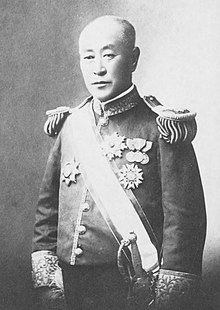
Do you know how the person who is printed on paper money is chosen? In Japan, the person on paper money should have great achievements, be well-known, and be the person who can represent Japan (Kinan, 2004). In 1835, Fukuzawa Yukichi, who is printed on 10,000 yen note, was born as the youngest son of a poor lower samurai of the Nakatsu Clan in Osaka. After his father passed away, he went back to Nakatsu and became a disciple of Tsuneto Shiroishi, and then he went to Osaka to study about Western things in Dutch language (Fukuzawa Yukichi (b), 2013). He was a Japanese author, educator, publisher, Enlightenment writer, and he founded Keio-Gijuku university which is one of the famous universities in Japan. He is one of the influential people in Meiji era because he created up-to-date Japan through his experiences in Western countries.

Firstly, I am going to focus on Fukuzawa Yukichi’s first mission to America. In 1860, he was sent to America as one of the members of a diplomatic mission. He was really surprised at difference between Japan and the United States. In America, he bought a Chinese-English dictionary, Kaei Tsugo, and brought it back to Japan. After he came back, he started to translate it into Japanese. Based on Kaei Tsugo, Fukuzawa published Zotei Kaei Tsugo, which is Japanese-English dictionary, and it was his first publication (Fukuzawa Yukichi(c), 2013). I think his English-Japanese dictionary was very important to Japan because many people thought Dutch was more important than English during the sakoku (closed country) period, so there were few English-Japanese dictionaries at that time. However, Fukuzawa Yukichi realized the necessity and importance of English through his experiences. I think he is one of the leaders of the encouragement of English education in Japan.

Secondly, I am going to focus on Fukuzawa Yukichi’s publications. He went to the United States and Europe three times as one of the Shogunate mission members, so he wrote many books about Western culture based on his experiences in foreign countries such as “Gakumon no susume” (Encouragement of Learning), “Seiyo jijo” (Conditions in the West), and “Bunmeiron no gairyaku” (An Outline of a Theory of Civilization) (Fukuzawa Yukichi (b), 2013). “Seiyo jijo” (Conditions in the West), which introduced many aspects of Western life, history, and ideas, became extremely popular. He clearly described them, so ordinary people, who do not have knowledge about Western view, were able to understand easily (Fukuzawa Yukichi (a), 2013). Japan was not an open country for a long time, so ordinary people did not know about foreign countries. However, I think his simple books helped Japanese citizens understand new opinions from Western countries.

Finally, I am going to consider Fukuzawa Yukichi’s focus on the inner spirit. He believed that education, individualism, and national independence were the power of Western countries, so he introduced them through his writings (Fukuzawa Yukichi (c), 2013). In addition, his ideas helped to civilize and modernize Japan. I think he created foundation of current Japanese system because, for example, he asserted that everyone should have a chance to get education equally, and we are able to get education equally today, so I think that his belief must have affected modern society. Despite the great job he did supporting Japan, he never accepted any high position, and he stayed an ordinary citizen in his whole lifetime.

In conclusion, Fukuzawa Yukichi was an important person who impacted on Japan because he introduced Western things which were not familiar at that time to Japanese through his experiences in foreign countries and his books, and helped Japan become modern and civilized country. I had never thought about why he appears on paper money before now, but I was able to understand through this final project.


References

Fukuzawa Yukichi(a). (2013). In Encyclopædia Britannica. Retrieved 24 July, 2013, from http://www.britannica.com/EBchecked/topic/221689/Fukuzawa-Yukichi

Fukuzawa Yukichi(b). (2013), Modern Japanese Historical Figures. Retrieved 24 July, 2013, from http://www.ndl.go.jp/portrait/e/datas/185.html

Fukuzawa Yukichi(c). (2013). Wikipedia. Retrieved 24 July, 2013, from http://en.wikipedia.org/wiki/Fukuzawa_Yukichi

Kinan, H. (2004). Life Planning. Retrieved 24 July, 2013, from http://woman.excite.co.jp/lifeplanning/news/rid_1592/

Hannah Riddell

By Jaimie Natsuki
Hannah Riddell
Hannah Riddell


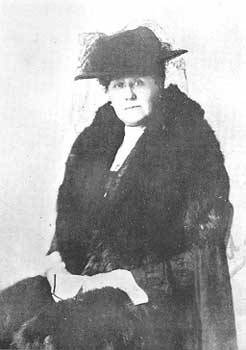
Hannah Riddell was an English women who devoted her life to leprosy victims in Japan. Leprosy is a serious chronic disease which destroys the flesh and nerves. From 1907 to 1996 in Japan, leprosy victims had serious discrimination problems. For example, they were treated cruelly by people, government, and even by hospitals.

However, in 1895, Hannah Riddell made a hospital called “Kaisyun hospital” in Japan, and she made a great contribution to the Japanese policy of leprosy, but if she were not inflexible person, deepen people’s understanding of leprosy was not easy. In this paper, I will focus on the reasons why she came to Japan, her achievements, and the two sides of her character.

Hannah was born in 1855 in London, and her family were Christian. She and her mother managed a women's school, and even though she was only 20 years old at that time, she could teach all the subjects. Her parents were quite old and she had a brother’s little nephew and niece to bring up, because he died of pneumonia. Hannah had to work to live, and she had no choice except being a teacher.

When she came to Japan as a missionary, she met a little boy suffering from leprosy at Honmyou temple in Kumamoto, and that made her decide to take care of leprosy victims for her whole life.

In 1895, finally she was able to build her ideal hospital, “Kaisyun hospital”, but it was not so easy. She had to negotiate with many top class people, and solicit funds. She had a bad relationship with middle echelons, and because of her character, she made many enemies on the church organization committee, so she had to manage without their help. However, that made it easier to collect funds. In 1905, she held a nationwide conference and her proposal for a nonprofit hospital was accepted.

Also, she cared about the location and hospital name too. The location was peaceful, and had beautiful nature, and moreover it was easy to go to the city, but was not too close. The outside of house did not look like a hospital. The design was a mix of western and oriental style. Hannah did not want to get image of “revival” and “regenerate”, so she choose the name very carefully. In English, it means “Resurrection of Hope”, but in Japanese, her concept of “revival” and “regenerate” is well expressed in appropriate language.

Hannah believed that leprosy is a hereditary disease, and was convinced that men and women should live separately, even though in 1873, a doctor proved it is bacterial disease. Here is her opinion: “Leprosy victims should not live in the same house, and if it is possible, the house should be as far as possible, and the best way to avoid this disease is to ban a marriage in two generation. It might sound little bit hard, but still it is possible to learn the happiness and joy, and they will understand that they just do not have choice to get married.” She strongly believed the best way to avoid leprosy is to control passions and desires, but in fact, just keeping a clean and noble life was not helpful. Her knowledge was too scanty, even though she devoted her life to leprosy.

Some victims felt “Kaisyun hospital” is like a religious house because sometimes victims felt pleasure to become Christian. However, even though the hospital was like a religious house, it was overwhelming popular to enter, especially for serious cases.

To build up the medical treatment of leprosy took a long time, but following all of her efforts, in 1910, Japanese authorities recognized leprosy as a social problem. Nowadays Hannah’s opinion is accepted and respected from some Japanese top class people, and patients had their love and respect for her.


<References>

Boyd, J. (1995.11.16). Hannah Riddell: an English woman in Japan, Charles E. Tuttle Company.

Friday, 2 August 2013

Inoue Masaru

By Hikaru Kawasaki
Inoue Masaru
Inoue Masaru


Have you ever heard of Inoue Masaru, who is called the “Father of Japan’s Railways? He was one of the Choshu five, who went to study abroad while it was still illegal to leave Japan. He was born on August 24th in 1843 at Hagi in Yamaguchi prefecture, in southern Japan. He was brought up as a samurai belonging to the Choshu clan who controlled that area. In 1863, however, he and four friends from Choshu clan sneaked into a vessel which went to the UK. He studied civil engineering and mining at University College London and came back to Japan in 1868. After he came back, he took a leadership in Japan’s railway planning and construction, and he was appointed the Director of the Railway Board in 1871. He thought railways should be under national control, and he worked for a creation of the Railway Nationalization Act. He died of an illness in London in 1910, during an official visit on behalf of the Ministry of Railways. Thanks to him, Japanese railway developed and made our life convenient. Without him, it would have been more difficult for Japan to develop in that time, and also we might not have a good train system today.

One of the most important things which he did was making the first railway in Japan. In 1872, the government decided to make a railway, and he was appointed the supervisor because he saw many techniques about it in London. He often went to the construction field and gave instructions by himself. In 1875, the first railway was opened between Shinbashi and Yokohama, which are famous places around Tokyo. The Meiji emperor rode on the rail and told him to expand the railway system throughout Japan, so he was inspired and made more efforts after that. To build up a railway between Kyoto and Otsu, which are located in middle parts of Japan, a tunnel construction was needed, but it was such a difficult work. In addition, it was said that it was impossible to build a tunnel by Japanese without foreign help, but he succeeded in making it only by Japanese people in 1883. In 1892, he finally finished making the Tokaido line between Tokyo and Kobe, located in the centre of Japan. There were no other people who had much knowledge about the railway except him, so he worked hard to expand the railways. In 1894, the railway between Ueno located in Tokyo and Aomori in the north of Japan was also opened.

Why did he work so hard for making the railway? In that time, transportation system in Japan wasn’t good, and walking was the main way for the transportation. There was a mikoshi which is a box carried by people, but only rich people used it. Also, only samurai officers used war-horses. For most people, there was no other useful transportation but walking, so he thought Japan needed the railway. Though horse carts and jinrikisha were developing, he thought they were not enough. He was hoping that the railway system would make life more convenient and also bring in benefits for the Japanese economy. The railway made it possible for people to travel all over Japan, and people exchanged their materials and information with other Japanese so that they could help each other more. That’s why he worked so hard for the railway system.

He resigned as the director in 1893, but he kept working for the railway. In that time, the railway was developing, but it relied on foreign techniques and materials. Thus, Japan needed to pay much money to foreign countries. Then he thought Japan needed the technique which was made and used by Japanese. He cooperated with some of his friends such as Mori and Iwasaki, who were rich and had good education, and they established a new company called “Train production firm company” in 1896. The company built plants in Osaka and got orders for making trains. Thanks to the demand of the railway caused by Russo-Japan War, the company got many orders and became a big company. Also, other companies were established after that, which improved Japanese railway techniques.

He died in London in 1910 while he was visiting there as studying railways. Through his life, he worked for Japanese railway system, and he improved Japanese transportation system. In 1914, his statue was made at Marunouchi station, which is a famous place in Tokyo, to admire his achievement. Without him, Japanese railway would not really have developed, and transportation system would have been inconvenient. Thanks to his great effort, Japan got a railway made in Japan, which brought large benefits to Japanese economy and helped Japan develop. Our life would be so different from now if he hadn’t gone to the UK, so we should thank him for his courage in that time.


References

Hidaka Olion, (2010). Father of the railway: Inoue Masaru ~persistence to Made in japan~. Retrieved from http://www13.ocn.ne.jp/~dawn/ on July 25, 2013

Toshikazu, K, (2012). The railway initiation history of Inoue Masaru. Retrieved from http://ktymtskz.my.coocan.jp/denki/inoue.htm on July 25, 2013

Mori Arinori

Mori Arinori
Mori Arinori
By Eri Yamashita

Mori Arinori is well known in Japan for his achievements of setting education system and his radically westernized way of thinking. 

First of all I’m going to describe how his life was going along timeline. He was born in Satsuma domain (now Kagoshima) to a high-ranking samurai family. He was the fifth boy. Because his family was wealthy, he got educated well. When he was 13 years old, which is now the age of enrollment of junior high school, he started studying kanngaku (Chinese ancient study) and 4 years later, he enrolled at Kaiseizyo where students studied Western learning. It is said that this school is the basis of the Tokyo University. There, he took a class about studies of British literature. When he turned 18 years old, he went to London to study. Later, he also studied in Washington. During these stays, he got interested in Christianity.

After the Meiji restoration, he went back to Japan and he set up a group named Meirokusha with other historical important men, such as Fukuzawa Yukichi or Saishu. This group was meant to do enlightenment activities. He became the first leader of this group and published many literatures. In 1875, he founded a private school called Syouhou Kousyuuzyo (which is now known as Hitotsubashi University). In this year, he married a Japanese woman, Hirose Tsune. It is said that this was the very first contract marriage in Japan. 

While he worked in London as an ambassador to Great Britain, Ito Hirobumi visited him and they had discussions about Japan’s future. Mori insisted that education is the first thing that Japanese government should work on first to build a strong country. Ito was impressed by his passion and he accredited Mori as a first minister of education as he got a Cabinet in a place. Even after Ito’s Cabinet ended, he stayed on his post of the education minister. While he worked for Prime Minister Kuroda Kiyotaka, he set an academic degree system. This is still a basis of present education system. 

In 1899, at the age of 43, on the day of promulgation of the constitution, he was changing his clothes for the ceremony, he was attacked and stabbed by an ultranationalist and he died the next day. 

Now, I want to give a little focus on the education area, starting off with his idea of education. His idea was basically education is ultimately to enrich the country, known as Fukoku Kyouhei (rich country, strong army), by giving appropriate knowledge evenly to boys and girls. Some researchers have pointed out that he thought that school is a place to choose good students to become soldiers for the policy. 

Because of his extremely westernized thoughts, he once even suggested that we should stop using Japanese and change the public language to English. 

Now about the assassination, there are some rumors about the cause of this incident that he was regarded as extremely westernized so that he didn’t take off his shoes when he entered a famous shrine in Ise and he pushed aside a curtain with his walking stick which only the emperor can touch. However many reseachers deny all these rumors. The guy who attacked him also got killed at the time he killed Mori so truth will never come to light.

Needless to say, his thoughts were not same as most other Japanese people. Only a few wealthy Japanese people learned Western studies and most of Japanese didn’t agree on his radical Westernized ideas. That might have been caused him many difficulties. However he still contributed to make Japan modernized and distribute education evenly to boys and girls.

Fukuzawa Yukichi: Aspects of Learning

Fukuzawa Yukichi
Fukuzawa Yukichi
By Daiki Ito

What is learning? Fukuzawa Yukichi may give you a hint about it. He lived from 1834 to 1901 and became a translator and teacher. He is very famous for education, and was a founder of Keio University which is one of the most famous universities in Japan. He is also known for the expression “Heaven doesn't make a man better than others, nor does it make a man worse than others” (Fukuzawa Yukichi, 1994). In reality, however, we are not equal in many ways, but what makes the gap? He says it is learning that creates the disparity. Assuming that is true, so as to fill in the gap and become happier, it is probably the first step to ponder the aspects of “learning’’.

First of all, Fukuzawa learned from other countries and broadened his horizons. He was dispatched by the government to the countries such as America, Britain, Germany, and France. In 1860, he went to America and he was shocked so much by the cultural difference such as America’s indifference to offspring of famous people like George Washington. In 1861, he was dispatched by the government to Europe as a translator. When he went to London, he visited an international exhibition for research and saw things such as steam locomotives, electrical equipment, and linotypes. In addition, utilizing money provided by the Japanese government, he bought lots of books about Europe and scrutinized European’s culture. After these surveys, he wrote a book named “Things Western (西洋事情)’’ which describes European culture, politics, economy and so forth. If you can conjure up a time when you have had an experience in a new place, you must know that as his case, expanding your field of vision is a significant part of learning.

Learning from other countries, however, does not mean imitating them and proper learning is to be selective. Fukuzawa writes about it on a book named “Datsu-A Ron (脱亜論)’’ which literally means escaping from Asia. You may want to criticize him as an unpatriotic person, but this is not true. He seemed to love Japan and that is why he referred to the necessity for Japan to be civilized. As he said, imitating such as wearing western clothes is not civilization as he would think of it; then, what is civilization? He seemed to regard it as cultivation of ‘’inner spirit’’. In other words he thought that people had to learn things from other countries such as dignity and the way of thinking which are more important than external things like food, hair style, and fashion. Interestingly, it is said that Fukuzawa never wore western clothes at home and he disliked meat and liked fishes, which was typical of Japan. As it shows, he mentioned the importance of being selective about learning (Hutchinson, personal communication, 2013).

Finally, everyone has been learning and will continue to keep learning things. The famous book ‘’Encouragement for education (学問のすすめ)’’ talks about it. What you have to notice here is the word “Gakumon (学問)’’. This word “Gakumon’’ is common in current Japan but it had a different meaning in Edo period. ‘’In this period, when people heard the word, most of them thought of “学文” instead of “学問” (Shibata Toshio, 2005). What is the difference? On one hand, “学文” literally means study such as reading and writing. On the other hand, the word “学問”, as you can see by the word “問’’, is to question things such as “what is happiness?’’ and it was Fukuzawa who popularized it. The thing is that there is no end to questioning things and this indicates that we never stop learning for good as far as we live.

What we can conclude from these facts and his ideas is that learning has at least three cardinal aspects. They are that learning is to broaden your horizon, we must be selective, and learning never ends in our lives. As Fukuzawa Yukichi mentioned, if learning differentiates people, with learning these features as the first step, no one will stop learning for the sake of realization of real equality.


References
Fukuzawa, Y. (1994), 学問のすゝめ [Encouragement of Learning], Iwanami
Shibata, T. (2005), 福澤諭吉のレガシー [The legacy of Fukuzawa Yukichi], Maruzen

Peculiar women's culture in Meiji Japan

Alice Mabel Bacon
Alice Mabel Bacon
By Chihiro Oka

Alice Mabel Bacon was a specialist of Japanese culture and women. In Japan, she taught English at Gakushuin Women’s School for aristocratic families. She left Japan once; however, she came back to Japan to establish Tokyo Women’s Normal School (now Ochanomizu University), and basically helped Tsuda Umeko who was a Japanese educator for women. She spent a time in Japan, and experienced a lot of aspects of Japanese women’s lives. Today, Japanese women are mostly free to choose working or being house worker, and almost all Japanese women are free to live. However, in Bacon’s life, she realized and considered Japanese women’s peculiar lifestyle. When people think about Japanese women in Meiji period from 1868 to 1912, it is important to focus on her experiences in Japan. Then, it is necessary to consider about three aspects of education, marriage and women’s different status in Japan.

The first important thing to think about women in Japan is education. Bacon (1902) said that there were no chances for women to get education at school. It means there were no schools for women. Then, how did they study, or could they study? Actually, they had to study from reading books, and obtained way of writing and reading Japanese language without schools. In general, there was thinking that women’s culture in Japan should be manners, writing skills, and liking the tea ceremony or flower arrangement. Those were forgotten study for women. To get knowledge of these things, they had to go to teacher’s house. Although there were no schools, women could write and read Japanese, and learn Japanese manners. However, these customs changed since Commodore Perry came to Japan and the country began to open to the West. Schools for women were established, and women could get education. They could study not only manners or writing and reading skills, but also mathematics or foreign languages. Moreover, there were not problems of women’s status in society. Both high class and low class women were able to go to school to study. Bacon thought that there were a lot of things to study, and it was hard for men and women to do them. However, she felt that Japanese people were hard workers.

The second thing is marriage for women. Bacon (1902) said that Japanese women usually got married when they are 16 years old. They were able to say whether the person who would be their husband was good or bad. However, it was not allowed to refuse a marriage. After they married, there were big differences between American style and Japanese style. In America, a young couple had their own house. On the other hand, Japanese couples did not. Wife had to live with husband and his family. Women had to be more involved with husband’s family than her family. In addition, if women wanted to get a divorce, it was hard for them, because men have a parental authority, so women had to leave their children. Moreover, if women can have a parental authority, it was hard and difficult for them to make their lives. System and condition for women were not fair when it was compared with men. Bacon was surprised at the situation. She thought that different status between men and women were related to areas and social status. It means women in a city and high class had big differences from men, and women had to follow them. On the contrary, women in country and low class did not have big differences from men. Men thought that women were almost equal to them.

The last thing is women’s status in society and family. There were big differences of status in family between high and low class women. Bacon (1902) said that low class women were fuller of life than high class women. Low class women worked in the field with men. This living condition makes women almost same status with men. On the contrary, high class women had to be a servant of husband’s parents. High class women gave up their freedom, and obeyed them. Therefore, Bacon (1902) explained that high class women looked more tired than low class women. She felt that Japanese women who worked were attractive, and it was Japanese peculiar virtue.

In conclusion, the women’s lifestyle was different between high class and low class status, and at the same time, the relationship between men and women was also different. When Bacon considered about women’s lifestyle in high and low class, low class women are happier than high class women because of working. It means that working is important for women to make their life better. There are human rights, and men and women have to be equal, and women should study and work in society.


Reference


Alice Mabel Bacon (1902), 明治日本の女たち [JAPANESE GIRLS AND WOMEN], Boston and New York, Houghton, Mifflin and Company

Lafcadio Hearn: His Journey Through Japan

Lafcadio Hearn
Lafcadio Hearn
By Ayako Miki

Lafcadio Hearn, later known as Koizumi Yakumo, is definitely one of the most important non-Japanese in Japanese history, who wrote more than ten books about Japan which showed old Japanese way of life through a Westerner’s eye from ancient myth to people’s daily lives. He is often described as a naturalized Japanese who researched and grasped what is called “Japanese mind” and this is the reason why he was counted as such an important person in history. However, his perspective toward Japan changed significantly thorough his fourteen years in Japan. The aim of this paper is to clarify how Hearn’s perspective on Japan changed by examining his writings and historical facts.

In his early days in Japan, Hearn seemed to see the country very delightedly with great enthusiasm. According to My First Day in the Orient[1], he found this Far East as “the old and new mingle so well” and described Japanese as “the most lovable people in the universe”. Considering adjectives used in the essay which are “divine” “fantastic” “beautiful” “mysterious” etc, it was clear that he found almost everything very attractive and exotic. Although he was surrounded by unfamiliar, strange, unknown things, he enjoyed himself being stranger on the street. Also, another reason for him to find Japan exotic and mysterious was that he spent his first two years in Matsue. Shortly after landing, Hearn was sent to Matsue in Shimane prefecture to teach English by Japanese government. Shimane prefecture is known as the place where many Japanese myths were set, which interested him. With this enthusiasm brought by the honeymoon days and encounters with the ethnic ancient tales, Hearn mostly saw Japan as a beautiful, warm, friendly nation.

However, after moving to Kumamoto from Matsue where he spent his first year in Japan, Hearn seemed to realize that his beloved Japan was standing at a turning point which disappointed him. Although it was far apart from Tokyo, Kumamoto city was big enough to reflect the influence of Meiji Restoration. He criticized the transition as “rapid industrialization took away Japanese traditional minds from people”[2]. Compared to Matsue, small city but still possessing fragments of Japanese mythology everywhere, Kumamoto was much more modernized and leaving traditional Japan behind. Because of the bigger population and urbanness of Kumamoto, also feeling huge changes happening to Japanese society in Meiji Era, Hearn left for Kobe to be a journalist at a newspaper company for foreign residents in Japan by quitting his job as an English teacher. It did not take long for Hearn to notice the transition of Japan, which disappointed him. He could not help feeling his love melting away.

Finally in his later days, moving to Tokyo, Hearn begun to note his melancholy and nostalgia for Japan which he dreamt of. “The beautiful illusion of Japan, the almost weird charm that comes with one's first entrance into her magical atmosphere, had, indeed, stayed with me very long,” he wrote in his essay titled In Yokohama[3], “but had totally faded out at last.” He mourned for his passing days filled with divine specters, sweetness, traditional Japan and people who possessed loving hearts. However, during his very last time in Japan, he did not mention that his memory and dream were lost because of rapid social change known as Meiji Restoration. In contrast to writings from days in Kumamoto, he gradually came to notice that he got used to his Japanese life as if he had awakened from a dream. Although his writings in Kumamoto seemed to contain anger and criticism for Meiji Restoration, at this time he started to express his disappointment to himself and more nostalgia for the illusion of Japan which captured and led him to this far-east Orient from the United States. At last his dream was lost, and Hearn was certainly aware of that. Shortly before his death, he continued to note his indescribable love and melancholy for lost Japan and passing days.

Hearn is now often described as a person who loved Japan without any doubts. However, as his writings telling us, his mind changed through his fourteen-year life in Japan. At first it was only enthusiastic, but gradually vivid colors were washed out by Westernization, and finally he noticed the Japan that he dreamt of was lost because of both of Meiji Restoration and changes happened to himself. His life, of course his mind, too, was not as easy as recent people expected. However surely he was in love with Japan, which he once regarded as his home. He passed away fifteen years after his first day of Japan, and now he rests in the Zosigaya grave. He ended his life in the place he dreamt of; even though it disappointed him, perhaps he reached the Orient heaven at last.

Citations 

[1] Hearn, L. (n,d,). Lafcadio Hearn – The First Day in the Orient. Retrieved from http://www.oldandsold.com/articles33n/essays-studies-25.shtml

[2] Hearn, L. (n,d,). Insect Musicians. [Mushi no Ensoka]. Tokyo. Kodansha.

[3] Hearn, L. (n,d,). In Yokohama. Retrieved from http://lafcadiohearn.jp/articles/InYokohama.html
References

Hearn, L. (1990.). Glimpse of Unfamiliar Japan. [Shirarezaru Nihon no Omokage]. Tokyo. Kodansha.

Hearn, L. (1990.). Kokoro. Tokyo. Kodansha.

Yamada, T. (2002). Glimpse of Japan- The world of Lafcadio Hearn. [Nihon no Omokage – Lafcadio Hearn no Sekai.]. Tokyo. Iwanami Gendai Bunko.